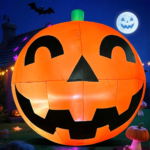


Các đồ trang trí bơm hơi Halloween đã trở thành lựa chọn phổ biến cho các không gian trưng bày tại nhà, địa điểm thương mại, trung tâm mua sắm, công viên chủ đề và các sự kiện theo mùa. Những quả bí ngô khổng lồ, bóng ma, bộ xương, ngôi nhà ma quái và các mô hình phát sáng có thể tạo nên hiệu ứng thị giác ấn tượng mà không cần đến những cấu trúc cố định phức tạp. Tuy nhiên, đối với các nhà sản xuất, việc tạo ra một món đồ trang trí bơm hơi vừa đẹp mắt chỉ là một phần của công việc. Chất liệu còn phải chịu được thời tiết ngoài trời, quá trình bơm – xả khí nhiều lần, các thao tác lắp đặt cũng như bảo quản giữa các mùa lễ hội.
Việc lựa chọn vải ảnh hưởng trực tiếp đến tuổi thọ sử dụng, vẻ ngoài, trọng lượng và chi phí sản xuất của sản phẩm cuối cùng. Các vật liệu bơm hơi truyền thống có thể mang lại khả năng chống nước hoặc độ bền đủ dùng, nhưng chúng không phải lúc nào cũng cân bằng tốt giữa tính linh hoạt, trọng lượng, độ kín khí và hiệu suất gia công cho mọi thiết kế.
Vải phủ TPU cung cấp cho các nhà sản xuất một lựa chọn vật liệu khác. Bằng cách kết hợp lớp nền dệt với lớp phủ polyurethane nhiệt dẻo, nó có thể mang lại những đặc tính hữu ích cho nhiều loại cấu trúc bơm hơi, từ những mô hình trang trí nhẹ nhàng cho đến các đạo cụ ngoài trời cỡ lớn đòi hỏi độ bền cơ học cao hơn. Cách thức cấu tạo phù hợp phụ thuộc vào cấu trúc sản phẩm, điều kiện vận hành và tuổi thọ dự kiến.
Những yêu cầu về vật liệu nào quan trọng đối với đồ trang trí bơm hơi Halloween?
Đồ trang trí bơm hơi Halloween thường được sử dụng trong môi trường mà thời tiết và điều kiện xử lý khó kiểm soát. Một món đồ trưng bày ở sân trước có thể phải đối mặt với mưa, ánh nắng mặt trời, sự thay đổi nhiệt độ, cũng như tiếp xúc với cỏ, đá lát hoặc các vật thể xung quanh. Các công trình thương mại còn có thể phải di chuyển, lắp ráp và tháo dỡ thường xuyên.
Những điều kiện này đặt ra một số yêu cầu về vật liệu.
Khả năng chống nước cho các sản phẩm trưng bày ngoài trời
Mưa và độ ẩm từ mặt đất có thể ảnh hưởng đến ngoại hình và hiệu suất của các đồ trang trí ngoài trời. Vải được phủ lớp chống nước phù hợp sẽ giúp ngăn nước thấm qua cấu trúc dệt. Điều này đặc biệt quan trọng đối với các mô hình trang trí đặt trên bãi cỏ, gần lối vào hoặc tại các khu vực thương mại mở.
Khả năng chống nước cần được xem xét song song với cấu trúc của sản phẩm hoàn thiện. Các lỗ khâu, điểm nối, khóa kéo, van và các khe hở khác có thể khiến nước xâm nhập ngay cả khi lớp vải chính đã được phủ chống nước. Các nhà sản xuất cần đánh giá toàn bộ cấu trúc thay vì chỉ dựa vào lớp phủ.
Tính linh hoạt trong quá trình bơm – xả khí
Các đồ trang trí bơm hơi liên tục thay đổi hình dạng khi được bơm phồng, gấp gọn, đóng gói và bảo quản. Vải phải chịu được những chuyển động này mà không trở nên quá cứng hoặc bị hư hại ở các vùng thường xuyên chịu lực.
Lớp phủ TPU linh hoạt có thể giúp duy trì độ mềm dẻo của vật liệu, tuy nhiên hiệu suất cuối cùng phụ thuộc vào công thức TPU, độ dày lớp phủ, chất nền dệt và nhiệt độ hoạt động. Một loại vải phù hợp với món đồ trang trí bơm hơi nhỏ gọn có thể không thích hợp cho những cấu trúc lớn, nơi chịu lực căng mạnh hơn.
Độ bền cơ học cho việc sử dụng nhiều lần
Các đồ trang trí ngoài trời có thể bị di chuyển, gấp gọn, kéo căng và va chạm bất ngờ. Vật liệu mỏng có thể giảm trọng lượng sản phẩm, nhưng lại kém phù hợp với những thiết kế chịu lực lớn ở các góc, điểm gắn hoặc cấu trúc hỗ trợ.
Do đó, khả năng chống rách và chống mài mòn cần được xem xét kỹ lưỡng khi lựa chọn vật liệu. Vải nên phù hợp với điều kiện xử lý dự kiến chứ không chỉ đáp ứng tiêu chuẩn tối thiểu về trọng lượng.
Trọng lượng phù hợp cho vận chuyển và lắp đặt
Nhiều đồ trang trí theo mùa được thiết kế để cất đi sau khi sử dụng. Trọng lượng vải thấp hơn có thể giảm bớt nhu cầu vận chuyển và bảo quản, đặc biệt với những mô hình trang trí cỡ lớn. Tuy nhiên, việc thiết kế nhẹ không được phép làm suy giảm độ bền cần thiết của sản phẩm.
Sự cân bằng phù hợp phụ thuộc vào kích thước, phương pháp bơm hơi, cấu trúc bên trong và mức độ tiếp xúc dự kiến của món đồ trang trí.
Vải phủ TPU hỗ trợ sản xuất đồ trang trí bơm hơi như thế nào?
Vải phủ TPU bao gồm một lớp nền dệt kết hợp với lớp polyurethane nhiệt dẻo. Lớp dệt đảm nhiệm phần lớn chức năng hỗ trợ cơ học, trong khi lớp phủ TPU mang lại các đặc tính như chống nước, linh hoạt và khả năng gia công nối bằng nhiệt.
Sự kết hợp này cho phép các nhà sản xuất lựa chọn nhiều kiểu cấu trúc vải khác nhau cho từng ứng dụng bơm hơi.
Kết hợp giữa sức bền của vải và hiệu suất của lớp phủ
Chất liệu nền ảnh hưởng đến độ bền kéo, khả năng chống rách, độ ổn định kích thước và tổng trọng lượng. Nylon và polyester thường được sử dụng làm chất nền trong các loại vải phủ kỹ thuật, nhưng đặc tính hiệu suất của chúng lại khác nhau.
Nylon thường được chọn khi tính linh hoạt và độ bền cơ học là yếu tố quan trọng. Polyester lại hữu ích khi cần đảm bảo độ ổn định kích thước và khả năng chống lại những thay đổi do độ ẩm gây ra. Đồng thời, cần xem xét cả cấu trúc lớp phủ, bởi chỉ riêng chất nền không quyết định được hiệu suất của vật liệu hoàn thiện.
Đối với đồ trang trí bơm hơi Halloween, các nhà sản xuất nên đánh giá toàn bộ vải phủ TPU thay vì chỉ lựa chọn vật liệu dựa trên thông số kỹ thuật của vải.
Khả năng chống nước cho các ứng dụng ngoài trời
Lớp phủ TPU có thể tạo thành một lớp bảo vệ bao quanh chất nền dệt. Khi lớp phủ được thi công liền mạch và đúng quy trình, nó giúp ngăn nước thấm qua bề mặt vải.
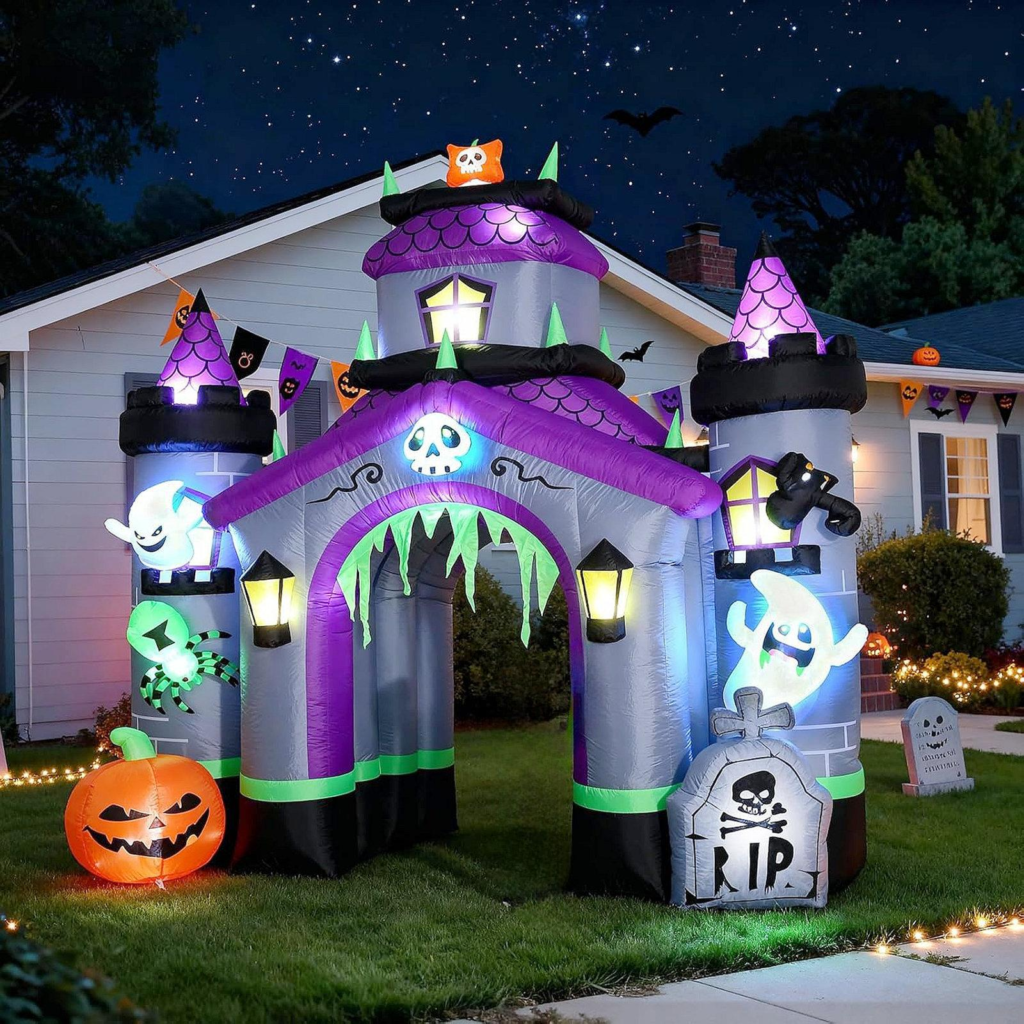
Điều này khiến các vật liệu phủ TPU đáng được xem xét cho những quả bí ngô, bóng ma, bộ xương, vòm trang trí và các đạo cụ theo mùa khác dùng ngoài trời. Tuy nhiên, vẫn cần kiểm tra kỹ các đường may, khóa và điểm nối, vì khả năng chống nước của sản phẩm hoàn thiện phụ thuộc vào nhiều yếu tố hơn là chỉ bề mặt vải.
Tính linh hoạt khi gấp gọn và bảo quản
Các đồ trang trí theo mùa không phải lúc nào cũng được giữ bơm phồng suốt cả năm. Nhiều sản phẩm được xả khí, gấp gọn, đóng gói và bảo quản trong vài tháng trước khi tái sử dụng.
Một loại vải phủ linh hoạt có thể giúp việc gấp gọn và xử lý dễ dàng hơn. Việc lựa chọn vật liệu cần tính đến các chu kỳ uốn cong và nén nhiều lần, đặc biệt ở những vị trí gấp, góc cạnh và nơi vải tiếp xúc với các cấu trúc hỗ trợ bên trong.
Các nhà sản xuất nên thử nghiệm mẫu qua nhiều chu kỳ bơm – xả và gấp gọn. Một loại vải hoạt động tốt trong điều kiện mới có thể phản ứng khác biệt sau thời gian bảo quản dài hoặc nhiều lần sử dụng.
Vải TPU nhẹ có phù hợp với đồ trang trí bơm hơi Halloween không?
Trọng lượng là yếu tố quan trọng đối với các nhà sản xuất đồ trang trí bơm hơi. Những mô hình lớn có thể cần lượng vải rất lớn, và chất liệu này góp phần đáng kể vào tổng trọng lượng sản phẩm. Một cấu trúc nhẹ hơn có thể giúp việc vận chuyển, lắp đặt và bảo quản theo mùa thuận tiện hơn.
Các loại vải phủ TPU nhẹ có thể được xem xét cho những mô hình trang trí nhỏ và các sản phẩm bơm hơi mà tính di động là ưu tiên.
Ví dụ, các cấu trúc nylon 20D phủ TPU và polyester nhẹ có thể được đánh giá cho những đồ trang trí bơm hơi nhỏ gọn, quả bí ngô mini, bóng ma nhẹ và các sản phẩm khác có yêu cầu cấu trúc tương đối đơn giản. Tính phù hợp của chúng phụ thuộc vào thông số kỹ thuật cụ thể của vải và thiết kế của sản phẩm hoàn thiện.
Những nơi vật liệu nhẹ mang lại giá trị thực tế
Vải nhẹ có thể đem lại nhiều lợi ích trong sản xuất và sản phẩm:
- Trọng lượng vật liệu thấp hơn có thể giảm tổng trọng lượng của các sản phẩm bơm hơi nhỏ gọn.
- Cấu trúc linh hoạt giúp việc gấp gọn và đóng gói thuận tiện hơn.
- Gói vải nhỏ hơn giúp đơn giản hóa việc vận chuyển và lưu trữ trong kho.
- Vật liệu nhẹ có thể phù hợp với những sản phẩm không chịu lực cơ học lớn.
- Tính linh hoạt của vật liệu có thể hỗ trợ các hình dáng trang trí với bề mặt cong và nhiều mảng.
These benefits are most relevant when the product design does not require heavy reinforcement or high resistance to repeated physical contact.
Why lightweight should not be the only selection criterion
A large outdoor inflatable decoration may experience wind pressure, movement around its anchor points, and tension across its panels. A very lightweight fabric may not provide sufficient resistance for these conditions.
Manufacturers should consider fabric weight together with tensile strength, tear resistance, coating adhesion, and the dimensions of the inflatable structure. Reinforcement may also be required around tie-down points, seams, and other concentrated stress areas.
A lightweight fabric is not automatically the most economical option. If the finished decoration requires frequent repairs or replacement, the initial material savings may be offset by higher service costs.
When Should Manufacturers Choose 210D, 420D, or 840D TPU Coated Fabric?
Not every Halloween inflatable decoration needs a lightweight fabric. Larger outdoor props, reusable commercial displays, and products exposed to frequent handling may require a more robust textile construction.
TPU coated nylon fabrics in 210D, 420D, and 840D constructions provide different options for manufacturers evaluating strength, weight, and handling requirements. Denier describes the linear density of the yarn, but it should not be treated as a direct measurement of finished fabric strength. Weave construction, coating, yarn quality, and manufacturing processes also influence performance.
| Fabric construction | Potential application direction | Main selection consideration |
|---|---|---|
| 210D TPU coated nylon | Medium-sized decorative inflatables and general-purpose props | Balance between weight and mechanical performance |
| Vải nylon phủ TPU 420D | Larger outdoor decorations and reusable event props | Greater fabric robustness for repeated handling |
| Vải nylon phủ TPU 840D | Heavy-duty decorative structures and demanding applications | Higher material weight and the need for stronger construction |
The table provides a starting point for material evaluation rather than a universal specification. Actual suitability must be confirmed through technical data and product testing.
210D for moderate material requirements
A 210D construction may be worth evaluating for inflatable decorations that need a balance between manageable weight and fabric strength. It can be considered for medium-sized pumpkins, ghosts, and other decorative figures, provided the design does not place excessive stress on the material.
The coating type and thickness should be matched to the intended application. Manufacturers should also check whether the selected construction can be processed using their planned joining method.
420D for larger and reusable props
A 420D TPU coated nylon fabric may be more appropriate when the decoration has a larger surface area or is expected to undergo frequent transportation and installation.
For example, commercial event operators may reuse the same inflatable decorations across several seasonal campaigns. In this case, resistance to handling damage becomes an important part of material selection.
Manufacturers should pay particular attention to the areas around attachment points, seams, and corners. These locations may experience more concentrated stress than the main fabric panels.
840D for demanding applications
An 840D construction can be considered for applications where a heavier textile base is needed. Large outdoor props, rugged event structures, and decorations that experience frequent handling may require this type of material evaluation.
However, a heavier fabric can also increase the total product weight and affect folding, transportation, and installation. It may not be necessary for small decorative figures or products designed for occasional indoor use.
The best construction is the one that meets the product’s mechanical requirements without adding unnecessary material weight or cost.
How Does TPU Coated Fabric Perform in Outdoor Halloween Conditions?
Outdoor use introduces several variables that manufacturers cannot fully control. Rain, sunlight, temperature changes, wind, and contact with surrounding surfaces can all affect the finished decoration.
Material selection should therefore be based on the actual operating environment.
Rain and moisture exposure
Waterproof TPU coated fabric can help protect the textile substrate from direct water penetration. This is useful for inflatable decorations displayed in gardens, outdoor shopping areas, and public event spaces.
However, the finished product still needs appropriate construction around seams, zippers, electrical connections, and other openings. For blower-driven inflatables, the design may also include ventilation openings that are part of normal operation. These should not be confused with defects in the coated fabric.
Manufacturers should test the complete decoration under conditions that reflect its intended use.
Sunlight and outdoor aging
Decorations displayed outdoors may receive prolonged exposure to sunlight. UV radiation can gradually affect polymers, coatings, colors, and other exposed components.
The degree of change depends on the TPU formulation, pigments, stabilizers, coating thickness, and exposure conditions. A general TPU fabric specification does not automatically establish long-term UV resistance.
For products intended for repeated outdoor use, manufacturers should request relevant test information from the material supplier and conduct aging evaluations where necessary. Color retention should also be checked, especially for bright orange, purple, green, and other colors commonly used in Halloween designs.
Temperature changes
Halloween displays may be installed in different climates. Some products are used in relatively warm autumn conditions, while others may experience cold nights or sudden temperature changes.
TPU formulations vary in low-temperature flexibility. Manufacturers should confirm the operating temperature range of the selected fabric rather than assuming that all TPU coated materials behave identically.
Cold-temperature testing can help identify whether the material becomes too stiff, develops surface cracks, or loses flexibility during folding and handling.
Wind and repeated movement
Large inflatable decorations can move under wind pressure. This movement may transfer stress to seams, anchor points, and connection areas.
Fabric strength is only one part of the solution. The decoration also needs suitable anchoring, balanced panel design, and reinforcement at stress concentration points.
For outdoor installations, manufacturers should evaluate the complete structure under realistic conditions rather than expecting the coated fabric alone to prevent wind-related damage.
Does Airtight TPU Fabric Suit Every Type of Halloween Inflatable?
The term inflatable decoration covers several different product structures. Some products use a sealed air chamber, while others rely on a continuous air supply from an electric blower. These two designs have different material and construction requirements.
Understanding the difference is important when selecting TPU coated fabric.
Sealed inflatable structures
A sealed inflatable product is designed to retain air within an enclosed chamber. Examples in other industries include inflatable sleeping pads, pillows, air cells, and certain portable structures.
For this type of construction, airtightness is a major material requirement. The coated fabric and its joining points must work together to limit air leakage.
Airtight TPU fabrics may be considered for sealed decorative products where the design requires air retention. Manufacturers need to verify the coating construction, joining compatibility, and air retention performance of the selected material.
Continuous-air inflatable decorations
Many large Halloween lawn decorations use an electric blower to maintain their shape. These products are not necessarily designed to retain air after the blower is switched off. Instead, air continuously enters the structure and escapes through designated openings or fabric areas.
For this type of product, the material requirements may place greater emphasis on lightweight construction, tear resistance, water resistance, flexibility, and seam durability.
Selecting a fabric only because it has high airtightness may not provide a meaningful advantage if the product is designed for continuous airflow. Manufacturers should match the material to the actual inflation method.
Why product structure should guide material selection
Before requesting a fabric quotation, manufacturers should clarify several design details:
- Is the product sealed or continuously inflated by a blower?
- What are the finished dimensions and expected operating pressure?
- Will the decoration be used indoors, outdoors, or in both environments?
- How frequently will it be inflated, deflated, folded, and transported?
- Are there areas that require additional reinforcement?
- Which joining process will be used during production?
These details help suppliers recommend a more suitable construction and reduce the risk of selecting a material that does not match the finished product.
How Does Fabric Joining Affect the Durability of Inflatable Decorations?
The durability of an inflatable decoration depends on both the fabric and the way its panels are joined. Even a technically suitable coated material can fail if the seams are poorly designed or processed.
For TPU coated fabric, high-frequency welding is one possible joining method, depending on the material construction and processing requirements. The compatibility of a specific fabric with HF welding should always be confirmed through production trials.
HF welding and seam consistency
High-frequency welding uses electromagnetic energy to generate heat within compatible thermoplastic materials. Under suitable processing conditions, it can create a bonded seam without relying on conventional needle stitching.
For inflatable products, seam quality affects air retention, structural strength, and long-term reliability. Manufacturers should evaluate welding temperature, pressure, processing time, electrode design, and material thickness.
A production setting that works for one TPU coated fabric may not work for another. Changes in coating formulation, substrate, and thickness can affect the welding window.
Reinforcement around high-stress areas
Certain parts of a Halloween inflatable decoration experience more stress than others. These may include:
- Tie-down and anchoring points
- Connections between the main body and decorative components
- Corners and curved transitions
- Valve or blower connection areas
- Handles and transportation points
Additional fabric layers or structural reinforcement may be required in these locations. The reinforcement design should distribute the load instead of creating an abrupt transition that concentrates stress at its edge.
Balancing appearance and manufacturing performance
Halloween decorations often contain complex shapes, contrasting colors, printed patterns, and multiple connected components. The material must support the intended visual design while remaining practical for cutting, joining, and assembly.
Manufacturers should test the complete panel construction before mass production. A visually attractive design may still create production difficulties if narrow seams, sharp corners, or complicated panel intersections are difficult to process consistently.
What Tests Should Manufacturers Conduct Before Mass Production?
Material samples and finished product prototypes should be evaluated before large-scale production. Testing helps identify weaknesses that may not be obvious from a technical data sheet or a visual inspection.
The exact test plan depends on whether the decoration is sealed or blower-driven, its size, and the conditions under which it will be used.
| Test item | What it evaluates | Tại sao điều này quan trọng |
|---|---|---|
| Độ bền kéo | Resistance to pulling forces | Helps assess fabric suitability for structural loads |
| Khả năng chống rách | Resistance to tear propagation | Important around corners and damaged areas |
| Độ bám dính của lớp phủ | Bonding between coating and textile | Helps identify coating separation risks |
| Chống nước | Resistance to water penetration | Relevant to outdoor displays |
| Flexibility testing | Material behavior during bending and folding | Supports repeated storage and handling |
| Seam strength | Strength of joined fabric panels | Helps assess finished product reliability |
| Air retention testing | Leakage through fabric and seams | Required for sealed inflatable structures |
| Aging evaluation | Changes after environmental exposure | Useful for products intended for repeated outdoor use |
For sealed products, air leakage testing should include both the fabric and the finished seams. For continuous-air decorations, manufacturers should instead evaluate blower performance, airflow, structural stability, and the behavior of the material during extended operation.
A prototype should also be inflated and deflated repeatedly. This helps identify problems around welded seams, folds, valves, and reinforced areas before production quantities increase.
How Can Manufacturers Select the Right TPU Fabric Supplier?
The material supplier plays an important role in maintaining product consistency. For manufacturers producing seasonal decorations, material availability, specification control, and technical communication can influence production schedules and final product quality.
A supplier should be able to provide more than a general product description.
Check the technical specifications
Manufacturers should request information about the textile substrate, denier, coating type, thickness, weight, and relevant performance test results.
For TPU coated fabrics, it is also useful to clarify whether the coating is single-sided or double-sided and whether the material uses a polyester-based or polyether-based TPU formulation. These details can influence application suitability and processing behavior.
Confirm processing compatibility
If the production line uses HF welding, the supplier should help confirm whether the selected construction is compatible with the planned process. Sample testing is still necessary because actual welding performance depends on the material and machine settings.
Manufacturers should also check the material’s suitability for cutting, printing, folding, and other operations involved in the production process.
Evaluate customization options
Halloween products often use distinctive colors and visual designs. Material customization may involve color, substrate, coating thickness, fabric weight, and other construction details.
A supplier with customization capabilities can help manufacturers match the material to a specific product design. However, any change in formulation or construction should be reviewed because it may affect mechanical properties and processing performance.
Consider supply consistency
Seasonal production schedules can be demanding. Manufacturers may need to prepare materials well before the Halloween selling period and maintain consistent specifications across different production batches.
A reliable supply arrangement should include clear technical specifications, sample approval, production planning, and quality checks. These steps help reduce unexpected changes during mass production.
Final Considerations for Halloween Inflatable Decoration Manufacturers
TPU coated fabric can provide a useful material option for manufacturers producing Halloween inflatable decorations, particularly where waterproof protection, flexibility, manageable weight, and textile strength are important.
Lightweight TPU coated nylon and polyester constructions may suit compact decorative products, while 210D, 420D, and 840D TPU coated nylon fabrics can be evaluated for larger or more demanding applications. Airtight TPU fabrics may also be relevant to sealed inflatable structures, but they should not be treated as a universal requirement for blower-driven decorations.
The most suitable material depends on the product’s inflation method, dimensions, outdoor exposure, handling frequency, and manufacturing process. Fabric testing, seam evaluation, and prototype trials are essential before mass production.
Xianglong Polymer Fabric supplies TPU coated fabrics in different textile constructions for inflatable, outdoor, and technical applications. Manufacturers can evaluate suitable options according to their required fabric weight, substrate, coating construction, and finished product design. Selecting the material around real production and operating conditions is a more reliable approach than choosing a fabric based on a single specification.