

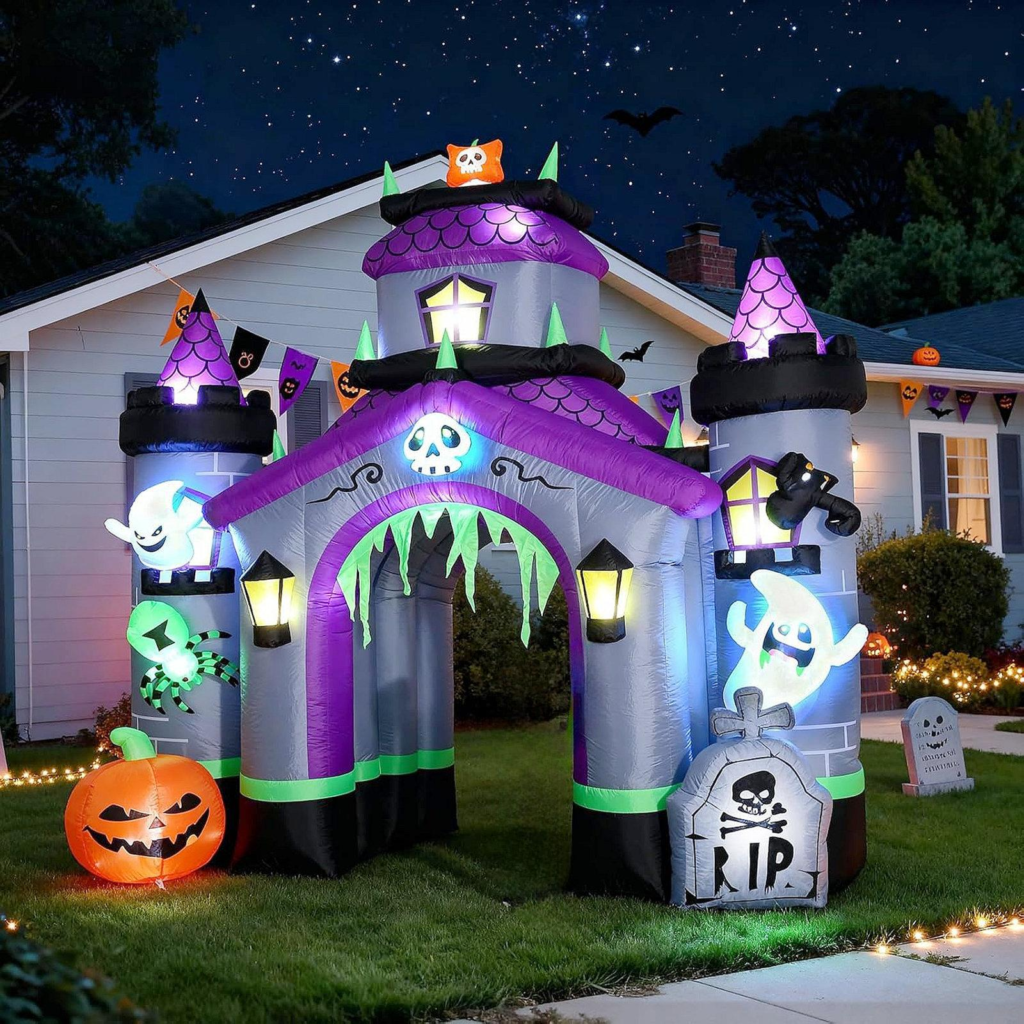
As decorações infláveis de Halloween tornaram-se uma escolha popular para exposições residenciais, locais comerciais, shopping centers, parques temáticos e eventos sazonais. Grandes abóboras, fantasmas, esqueletos, casas mal-assombradas e figuras iluminadas podem criar um efeito visual impressionante sem exigir estruturas permanentes complexas. Para os fabricantes, porém, produzir uma decoração inflável que seja esteticamente atraente é apenas parte do trabalho. O material também deve resistir à exposição ao ar livre, às repetidas inflações e deflações, ao manuseio durante a instalação e ao armazenamento entre os eventos sazonais.
A seleção do tecido influencia diretamente a vida útil do produto final, sua aparência, peso e custo de produção. Materiais infláveis tradicionais podem oferecer proteção à água ou resistência adequada, mas nem sempre proporcionam o equilíbrio certo entre flexibilidade, peso, hermeticidade e desempenho de processamento para cada projeto.
Tecido revestido de TPU oferece aos fabricantes mais uma opção de material. Ao combinar uma base têxtil com um revestimento de poliuretano termoplástico, é possível obter propriedades úteis para diferentes estruturas infláveis, desde figuras decorativas leves até grandes adereços externos que exigem maior resistência mecânica. A construção adequada depende da estrutura do produto, das condições de operação e da vida útil esperada.
Quais são os requisitos de material importantes para decorações infláveis de Halloween?
As decorações infláveis de Halloween costumam ser utilizadas em ambientes onde as condições climáticas e de manuseio são difíceis de controlar. Uma decoração exposta no jardim da frente pode enfrentar chuva, luz solar, variações de temperatura e contato com grama, pavimentação ou objetos ao redor. Instalações comerciais também podem envolver transporte, montagem e desmontagem frequentes.
Essas condições geram vários requisitos de material.
Resistência à água para exposições ao ar livre
A chuva e a umidade do solo podem afetar a aparência e o desempenho de decorações externas. Um tecido com um revestimento impermeável adequado ajuda a evitar que a água penetre na estrutura têxtil. Isso é especialmente importante para figuras decorativas colocadas em gramados, próximas a entradas ou em áreas comerciais abertas.
A resistência à água deve ser considerada junto com a construção do produto final. Orifícios de costura, pontos de conexão, zíperes, válvulas e outras aberturas podem permitir a entrada de água mesmo quando o tecido principal possui um revestimento impermeável. Os fabricantes precisam avaliar a estrutura completa, em vez de confiar apenas no revestimento.
Flexibilidade durante a inflação e a deflação
As decorações infláveis mudam de forma repetidamente ao serem infladas, dobradas, embaladas e armazenadas. O tecido deve suportar esse movimento sem ficar excessivamente rígido ou apresentar danos nas áreas mais solicitadas.
Revestimentos flexíveis de TPU podem ajudar a manter a maleabilidade do material, embora o desempenho final dependa da formulação do TPU, da espessura do revestimento, do substrato têxtil e da temperatura de operação. Um tecido adequado para um ornamento inflável compacto pode não ser apropriado para uma estrutura grande que sofre tensões maiores.
Resistência mecânica para uso repetido
Decorações externas podem ser movimentadas, dobradas, puxadas e expostas a contatos acidentais. Materiais finos podem reduzir o peso do produto, mas podem ser menos adequados para designs com alta tensão nos cantos, pontos de fixação ou estruturas de suporte.
Portanto, a resistência ao rasgo e à abrasão devem ser consideradas durante a seleção do material. O tecido deve corresponder às condições de manuseio esperadas, em vez de apenas atender a uma meta mínima de peso.
Peso adequado para transporte e instalação
Muitas decorações sazonais são projetadas para serem guardadas após o uso. Um peso menor do tecido pode reduzir as exigências de transporte e armazenamento, especialmente para grandes figuras decorativas. No entanto, uma construção leve não deve comprometer a resistência necessária ao produto.
O equilíbrio correto depende das dimensões, do método de inflação, da estrutura interna e da exposição esperada da decoração.
Como o tecido revestido com TPU apoia a produção de decorações infláveis?
O tecido revestido com TPU consiste em um substrato têxtil combinado com uma camada de poliuretano termoplástico. O tecido fornece grande parte do suporte mecânico, enquanto o revestimento de TPU contribui com propriedades como resistência à água, flexibilidade e a possibilidade de processos de união por calor.
Essa combinação dá aos fabricantes margem para selecionar diferentes construções de tecido para distintas aplicações infláveis.
Uma combinação de resistência do tecido e desempenho do revestimento
O tecido base influencia a resistência à tração, a resistência ao rasgo, a estabilidade dimensional e o peso total. Náilon e poliéster são substratos comuns em tecidos técnicos revestidos, mas suas características de desempenho diferem.
O náilon costuma ser escolhido quando flexibilidade e resistência mecânica são importantes. Já o poliéster pode ser útil quando a estabilidade dimensional e a resistência a mudanças relacionadas à umidade são prioridades. A construção do revestimento também deve ser levada em conta, pois o substrato sozinho não determina o desempenho do material final.
Para decorações infláveis de Halloween, os fabricantes devem avaliar o tecido revestido com TPU como um todo, em vez de escolher um material apenas pela especificação têxtil.
Proteção impermeável para aplicações externas
Os revestimentos de TPU podem formar uma camada protetora sobre o substrato têxtil. Quando o revestimento é contínuo e bem fabricado, ajuda a impedir que a água atravesse o próprio tecido.
Isso torna os materiais revestidos com TPU dignos de consideração para abóboras infláveis, fantasmas, esqueletos, arcos decorativos e outros adereços sazonais destinados ao exterior. Ainda é necessário avaliar costuras, fechamentos e pontos de conexão, pois a resistência à água do produto final depende de mais do que apenas a superfície do tecido.
Flexibilidade para dobrar e armazenar
As decorações sazonais nem sempre permanecem infladas durante todo o ano. Muitos produtos são desinflados, dobrados, embalados e armazenados por vários meses antes de serem novamente utilizados.
Um tecido revestido flexível pode facilitar a dobragem e o manuseio. A seleção do material deve levar em conta a flexão e a compressão repetidas, especialmente em torno de dobras, cantos e áreas onde o tecido entra em contato com suportes internos.
Os fabricantes devem testar amostras através de ciclos repetidos de inflação, deflação e dobragem. Um tecido que se comporta bem em condições novas pode apresentar desempenho diferente após longo armazenamento ou uso recorrente.
O tecido leve de TPU é adequado para decorações infláveis de Halloween?
O peso é uma consideração importante para os fabricantes de decorações infláveis. Grandes figuras podem exigir quantidades substanciais de tecido, e o material contribui para o peso total do produto. Uma construção mais leve pode tornar o transporte, a instalação e o armazenamento sazonal mais convenientes.
Tecidos leves revestidos com TPU podem ser considerados para figuras decorativas menores e produtos infláveis onde a portabilidade é prioridade.
Por exemplo, construções de náilon 20D revestido com TPU e de poliéster leve podem ser avaliadas para decorações infláveis compactas, pequenas abóboras, fantasmas leves e outros produtos com demandas estruturais relativamente modestas. Sua adequação depende da especificação específica do tecido e do design do produto final.
Onde os materiais leves oferecem valor prático
Tecidos leves podem trazer diversas vantagens na fabricação e no produto:
- O menor peso do material pode reduzir o peso total de produtos infláveis compactos.
- Construções flexíveis podem facilitar a dobragem e a embalagem.
- Embalagens menores de tecido podem simplificar o transporte e o armazenamento em depósito.
- Materiais leves podem ser adequados para produtos que não sofrem alta tensão mecânica.
- A flexibilidade do material pode sustentar formas decorativas com superfícies curvas e múltiplos painéis.
These benefits are most relevant when the product design does not require heavy reinforcement or high resistance to repeated physical contact.
Why lightweight should not be the only selection criterion
A large outdoor inflatable decoration may experience wind pressure, movement around its anchor points, and tension across its panels. A very lightweight fabric may not provide sufficient resistance for these conditions.
Manufacturers should consider fabric weight together with tensile strength, tear resistance, coating adhesion, and the dimensions of the inflatable structure. Reinforcement may also be required around tie-down points, seams, and other concentrated stress areas.
A lightweight fabric is not automatically the most economical option. If the finished decoration requires frequent repairs or replacement, the initial material savings may be offset by higher service costs.
When Should Manufacturers Choose 210D, 420D, or 840D TPU Coated Fabric?
Not every Halloween inflatable decoration needs a lightweight fabric. Larger outdoor props, reusable commercial displays, and products exposed to frequent handling may require a more robust textile construction.
TPU coated nylon fabrics in 210D, 420D, and 840D constructions provide different options for manufacturers evaluating strength, weight, and handling requirements. Denier describes the linear density of the yarn, but it should not be treated as a direct measurement of finished fabric strength. Weave construction, coating, yarn quality, and manufacturing processes also influence performance.
| Fabric construction | Potential application direction | Main selection consideration |
|---|---|---|
| 210D TPU coated nylon | Medium-sized decorative inflatables and general-purpose props | Balance between weight and mechanical performance |
| Nylon revestido com TPU 420D | Larger outdoor decorations and reusable event props | Greater fabric robustness for repeated handling |
| Nylon revestido com TPU 840D | Heavy-duty decorative structures and demanding applications | Higher material weight and the need for stronger construction |
The table provides a starting point for material evaluation rather than a universal specification. Actual suitability must be confirmed through technical data and product testing.
210D for moderate material requirements
A 210D construction may be worth evaluating for inflatable decorations that need a balance between manageable weight and fabric strength. It can be considered for medium-sized pumpkins, ghosts, and other decorative figures, provided the design does not place excessive stress on the material.
The coating type and thickness should be matched to the intended application. Manufacturers should also check whether the selected construction can be processed using their planned joining method.
420D for larger and reusable props
A 420D TPU coated nylon fabric may be more appropriate when the decoration has a larger surface area or is expected to undergo frequent transportation and installation.
For example, commercial event operators may reuse the same inflatable decorations across several seasonal campaigns. In this case, resistance to handling damage becomes an important part of material selection.
Manufacturers should pay particular attention to the areas around attachment points, seams, and corners. These locations may experience more concentrated stress than the main fabric panels.
840D for demanding applications
An 840D construction can be considered for applications where a heavier textile base is needed. Large outdoor props, rugged event structures, and decorations that experience frequent handling may require this type of material evaluation.
However, a heavier fabric can also increase the total product weight and affect folding, transportation, and installation. It may not be necessary for small decorative figures or products designed for occasional indoor use.
The best construction is the one that meets the product’s mechanical requirements without adding unnecessary material weight or cost.
How Does TPU Coated Fabric Perform in Outdoor Halloween Conditions?
Outdoor use introduces several variables that manufacturers cannot fully control. Rain, sunlight, temperature changes, wind, and contact with surrounding surfaces can all affect the finished decoration.
Material selection should therefore be based on the actual operating environment.
Rain and moisture exposure
Waterproof TPU coated fabric can help protect the textile substrate from direct water penetration. This is useful for inflatable decorations displayed in gardens, outdoor shopping areas, and public event spaces.
However, the finished product still needs appropriate construction around seams, zippers, electrical connections, and other openings. For blower-driven inflatables, the design may also include ventilation openings that are part of normal operation. These should not be confused with defects in the coated fabric.
Manufacturers should test the complete decoration under conditions that reflect its intended use.
Sunlight and outdoor aging
Decorations displayed outdoors may receive prolonged exposure to sunlight. UV radiation can gradually affect polymers, coatings, colors, and other exposed components.
The degree of change depends on the TPU formulation, pigments, stabilizers, coating thickness, and exposure conditions. A general TPU fabric specification does not automatically establish long-term UV resistance.
For products intended for repeated outdoor use, manufacturers should request relevant test information from the material supplier and conduct aging evaluations where necessary. Color retention should also be checked, especially for bright orange, purple, green, and other colors commonly used in Halloween designs.
Temperature changes
Halloween displays may be installed in different climates. Some products are used in relatively warm autumn conditions, while others may experience cold nights or sudden temperature changes.
TPU formulations vary in low-temperature flexibility. Manufacturers should confirm the operating temperature range of the selected fabric rather than assuming that all TPU coated materials behave identically.
Cold-temperature testing can help identify whether the material becomes too stiff, develops surface cracks, or loses flexibility during folding and handling.
Wind and repeated movement
Large inflatable decorations can move under wind pressure. This movement may transfer stress to seams, anchor points, and connection areas.
Fabric strength is only one part of the solution. The decoration also needs suitable anchoring, balanced panel design, and reinforcement at stress concentration points.
For outdoor installations, manufacturers should evaluate the complete structure under realistic conditions rather than expecting the coated fabric alone to prevent wind-related damage.
Does Airtight TPU Fabric Suit Every Type of Halloween Inflatable?
The term inflatable decoration covers several different product structures. Some products use a sealed air chamber, while others rely on a continuous air supply from an electric blower. These two designs have different material and construction requirements.
Understanding the difference is important when selecting TPU coated fabric.
Sealed inflatable structures
A sealed inflatable product is designed to retain air within an enclosed chamber. Examples in other industries include inflatable sleeping pads, pillows, air cells, and certain portable structures.
For this type of construction, airtightness is a major material requirement. The coated fabric and its joining points must work together to limit air leakage.
Airtight TPU fabrics may be considered for sealed decorative products where the design requires air retention. Manufacturers need to verify the coating construction, joining compatibility, and air retention performance of the selected material.
Continuous-air inflatable decorations
Many large Halloween lawn decorations use an electric blower to maintain their shape. These products are not necessarily designed to retain air after the blower is switched off. Instead, air continuously enters the structure and escapes through designated openings or fabric areas.
For this type of product, the material requirements may place greater emphasis on lightweight construction, tear resistance, water resistance, flexibility, and seam durability.
Selecting a fabric only because it has high airtightness may not provide a meaningful advantage if the product is designed for continuous airflow. Manufacturers should match the material to the actual inflation method.
Why product structure should guide material selection
Before requesting a fabric quotation, manufacturers should clarify several design details:
- Is the product sealed or continuously inflated by a blower?
- What are the finished dimensions and expected operating pressure?
- Will the decoration be used indoors, outdoors, or in both environments?
- How frequently will it be inflated, deflated, folded, and transported?
- Are there areas that require additional reinforcement?
- Which joining process will be used during production?
These details help suppliers recommend a more suitable construction and reduce the risk of selecting a material that does not match the finished product.
How Does Fabric Joining Affect the Durability of Inflatable Decorations?
The durability of an inflatable decoration depends on both the fabric and the way its panels are joined. Even a technically suitable coated material can fail if the seams are poorly designed or processed.
For TPU coated fabric, high-frequency welding is one possible joining method, depending on the material construction and processing requirements. The compatibility of a specific fabric with HF welding should always be confirmed through production trials.
HF welding and seam consistency
High-frequency welding uses electromagnetic energy to generate heat within compatible thermoplastic materials. Under suitable processing conditions, it can create a bonded seam without relying on conventional needle stitching.
For inflatable products, seam quality affects air retention, structural strength, and long-term reliability. Manufacturers should evaluate welding temperature, pressure, processing time, electrode design, and material thickness.
A production setting that works for one TPU coated fabric may not work for another. Changes in coating formulation, substrate, and thickness can affect the welding window.
Reinforcement around high-stress areas
Certain parts of a Halloween inflatable decoration experience more stress than others. These may include:
- Tie-down and anchoring points
- Connections between the main body and decorative components
- Corners and curved transitions
- Valve or blower connection areas
- Handles and transportation points
Additional fabric layers or structural reinforcement may be required in these locations. The reinforcement design should distribute the load instead of creating an abrupt transition that concentrates stress at its edge.
Balancing appearance and manufacturing performance
Halloween decorations often contain complex shapes, contrasting colors, printed patterns, and multiple connected components. The material must support the intended visual design while remaining practical for cutting, joining, and assembly.
Manufacturers should test the complete panel construction before mass production. A visually attractive design may still create production difficulties if narrow seams, sharp corners, or complicated panel intersections are difficult to process consistently.
What Tests Should Manufacturers Conduct Before Mass Production?
Material samples and finished product prototypes should be evaluated before large-scale production. Testing helps identify weaknesses that may not be obvious from a technical data sheet or a visual inspection.
The exact test plan depends on whether the decoration is sealed or blower-driven, its size, and the conditions under which it will be used.
| Test item | What it evaluates | Por que isso importa |
|---|---|---|
| Resistência à tração | Resistance to pulling forces | Helps assess fabric suitability for structural loads |
| Resistência ao rasgo | Resistance to tear propagation | Important around corners and damaged areas |
| Adesão do revestimento | Bonding between coating and textile | Helps identify coating separation risks |
| Resistência à água | Resistance to water penetration | Relevant to outdoor displays |
| Flexibility testing | Material behavior during bending and folding | Supports repeated storage and handling |
| Seam strength | Strength of joined fabric panels | Helps assess finished product reliability |
| Air retention testing | Leakage through fabric and seams | Required for sealed inflatable structures |
| Aging evaluation | Changes after environmental exposure | Useful for products intended for repeated outdoor use |
For sealed products, air leakage testing should include both the fabric and the finished seams. For continuous-air decorations, manufacturers should instead evaluate blower performance, airflow, structural stability, and the behavior of the material during extended operation.
A prototype should also be inflated and deflated repeatedly. This helps identify problems around welded seams, folds, valves, and reinforced areas before production quantities increase.
How Can Manufacturers Select the Right TPU Fabric Supplier?
The material supplier plays an important role in maintaining product consistency. For manufacturers producing seasonal decorations, material availability, specification control, and technical communication can influence production schedules and final product quality.
A supplier should be able to provide more than a general product description.
Check the technical specifications
Manufacturers should request information about the textile substrate, denier, coating type, thickness, weight, and relevant performance test results.
For TPU coated fabrics, it is also useful to clarify whether the coating is single-sided or double-sided and whether the material uses a polyester-based or polyether-based TPU formulation. These details can influence application suitability and processing behavior.
Confirm processing compatibility
If the production line uses HF welding, the supplier should help confirm whether the selected construction is compatible with the planned process. Sample testing is still necessary because actual welding performance depends on the material and machine settings.
Manufacturers should also check the material’s suitability for cutting, printing, folding, and other operations involved in the production process.
Evaluate customization options
Halloween products often use distinctive colors and visual designs. Material customization may involve color, substrate, coating thickness, fabric weight, and other construction details.
A supplier with customization capabilities can help manufacturers match the material to a specific product design. However, any change in formulation or construction should be reviewed because it may affect mechanical properties and processing performance.
Consider supply consistency
Seasonal production schedules can be demanding. Manufacturers may need to prepare materials well before the Halloween selling period and maintain consistent specifications across different production batches.
A reliable supply arrangement should include clear technical specifications, sample approval, production planning, and quality checks. These steps help reduce unexpected changes during mass production.
Final Considerations for Halloween Inflatable Decoration Manufacturers
TPU coated fabric can provide a useful material option for manufacturers producing Halloween inflatable decorations, particularly where waterproof protection, flexibility, manageable weight, and textile strength are important.
Lightweight TPU coated nylon and polyester constructions may suit compact decorative products, while 210D, 420D, and 840D TPU coated nylon fabrics can be evaluated for larger or more demanding applications. Airtight TPU fabrics may also be relevant to sealed inflatable structures, but they should not be treated as a universal requirement for blower-driven decorations.
The most suitable material depends on the product’s inflation method, dimensions, outdoor exposure, handling frequency, and manufacturing process. Fabric testing, seam evaluation, and prototype trials are essential before mass production.
Xianglong Polymer Fabric supplies TPU coated fabrics in different textile constructions for inflatable, outdoor, and technical applications. Manufacturers can evaluate suitable options according to their required fabric weight, substrate, coating construction, and finished product design. Selecting the material around real production and operating conditions is a more reliable approach than choosing a fabric based on a single specification.