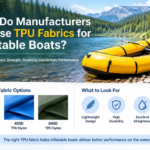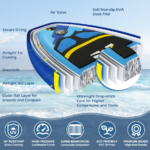


The material used in an inflatable kayak affects much more than its appearance. It determines how well the boat holds air, how easily it folds for storage, how much weight users need to carry, and how the structure responds to repeated contact with water, equipment, and rough surfaces.
For manufacturers, the decision usually comes down to finding a suitable balance between fabric strength, flexibility, airtightness, and production requirements. TPU-coated nylon is one material option used in inflatable products because it combines a woven textile base with a thermoplastic polyurethane coating. The nylon provides structural support, while the TPU layer contributes to air retention and allows compatible welding processes.
However, there is no single fabric specification that suits every inflatable kayak. A lightweight recreational model has different requirements from a touring kayak or a model intended for more demanding water conditions. Fabric denier, coating construction, thickness, and seam design all need to be considered in relation to the finished product.
What Materials Are Used to Make Inflatable Kayaks?
Inflatable kayaks are commonly manufactured using coated textile materials. The fabric needs to form an airtight structure while remaining flexible enough for folding, transportation, and regular handling.
PVC-coated fabrics and TPU-coated fabrics are two material options found in inflatable product manufacturing. Both can be used in suitable constructions, but their material characteristics and processing requirements differ.
PVC-Coated Fabric
PVC-coated fabric has been used in inflatable products for many years. It combines a textile base with a polyvinyl chloride coating to provide water resistance and a surface that can be processed using compatible joining methods.
For manufacturers, PVC may be considered when material cost, existing production equipment, and established manufacturing processes are important factors. Its suitability depends on the specific formulation, fabric construction, and intended service conditions.
One consideration is how the material behaves during repeated folding and storage. Some PVC constructions may become less flexible after prolonged exposure to certain environmental conditions. The actual result depends on the formulation and product design, so manufacturers should evaluate the material through relevant aging and folding tests.
TPU-Coated Nylon
TPU-coated nylon combines a woven nylon substrate with a thermoplastic polyurethane coating. The two layers perform different functions.
The nylon base contributes to tensile strength and tear resistance. The TPU coating provides a flexible barrier that supports airtight construction and can be joined through suitable heat-sealing or high-frequency welding processes.
For inflatable kayaks, this combination is worth evaluating when the product requires a balance of mechanical strength, flexibility, and air retention.
TPU-coated nylon is available in different fabric constructions. Manufacturers may compare 210D and 420D nylon according to the required weight, mechanical properties, and component design. The denier value alone does not determine the final performance.
TPU vs PVC Fabric for Inflatable Kayaks
The choice between TPU and PVC should be based on the finished kayak’s requirements rather than a general assumption that one material is always better.
Both materials have different formulations and constructions. Their performance can vary according to the textile base, coating thickness, additives, manufacturing process, and environmental exposure.
| Evaluation Factor | TPU-Coated Nylon | PVC-Coated Fabric |
|---|---|---|
| Textile base | Commonly woven nylon | Polyester or other textile bases |
| Flexibilidade | Depends on TPU formulation and construction | Depends on PVC formulation and plasticizer system |
| Estanqueidade ao ar | Can provide suitable air-barrier performance | Can provide suitable air-barrier performance |
| Joining methods | Compatible with suitable HF welding and heat sealing | Compatible with suitable welding processes |
| Folding behavior | Requires evaluation under repeated folding | Requires evaluation under repeated folding |
| Seleção de material | Often considered for flexible technical inflatables | Often considered where established PVC processing and cost are priorities |
Flexibility and Repeated Folding
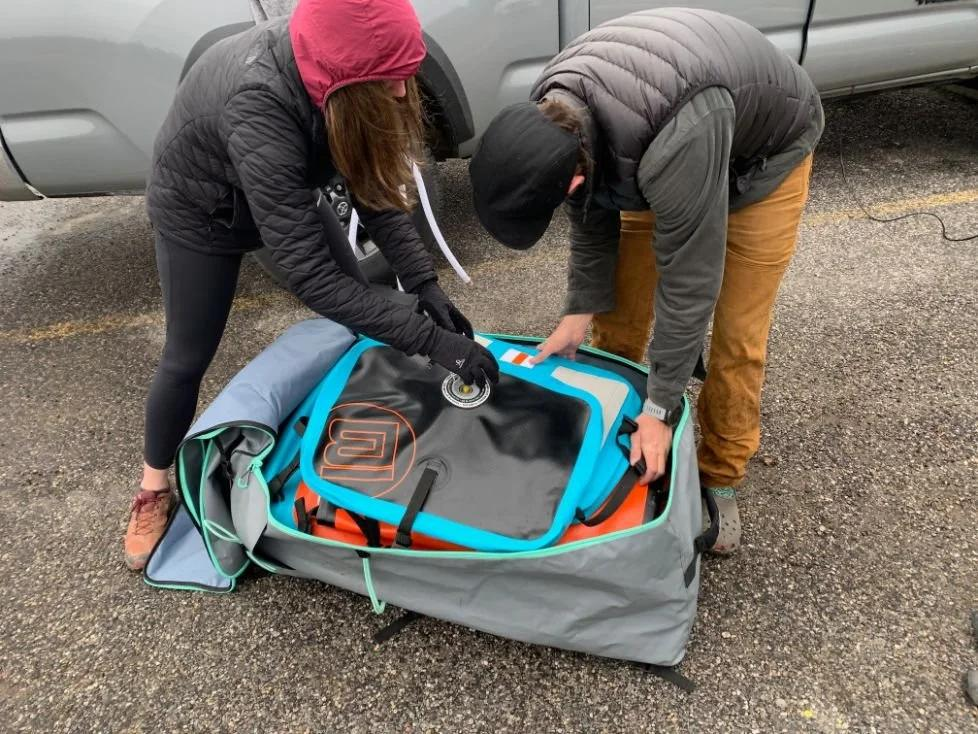
Inflatable kayaks are frequently deflated after use. Their fabric may be folded into a storage bag, transported in a vehicle, and unfolded again for the next trip.
The coating needs to remain attached to the textile base during this process. Repeated bending can place stress on the coating and the interface between the two layers.
TPU-coated nylon is often considered for products where flexibility during folding is important. However, the result depends on the TPU formulation, coating thickness, and fabric construction.
Manufacturers should test actual samples through repeated folding cycles. After testing, the material should be inspected for surface cracking, coating separation, and changes in airtight performance.
Airtightness and Seam Construction
The coated fabric must limit air transmission through its surface. At the same time, the seams and valve connections need to maintain reliable sealing.
TPU has thermoplastic properties that make suitable TPU-coated fabrics compatible with high-frequency welding and heat sealing. These processes can create sealed joints without relying on conventional needle stitching.
The quality of the finished seam still depends on material compatibility, joint design, equipment settings, and operator control. Neither TPU nor PVC automatically guarantees a leak-free kayak.
Environmental Exposure
Inflatable kayaks are used in environments involving water, sunlight, humidity, and temperature changes. Material selection should reflect the expected conditions.
Polyether-based TPU is often considered when hydrolysis resistance is important, particularly for products exposed to prolonged moisture. However, manufacturers should review the specific formulation and available test data rather than assume that every TPU coating provides the same level of resistance.
For products intended for frequent outdoor use, environmental aging tests can help assess whether the coating and textile structure retain their required properties.
Is 210D or 420D TPU Coated Nylon Better for an Inflatable Kayak?
Denier is an important specification when comparing nylon fabrics. It describes the linear mass of the yarn. A higher denier generally indicates a heavier yarn, but it does not automatically mean that the finished fabric will perform better in every application.
For inflatable kayak development, 210D and 420D TPU-coated nylon are two constructions worth comparing. Their suitability depends on the target product weight, mechanical requirements, coating structure, and manufacturing process.
210D TPU Coated Nylon for Weight-Conscious Designs
O nylon revestido com TPU 210D pode ser considerado quando a equipe de produto precisa controlar o peso do tecido, mantendo o desempenho estrutural exigido.
Uma construção têxtil mais leve pode ajudar a reduzir a contribuição do material para o peso total do caiaque acabado. Isso é relevante para modelos recreativos que os usuários precisam transportar entre o veículo, a área de armazenamento e o ponto de lançamento.
No entanto, a construção leve não deve comprometer a resistência necessária. Os fabricantes precisam avaliar a resistência à tração, a resistência ao rasgo, a adesão do revestimento e o comportamento das costuras soldadas.
A Nylon 210D revestido com TPU XL utiliza uma base de nylon 210D com revestimento de TPU. Suas informações publicadas sobre o produto indicam uma espessura de revestimento de TPU de 0,15 mm em um único lado e um peso total do tecido de 300 ± 15 g/m². Essas especificações servem como referência para comparações iniciais, mas a adequação do material para um caiaque específico ainda precisa ser confirmada por meio de testes de amostra.
Nylon Revestido com TPU 420D para Requisitos de Construção Mais Exigentes
O nylon revestido com TPU 420D oferece uma construção têxtil mais pesada, que os fabricantes podem avaliar quando um projeto exige um equilíbrio diferente entre resistência, resistência à abrasão e peso.
Pode ser considerado para componentes selecionados de caiaques ou para produtos que devem enfrentar condições de manuseio mais rigorosas. A adequação para todo o caiaque depende do design e dos resultados dos testes.
A Nylon 420D revestido com TPU XL apresenta, em sua ficha técnica, uma espessura de revestimento de TPU de 0,15 mm em um único lado e um peso total do tecido de 375 ± 20 g/m². O tecido base listado é nylon 420D.
Ao comparar essa construção com a de 210D, os fabricantes devem analisar as especificações completas, em vez de presumir que o maior denier proporcionará automaticamente o desempenho necessário.
Como Devem Ser Comparadas as Duas Opções?
A equipe de produto deve comparar ambos os materiais utilizando os mesmos critérios de avaliação.
As medições importantes incluem:
- Peso total do tecido e espessura
- Resistência à tração nas direções da urdidura e da trama
- Resistência ao rasgo
- Resistência à abrasão
- Adesão do revestimento
- Permeabilidade ao ar
- Flexibilidade após dobragens repetidas
- Resistência das costuras soldadas e desempenho contra vazamentos
Os resultados devem ser considerados juntamente com o uso pretendido do caiaque. Um material que atende aos requisitos de um caiaque recreativo para lagos pode não ser adequado para um produto projetado para contato frequente com margens rochosas de rios.
Quais Partes de um Caiaque Inflável Precisam de Tecido Mais Resistente?
Um caiaque inflável é composto por vários componentes, e cada um deles está sujeito a diferentes forças. As câmaras de ar principais, o fundo, a área do assento e os pontos de fixação não devem ser tratados automaticamente como tendo requisitos de material idênticos.
Um projeto de produto que considere essas diferenças pode ajudar a controlar o peso do material, mantendo o desempenho exigido.
Câmaras Laterais e Tubos Principais de Ar
As câmaras laterais mantêm a estrutura inflável do caiaque. Elas precisam conter ar, preservar a forma projetada e suportar as cargas geradas durante o uso.
A seleção do material deve levar em conta a retenção de ar, a resistência à tração, a adesão do revestimento e a construção das costuras.
A geometria das câmaras também é importante. Painéis curvos, seções finais e longas juntas soldadas podem criar condições de produção distintas. Os fabricantes devem processar amostras representativas usando o equipamento previsto antes de aprovar o material.
Painéis do Fundo
O fundo está exposto a um conjunto diferente de condições. Os usuários podem sentar-se, mover equipamentos ou colocar bolsas e outros itens sobre sua superfície. Durante o lançamento e o pouso, a parte inferior também pode entrar em contato com areia, cascalho e terreno irregular.
Dependendo do design do produto, os fabricantes podem avaliar uma construção de tecido mais robusta para o fundo do que para as câmaras laterais.
Uma construção de nylon revestido com TPU 420D pode valer a pena ser testada para designs selecionados de fundo. Opções mais pesadas também podem ser consideradas onde as expectativas de abrasão e cargas mecânicas justifiquem o peso adicional do material.
A decisão final deve ser respaldada por testes de abrasão, perfuração, rasgo e de produto acabado.
Suportes do Assento e Pontos de Fixação
Alças, suportes do assento, apoios para os pés e pontos de fixação de acessórios podem concentrar cargas em áreas relativamente pequenas.
Adicionar um painel de reforço pode ajudar a distribuir essas cargas, mas sua forma e método de junção são igualmente importantes. Um reforço mal projetado pode transferir o estresse para a borda do painel adicionado, em vez de reduzi-lo.
Os fabricantes devem testar a estrutura completa de fixação por meio de testes adequados de tração ou de carga repetida. O tecido circundante e as juntas soldadas devem ser inspecionados quanto a deformações ou separações.
O Que Torna o Tecido de TPU Estanque Adequado para Caiaques Infláveis?
A estanqueidade é um dos requisitos de material mais importantes para caiaques infláveis. O tecido precisa limitar a perda de ar através de sua superfície, enquanto a estrutura final deve manter costuras e conexões de válvula confiáveis.
O desempenho do tecido de TPU estanque depende de vários fatores relacionados.
Espessura e Uniformidade do Revestimento de TPU
A espessura do revestimento afeta o peso total do tecido, a flexibilidade e as características de barreira. Um revestimento mais espesso não é automaticamente melhor, pois também pode alterar a rigidez do material e seu comportamento durante o processamento.
Um revestimento uniforme é importante para um desempenho consistente do material. Variações na espessura do revestimento ou na condição da superfície podem afetar tanto a retenção de ar quanto os resultados da soldagem.
Os fabricantes devem solicitar especificações do revestimento ao fornecedor e verificar propriedades importantes por meio de inspeção e testes de entrada.
Adesão do Revestimento
O revestimento de TPU precisa permanecer ligado à base de nylon durante a dobragem, a inflação, a deflação e o manuseio normal.
Se a adesão for insuficiente, o revestimento pode se separar do substrato têxtil. Isso pode afetar a condição da superfície do material e o desempenho de vedação a longo prazo.
A adesão do revestimento deve ser avaliada por um método de teste apropriado. Para produtos que devem passar por dobragens repetidas, testes após condicionamento ou ciclagem mecânica podem fornecer informações adicionais.
Permeabilidade ao Ar
Os testes de permeabilidade ao ar ajudam a avaliar quanto ar passa pelo tecido sob condições definidas.
No entanto, os testes em nível de tecido são apenas uma parte da avaliação. Um caiaque acabado também contém costuras soldadas, válvulas e outras conexões que podem afetar a retenção de pressão.
Portanto, os fabricantes devem realizar tanto testes de material quanto verificações de vazamento do produto acabado. Isso ajuda a distinguir um problema no próprio tecido de uma questão relacionada à montagem.
How Are TPU Fabrics Welded During Inflatable Kayak Production?
The joining process has a direct effect on the quality of the finished kayak. Even a suitable fabric can produce inconsistent results if the welding process is not properly matched to the material.
TPU-coated nylon can be processed using compatible high-frequency welding or heat-sealing equipment.
Soldagem de Alta Frequência
High-frequency welding uses electromagnetic energy to generate heat within compatible thermoplastic materials. Pressure is applied during the process to create a bonded joint.
For inflatable kayak production, the method may be used for chamber seams and other suitable connections.
The welding result depends on several factors:
- TPU formulation and coating construction
- Fabric thickness and number of layers
- Electrode shape and contact area
- Welding time and applied pressure
- Equipment condition and process consistency
- Material positioning and surface cleanliness
Manufacturers should establish a suitable processing window through sample trials. The same parameters should not be assumed to work for every TPU-coated fabric.
Selagem por Calor
Heat sealing uses controlled temperature and pressure to join compatible thermoplastic surfaces.
The process needs to be adjusted to the specific fabric. Insufficient heat may result in incomplete bonding, while excessive heat can damage the coating or affect the textile base.
Production trials should examine the seam appearance, bonding strength, and air leakage. The results should be documented so that the process can be repeated consistently.
Why Seam Testing Matters
Airtight fabric does not guarantee airtight seams. Joint design, overlap width, welding conditions, and panel alignment all affect the finished connection.
Manufacturers should evaluate welded samples before moving into full prototype production.
Useful checks include peel strength, seam tensile strength, visual inspection, and leakage testing under defined pressure conditions. Representative kayak assemblies should also be tested because flat welded samples cannot reproduce every condition found in the finished product.
What Tests Should Be Completed Before an Inflatable Kayak Goes into Production?
Material approval should connect supplier specifications with actual manufacturing conditions. A fabric that looks suitable on paper may behave differently after cutting, welding, folding, and inflation.
A practical validation process should cover the material, the welded joints, and the finished kayak.
Fabric Inspection
Incoming material should be checked against the approved specification.
The inspection may include fabric weight, thickness, width, coating appearance, surface defects, and batch consistency. Where required, samples can be retained for comparison with later deliveries.
Mechanical Testing
Tensile strength and tear resistance provide information about how the fabric responds to mechanical loads. Abrasion and puncture tests may also be necessary depending on the kayak’s intended use.
The test methods should be agreed upon before material approval. Results from different methods should not be treated as directly comparable.
Folding and Inflation Cycles
Repeated folding and inflation can place stress on the coating and welded joints.
Manufacturers can develop a cycling test based on the expected product handling conditions. After the test, the fabric and seams should be inspected for coating damage, separation, deformation, and leakage.
Environmental Evaluation
Outdoor kayaks may be exposed to sunlight, moisture, and temperature changes during use and storage.
Where relevant, manufacturers may conduct UV exposure, humidity, hydrolysis, or temperature-aging tests. The selection of test conditions should reflect the intended market and expected service environment.
After conditioning, the material should be checked for changes in flexibility, adhesion, appearance, mechanical performance, and air retention.
Prototype Water Testing
A finished prototype should be evaluated under controlled water-use conditions before production approval.
The test plan may include pressure retention, load performance, stability, handling, and inspection of high-stress areas. Any abnormal pressure loss should be investigated to determine whether it comes from the fabric, a welded seam, a valve, or another component.
This step helps prevent material changes from being made when the actual issue lies elsewhere in the product structure.
How Can Manufacturers Keep Inflatable Kayak Material Costs Under Control?
Material cost is an important part of product development, but choosing the lowest-priced fabric does not always result in the lowest total production cost.
A fabric that is difficult to weld or produces inconsistent seams can increase scrap rates and labor requirements. A material that does not meet the expected service conditions may also increase warranty and replacement costs.
Product teams should evaluate the complete manufacturing impact.
Consider the Weight of the Finished Product
The weight of one fabric sample does not show the full impact on the finished kayak. Manufacturers need to calculate material consumption across all panels, reinforcements, and accessories.
A heavier fabric may be justified in a high-wear area but unnecessary in other components. Reviewing the material distribution can help avoid adding weight where it does not address a specific requirement.
Balance Material Cost and Production Yield
The fabric should be compatible with the cutting and welding process. Material consistency can affect panel alignment, seam appearance, and production yield.
During sample production, manufacturers should record processing parameters and identify any recurring defects. This information helps the team assess whether a material is suitable for regular production rather than just a single prototype.
Control Changes Between Material Batches
A change in fabric weight, coating thickness, or surface condition may affect welding performance.
Manufacturers should maintain an approved material specification and review any proposed supplier or construction changes before using them in production. Incoming inspection and batch records help identify differences before they affect finished kayaks.
Where Can Manufacturers Source TPU-Coated Nylon for Inflatable Kayaks?
Material sourcing should begin with the actual product requirements. Suppliers need information about the kayak type, target weight, component structure, expected operating conditions, and joining process before they can recommend suitable fabric constructions.
Xianglong Polymer Fabric provides TPU-coated nylon options for inflatable applications, including 210D and 420D constructions. These materials can be reviewed against the required fabric weight, mechanical properties, coating structure, and welding process.
O Airtight TPU Fabrics collection includes fabric options for inflatable boats, kayaks, and rescue rafts. Manufacturers can review the available constructions and compare them according to their product requirements.
For water-based applications, the Water Sports & Marine material range provides further information about TPU fabrics used in inflatable and marine equipment.
Before confirming an order, manufacturers should request the relevant technical data sheet and samples. The selected fabric should be processed using the intended production equipment and validated through mechanical, welding, and finished-product tests.
The best material for an inflatable kayak depends on how the finished product will be used. TPU-coated nylon is worth considering when manufacturers need a combination of textile strength, flexible construction, airtight performance, and compatibility with suitable welding processes.
A 210D construction may be evaluated for designs where weight is important, while 420D nylon may be considered when the product requires a different balance of strength and weight. The floor, side chambers, and reinforcement areas may also have different material requirements.
The final specification should be based on complete fabric data, sample processing, seam testing, and prototype evaluation. Comparing materials under the same conditions gives manufacturers a more reliable basis for product development and production approval.