

Weight matters when outdoor equipment must be carried over long distances. For backpackers, mountaineers, and multi-day trekkers, a sleeping pad or inflatable pillow needs to provide comfort without taking up too much space or adding unnecessary weight. For manufacturers, achieving this balance depends heavily on the materials used in the product’s inflatable structure.
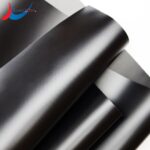
TPU laminated fabric is used in lightweight outdoor equipment because it can combine a textile backing with a thermoplastic polyurethane layer. The textile contributes dimensional stability and mechanical support, while the TPU layer provides a functional barrier for air retention. The performance of the finished product, however, depends on the fabric construction, film properties, joining process, and product design working together.
Selecting the right material therefore involves more than choosing the lightest available fabric. Manufacturers need to consider airtightness, flexibility, seam integrity, resistance to repeated folding, and the conditions in which the equipment will be used.
Why Does Material Weight Matter in Inflatable Outdoor Equipment?
Inflatable products are often designed to reduce packed volume and simplify transportation. A compact sleeping pad can fit inside a trekking backpack, while an inflatable pillow can replace bulkier foam alternatives. These advantages are only meaningful when the product remains reliable throughout repeated use.
The material contributes to both the packed weight and the structural performance of the finished item. A heavier laminate may offer useful reinforcement for a product exposed to rough ground, but that additional weight may be unnecessary for an inflatable pillow intended for occasional use on sheltered campsites.
Manufacturers should begin by defining the product’s intended conditions rather than setting an arbitrary minimum fabric weight.
For an ultralight sleeping pad, relevant considerations include the number of air chambers, the size of the contact area, the expected inflation pressure, and the level of protection provided by the outer surface. A pillow may require a different balance because its shape, loading pattern, and contact with the user differ from those of a sleeping pad.
The aim is to remove unnecessary material without compromising the requirements of the finished product.

How Does TPU Lamination Support Airtight Performance?
Textile fabrics alone are generally not suitable for retaining air in an inflatable chamber. Their woven or knitted structures contain openings that allow air to pass through. A continuous TPU layer can create the barrier required to hold air inside the product.
In TPU laminated fabric, the polymer layer is bonded to a textile substrate. The substrate may be selected for its weight, tensile properties, flexibility, and dimensional behavior, while the TPU layer is selected for its barrier performance and compatibility with the intended manufacturing process.
The quality of this construction depends on several factors.
Continuity of the TPU layer
Pinholes, coating defects, or inconsistent lamination can create potential leakage paths. Even when the fabric appears smooth, its barrier performance should be assessed using suitable inspection and testing methods.
Manufacturers should establish inspection criteria for the laminate and confirm that the material performs consistently across the supplied roll.
Bonding between the layers
The TPU layer must remain securely attached to the textile backing during handling, forming, inflation, and repeated folding. Poor bonding may lead to separation or changes in the surface structure, potentially affecting product durability.
Peel strength and other appropriate adhesion tests can help evaluate the laminate construction. Testing should reflect the intended product and the conditions likely to affect the bond during service.
Compatibility with the joining process
The laminate must also be compatible with the method used to assemble the inflatable product. Depending on the material construction and equipment, manufacturers may evaluate high-frequency welding or other suitable joining methods.
A material that performs well as a flat sample may behave differently when used in a narrow seam, curved chamber, or multi-layer joint. Representative production trials are necessary before approving a construction for manufacturing.
Which Fabric Construction Is Suitable for Sleeping Pads and Inflatable Pillows?
Sleeping pads and inflatable pillows share a need for air retention, but their material requirements are not identical. Product geometry, loading, surface contact, and packed dimensions all influence the most suitable construction.
| Design consideration | Inflatable sleeping pads | Almofadas infláveis |
|---|---|---|
| Loading conditions | Must support body weight over a larger contact area | Supports the head and neck over a smaller area |
| Structural design | May use multiple chambers, baffles, or internal supports | Often uses a compact chamber with a contoured shape |
| Surface requirements | Needs suitable resistance to ground contact and repeated placement | May prioritize softness, handling, and skin-contact comfort |
| Packed dimensions | Must fit the intended backpack or storage system | Usually designed for a particularly compact packed size |
| Material selection | Balances weight, durability, air retention, and dimensional stability | Balances low weight, flexibility, comfort, and seam reliability |
These differences should guide material trials. A construction selected for a lightweight pillow may not provide enough reinforcement for a sleeping pad exposed to uneven ground. Conversely, a heavier laminate designed for demanding ground contact may add unnecessary weight to a compact pillow.
Manufacturers should compare candidate materials in the intended product geometry rather than relying exclusively on generic fabric specifications.
How Can Manufacturers Reduce Weight Without Sacrificing Reliability?
Reducing fabric weight is a design exercise involving the entire inflatable structure. Changing the laminate alone may not deliver the expected result if the chamber layout, seam allowance, reinforcement, and valve assembly remain unnecessarily heavy.
Match the substrate to the application
The textile backing affects strength, handling, and dimensional stability. A lighter substrate may be suitable for products with limited mechanical demands, but its performance should be evaluated alongside the TPU layer and finished construction.
Manufacturers should compare tensile strength, tear behavior, flexibility, and dimensional stability under relevant conditions. Fabric density or denier can help describe the substrate, but neither measurement independently establishes the durability of the complete laminate.
Review the thickness of the laminate
A thinner construction can reduce material consumption and packed weight. However, reducing thickness may also change puncture resistance, tear behavior, handling characteristics, and the robustness of the joining area.
The appropriate thickness depends on the product’s expected loading, design, and intended service conditions. It should be established through testing rather than selected solely on the basis of the lowest available weight.
Optimize chamber geometry
Internal chamber design influences how the product distributes loads and retains its shape. Poorly positioned seams or abrupt transitions can concentrate stress in particular areas, potentially shortening product life.
Design teams should examine seam placement, chamber dimensions, corner geometry, and reinforcement requirements during prototype development. Adjusting the structure may improve performance without adding material across the entire product.
Avoid unnecessary reinforcement
Reinforcement can be valuable around valves, attachment points, and areas exposed to repeated loading. Applying the same reinforcement everywhere, however, can increase weight and packed volume without providing a proportional benefit.
A targeted approach places additional material where testing identifies a genuine need. The resulting design should still meet the product’s safety, durability, and service-life requirements.
What Should Be Tested Before Approving TPU Laminated Fabric?
Material specifications provide a useful starting point, but inflatable products need application-specific validation. Testing should establish whether the laminate and assembled product can maintain their required performance through storage, inflation, use, and repeated packing.
Air retention and leakage
Air-retention testing evaluates whether the finished chamber maintains its pressure over a defined period. Results can be affected by leakage through seams, valves, material defects, or connections between components.
Testing conditions should specify the initial inflation state, temperature, measurement period, and acceptable pressure change. Temperature variations should be considered because they can affect internal air pressure even when the product has no leak.
The test should distinguish between material permeability and leakage at assembled joints where possible.
Seam strength and joint consistency
Seam performance is especially important in inflatable products because internal pressure continuously loads the joined areas. Testing should examine joint strength, consistency, and the location of failure.
A seam that appears uniform may still contain weak sections. Samples should therefore be taken from representative joint designs and manufacturing conditions, including areas with corners, overlaps, or changes in direction.
Repeated inflation and deflation
Outdoor equipment is frequently inflated, deflated, folded, and packed away. Repeated cycles can reveal weaknesses that are not apparent during an initial leak test.
Manufacturers should establish a suitable cycle test based on the intended product life and use conditions. After cycling, the product can be assessed for leakage, deformation, seam damage, and changes in material appearance.
Folding and abrasion resistance
The packed product may experience repeated creasing and contact with other equipment. Sleeping pads may also be exposed to rough ground, while pillows can be compressed against items inside a backpack.
Testing should reflect the expected contact and handling conditions. Abrasion, folding, and puncture resistance should be evaluated according to the risks associated with the product rather than treated as interchangeable measures of durability.
Temperature conditioning
Outdoor equipment may be stored or used in environments that differ considerably from a controlled factory setting. Temperature conditioning can help determine whether the laminate, joints, and valve interfaces remain functional within the specified operating range.
Testing should include the temperature conditions relevant to the product’s intended market. A low-temperature result for one laminate should not automatically be applied to another construction with a different substrate, TPU formulation, or joining method.
Why Does Valve and Seam Design Matter as Much as the Fabric?
A well-selected laminate cannot compensate for a poorly designed valve connection or an inconsistent seam. In an inflatable product, the material, valve, welds, and chamber geometry form a connected system.
Valve interfaces deserve particular attention because they create transitions between the flexible laminate and a more rigid component. Differences in stiffness can concentrate stress around the attachment area, especially when the product is repeatedly inflated, folded, or compressed.
The design should account for the valve’s dimensions, attachment method, surrounding reinforcement, and accessibility during assembly. Manufacturers should also check whether the valve remains secure after repeated use and whether the connection can be inspected consistently during production.
Seam layout is another important consideration. Long seams, sharp corners, narrow channels, and overlapping joints may respond differently to pressure and movement. Where possible, the design should avoid unnecessary stress concentrations and provide sufficient room for a consistent joining process.
Prototype testing should include these details rather than focusing exclusively on a large, flat section of the product.
How Should Outdoor Brands Evaluate a TPU Fabric Supplier?
A suitable supplier should be able to provide information that supports material comparison, prototype development, and ongoing quality control. A low quoted price or attractive sample is not sufficient to establish long-term suitability.
Before approving a TPU laminated fabric, product developers and procurement teams should request information covering:
- Material construction: The textile substrate, TPU layer, nominal thickness, available widths, surface finish, and relevant tolerances.
- Mechanical performance: Available data for tensile strength, tear resistance, adhesion, and other properties relevant to the product.
- Processing compatibility: Information on suitable joining methods and any known limitations related to the proposed construction.
- Quality consistency: Inspection procedures, batch identification, traceability, and the handling of nonconforming material.
- Sample and production availability: Sample lead times, standard roll formats, expected production lead times, and the process for approving changes.
Suppliers should also be informed about the intended product, target weight, required packed dimensions, expected loading, and operating environment. Clear application information makes it easier to identify a suitable grade and reduces the risk of testing a material that does not fit the design requirements.
For products intended for extended outdoor use, brands should agree on the relevant acceptance criteria before moving from prototype trials to commercial production.
Moving from Material Selection to Product Validation
TPU laminated fabric can help manufacturers develop lightweight inflatable sleeping pads, pillows, and related outdoor equipment by combining a textile substrate with an air-retaining polymer layer. Its suitability depends on the complete construction, not simply the presence of TPU.
The most effective development process begins with defined product requirements, compares candidate laminates against those requirements, and validates the selected construction in representative prototypes. Air retention, seam strength, repeated inflation, folding, abrasion, and temperature performance should be assessed according to the intended application.
For outdoor brands, the goal is not to select the thinnest or lightest fabric available. It is to achieve the required balance of packed weight, comfort, durability, manufacturing consistency, and product life.
Working with a supplier that can provide clear technical specifications, application guidance, and suitable samples gives manufacturers a stronger foundation for developing reliable inflatable outdoor equipment.