

Il materiale utilizzato in un kayak gonfiabile influisce su molto più che sull’aspetto estetico. Determina quanto bene l’imbarcazione trattiene l’aria, quanto facilmente si piega per essere riposta, quanto peso devono trasportare gli utenti e come la struttura reagisce al contatto ripetuto con l’acqua, l’attrezzatura e le superfici irregolari.
Per i produttori, la scelta si riduce solitamente a trovare un equilibrio adeguato tra resistenza del tessuto, flessibilità, tenuta all’aria e requisiti di produzione. Il nylon rivestito in TPU è una delle opzioni di materiale impiegate nei prodotti gonfiabili perché combina una base tessile intrecciata con un rivestimento in poliuretano termoplastico. Il nylon fornisce supporto strutturale, mentre lo strato di TPU contribuisce alla ritenzione dell’aria e consente processi di saldatura compatibili.
Tuttavia, non esiste una specifica unica di tessuto adatta a tutti i kayak gonfiabili. Un modello ricreativo leggero ha esigenze diverse rispetto a un kayak da turismo o a un modello destinato a condizioni d’acqua più impegnative. Il denier del tessuto, la struttura del rivestimento, lo spessore e il design delle cuciture devono essere considerati in relazione al prodotto finito.
Quali materiali vengono utilizzati per realizzare i kayak gonfiabili?
I kayak gonfiabili sono comunemente fabbricati utilizzando materiali tessili rivestiti. Il tessuto deve formare una struttura ermetica rimanendo abbastanza flessibile per essere piegato, trasportato e maneggiato regolarmente.
I tessuti rivestiti in PVC e quelli rivestiti in TPU sono due opzioni di materiale presenti nella produzione di articoli gonfiabili. Entrambi possono essere impiegati in costruzioni appropriate, ma le loro caratteristiche materiali e i requisiti di lavorazione differiscono.
Tessuto Rivestito in PVC
Il tessuto rivestito in PVC viene utilizzato da molti anni nei prodotti gonfiabili. Combina una base tessile con un rivestimento in cloruro di polivinile per garantire resistenza all’acqua e una superficie lavorabile con metodi di giunzione compatibili.
Per i produttori, il PVC può essere preso in considerazione quando il costo del materiale, le attrezzature di produzione esistenti e i processi di fabbricazione consolidati sono fattori importanti. La sua idoneità dipende dalla formulazione specifica, dalla struttura del tessuto e dalle condizioni di servizio previste.
Un aspetto da considerare è il comportamento del materiale durante ripetute operazioni di piegatura e stoccaggio. Alcune strutture in PVC possono diventare meno flessibili dopo una prolungata esposizione a determinate condizioni ambientali. Il risultato effettivo dipende dalla formulazione e dal design del prodotto, quindi i produttori dovrebbero valutare il materiale attraverso test pertinenti di invecchiamento e piegatura.
Nylon Rivestito in TPU
Il nylon rivestito in TPU combina un substrato di nylon intrecciato con un rivestimento in poliuretano termoplastico. I due strati svolgono funzioni diverse.
La base in nylon contribuisce alla resistenza alla trazione e allo strappo. Il rivestimento in TPU offre una barriera flessibile che sostiene la tenuta ermetica e può essere unito tramite idonei processi di saldatura a caldo o ad alta frequenza.
Per i kayak gonfiabili, questa combinazione merita valutazione quando il prodotto richiede un equilibrio tra resistenza meccanica, flessibilità e ritenzione dell’aria.
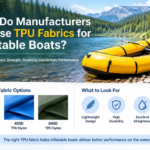
Il nylon rivestito in TPU è disponibile in diverse strutture di tessuto. I produttori possono confrontare il nylon 210D e 420D in base al peso richiesto, alle proprietà meccaniche e al design dei componenti. Il valore del denier da solo non determina le prestazioni finali.
Tessuto TPU vs PVC per Kayak Gonfiabili
La scelta tra TPU e PVC dovrebbe basarsi sui requisiti del kayak finito piuttosto che su un’assunzione generale secondo cui un materiale sia sempre migliore.
Entrambi i materiali hanno formulazioni e strutture diverse. Le loro prestazioni possono variare in base alla base tessile, allo spessore del rivestimento, agli additivi, al processo di fabbricazione e all’esposizione ambientale.
| Fattore di Valutazione | Nylon Rivestito in TPU | Tessuto Rivestito in PVC |
|---|---|---|
| Base Tessile | Comunemente nylon intrecciato | Poliestere o altre basi tessili |
| Flessibilità | Dipende dalla formulazione e dalla struttura del TPU | Dipende dalla formulazione del PVC e dal sistema plastificante |
| Tenuta all'aria | Può fornire prestazioni adeguate di barriera all’aria | Può fornire prestazioni adeguate di barriera all’aria |
| Metodi di Giunzione | Compatibile con idonee saldature HF e sigillatura a caldo | Compatibile con idonei processi di saldatura |
| Comportamento alla Piegatura | Richiede valutazione sotto ripetute piegature | Richiede valutazione sotto ripetute piegature |
| Selezione dei materiali | Spesso preso in considerazione per gonfiabili tecnici flessibili | Spesso preso in considerazione dove la lavorazione consolidata del PVC e il costo sono priorità |
Flessibilità e Ripetute Piegature
I kayak gonfiabili vengono spesso sgonfiati dopo l’uso. Il loro tessuto può essere ripiegato in una borsa di stoccaggio, trasportato in un veicolo e riaperto per il viaggio successivo.
Il rivestimento deve rimanere attaccato alla base tessile durante questo processo. La piegatura ripetuta può sottoporre a stress il rivestimento e l’interfaccia tra i due strati.
Il nylon rivestito in TPU è spesso considerato per prodotti in cui la flessibilità durante la piegatura è importante. Tuttavia, il risultato dipende dalla formulazione del TPU, dallo spessore del rivestimento e dalla struttura del tessuto.
I produttori dovrebbero testare campioni reali attraverso cicli ripetuti di piegatura. Dopo il test, il materiale dovrebbe essere ispezionato per verificare crepe superficiali, separazione del rivestimento e variazioni nelle prestazioni di tenuta all’aria.
Tenuta all’aria e Costruzione delle Cuciture
Il tessuto rivestito deve limitare la trasmissione d’aria attraverso la sua superficie. Allo stesso tempo, le cuciture e i collegamenti delle valvole devono mantenere una tenuta affidabile.
Il TPU possiede proprietà termoplastiche che rendono i tessuti rivestiti in TPU compatibili con la saldatura ad alta frequenza e la sigillatura a caldo. Questi processi possono creare giunti sigillati senza ricorrere alla tradizionale cucitura a ago.
La qualità della cucitura finita dipende comunque dalla compatibilità dei materiali, dal design del giunto, dalle impostazioni delle attrezzature e dal controllo dell’operatore. Né il TPU né il PVC garantiscono automaticamente un kayak senza perdite.
Esposizione Ambientale
I kayak gonfiabili sono utilizzati in ambienti che coinvolgono acqua, luce solare, umidità e sbalzi di temperatura. La scelta dei materiali dovrebbe riflettere le condizioni previste.
Il TPU a base di polietere è spesso preso in considerazione quando è importante la resistenza all’idrolisi, soprattutto per prodotti esposti a umidità prolungata. Tuttavia, i produttori dovrebbero esaminare la formulazione specifica e i dati di test disponibili invece di presumere che ogni rivestimento in TPU offra lo stesso livello di resistenza.
Per prodotti destinati a un uso esterno frequente, i test di invecchiamento ambientale possono aiutare a valutare se il rivestimento e la struttura tessile mantengono le proprietà richieste.
È Meglio il Nylon Rivestito in TPU 210D o 420D per un Kayak Gonfiabile?
Il denier è una specifica importante quando si confrontano i tessuti di nylon. Descrive la massa lineare del filato. Un denier più alto indica generalmente un filato più pesante, ma non significa automaticamente che il tessuto finito avrà prestazioni migliori in ogni applicazione.
Per lo sviluppo di kayak gonfiabili, il nylon rivestito in TPU 210D e 420D sono due strutture che vale la pena confrontare. La loro idoneità dipende dal peso target del prodotto, dai requisiti meccanici, dalla struttura del rivestimento e dal processo di fabbricazione.
Nylon Rivestito in TPU 210D per Design Attenti al Peso
210D TPU-coated nylon may be considered when the product team needs to control fabric weight while maintaining the required structural performance.
A lighter textile construction can help reduce the material contribution to the finished kayak’s total weight. This is relevant to recreational models that users need to carry between a vehicle, storage area, and launch point.
However, lightweight construction should not come at the expense of required strength. Manufacturers need to evaluate tensile strength, tear resistance, coating adhesion, and the behavior of welded seams.
Xianglong’s Nylon 210D rivestito in TPU XL uses a 210D nylon base with a TPU coating. Its published product information lists a single-sided TPU coating thickness of 0.15 mm and a total fabric weight of 300 ± 15 g/m². These specifications provide a reference for initial comparison, but the suitability of the material for a particular kayak still needs to be confirmed through sample testing.
420D TPU Coated Nylon for More Demanding Construction Requirements
420D TPU-coated nylon provides a heavier textile construction that manufacturers may evaluate when a project requires a different balance of strength, abrasion resistance, and weight.
It may be considered for selected kayak components or products expected to experience more demanding handling conditions. Whether it is appropriate for the entire kayak depends on the design and the test results.
Xianglong’s Nylon 420D rivestito in TPU XL has a published single-sided TPU coating thickness of 0.15 mm and a total fabric weight of 375 ± 20 g/m² in its product specification sheet. The listed base fabric is 420D nylon.
When comparing this construction with 210D, manufacturers should look at the complete specification rather than assuming that the higher denier will automatically provide the required performance.
How Should the Two Options Be Compared?
The product team should compare both materials using the same evaluation criteria.
Important measurements include:
- Total fabric weight and thickness
- Tensile strength in warp and weft directions
- Resistenza allo strappo
- Stabilità strutturale
- Adesione del rivestimento
- Air permeability
- Flexibility after repeated folding
- Welded seam strength and leakage performance
The results should be considered alongside the kayak’s intended use. A material that meets the requirements for a recreational lake kayak may not be suitable for a product designed for frequent contact with rocky riverbanks.
Which Parts of an Inflatable Kayak Need Stronger Fabric?
An inflatable kayak is made up of several components, and each component experiences different forces. The main air chambers, floor, seat area, and attachment points should not automatically be treated as having identical material requirements.
A product design that accounts for these differences can help control material weight while maintaining the required performance.
Side Chambers and Main Air Tubes
The side chambers maintain the kayak’s inflatable structure. They need to hold air, retain their intended shape, and withstand the loads created during use.
Material selection should consider air retention, tensile strength, coating adhesion, and seam construction.
The geometry of the chambers also matters. Curved panels, end sections, and long welded joints may create different production conditions. Manufacturers should process representative samples using the intended equipment before approving the material.
Floor Panels
The floor is exposed to a different set of conditions. Users may sit, move equipment, or place bags and other items on its surface. During launching and landing, the underside may also contact sand, gravel, and rough ground.
Depending on the product design, manufacturers may evaluate a more substantial fabric construction for the floor than for the side chambers.
A 420D TPU-coated nylon construction may be worth testing for selected floor designs. Heavier options may also be considered where the expected abrasion and mechanical loads justify the additional material weight.
The final decision should be supported by abrasion, puncture, tear, and finished-product tests.
Seat Supports and Attachment Points
Handles, seat supports, footrests, and accessory attachment points can concentrate loads in relatively small areas.
Adding a reinforcement panel may help distribute these loads, but its shape and joining method are equally important. A poorly designed reinforcement can move stress toward the edge of the added panel instead of reducing it.
Manufacturers should test the complete attachment structure through suitable pull or repeated-load tests. The surrounding fabric and welded joints should be inspected for deformation or separation.
What Makes Airtight TPU Fabric Suitable for Inflatable Kayaks?
Airtightness is one of the most important material requirements for inflatable kayaks. The fabric needs to limit air loss through its surface, while the finished structure must maintain reliable seams and valve connections.
The performance of airtight TPU fabric depends on several related factors.
TPU Coating Thickness and Uniformity
Coating thickness affects the total fabric weight, flexibility, and barrier characteristics. A thicker coating is not automatically better because it may also change the material’s stiffness and processing behavior.
Uniform coating is important for consistent material performance. Variations in coating thickness or surface condition may affect both air retention and welding results.
Manufacturers should request coating specifications from the supplier and verify important properties through incoming inspection and testing.
Coating Adhesion
The TPU coating needs to remain bonded to the nylon base during folding, inflation, deflation, and normal handling.
If adhesion is insufficient, the coating may separate from the textile substrate. This can affect the material’s surface condition and long-term sealing performance.
Coating adhesion should be evaluated using an appropriate test method. For products expected to undergo repeated folding, testing after conditioning or mechanical cycling can provide additional information.
Air Permeability
Air permeability testing helps assess how much air passes through the fabric under defined conditions.
However, fabric-level testing is only one part of the evaluation. A finished kayak also contains welded seams, valves, and other connections that can affect pressure retention.
Manufacturers should therefore carry out both material tests and finished-product leakage checks. This helps distinguish a problem with the fabric itself from an issue related to assembly.
How Are TPU Fabrics Welded During Inflatable Kayak Production?
The joining process has a direct effect on the quality of the finished kayak. Even a suitable fabric can produce inconsistent results if the welding process is not properly matched to the material.
TPU-coated nylon can be processed using compatible high-frequency welding or heat-sealing equipment.
Saldatura ad alta frequenza
High-frequency welding uses electromagnetic energy to generate heat within compatible thermoplastic materials. Pressure is applied during the process to create a bonded joint.
For inflatable kayak production, the method may be used for chamber seams and other suitable connections.
The welding result depends on several factors:
- TPU formulation and coating construction
- Fabric thickness and number of layers
- Electrode shape and contact area
- Welding time and applied pressure
- Equipment condition and process consistency
- Material positioning and surface cleanliness
Manufacturers should establish a suitable processing window through sample trials. The same parameters should not be assumed to work for every TPU-coated fabric.
Saldatura a caldo
Heat sealing uses controlled temperature and pressure to join compatible thermoplastic surfaces.
The process needs to be adjusted to the specific fabric. Insufficient heat may result in incomplete bonding, while excessive heat can damage the coating or affect the textile base.
Production trials should examine the seam appearance, bonding strength, and air leakage. The results should be documented so that the process can be repeated consistently.
Why Seam Testing Matters
Airtight fabric does not guarantee airtight seams. Joint design, overlap width, welding conditions, and panel alignment all affect the finished connection.
Manufacturers should evaluate welded samples before moving into full prototype production.
Useful checks include peel strength, seam tensile strength, visual inspection, and leakage testing under defined pressure conditions. Representative kayak assemblies should also be tested because flat welded samples cannot reproduce every condition found in the finished product.
What Tests Should Be Completed Before an Inflatable Kayak Goes into Production?
Material approval should connect supplier specifications with actual manufacturing conditions. A fabric that looks suitable on paper may behave differently after cutting, welding, folding, and inflation.
A practical validation process should cover the material, the welded joints, and the finished kayak.
Fabric Inspection
Incoming material should be checked against the approved specification.
The inspection may include fabric weight, thickness, width, coating appearance, surface defects, and batch consistency. Where required, samples can be retained for comparison with later deliveries.
Mechanical Testing
Tensile strength and tear resistance provide information about how the fabric responds to mechanical loads. Abrasion and puncture tests may also be necessary depending on the kayak’s intended use.
The test methods should be agreed upon before material approval. Results from different methods should not be treated as directly comparable.
Folding and Inflation Cycles
Repeated folding and inflation can place stress on the coating and welded joints.
Manufacturers can develop a cycling test based on the expected product handling conditions. After the test, the fabric and seams should be inspected for coating damage, separation, deformation, and leakage.
Environmental Evaluation
Outdoor kayaks may be exposed to sunlight, moisture, and temperature changes during use and storage.
Where relevant, manufacturers may conduct UV exposure, humidity, hydrolysis, or temperature-aging tests. The selection of test conditions should reflect the intended market and expected service environment.
After conditioning, the material should be checked for changes in flexibility, adhesion, appearance, mechanical performance, and air retention.
Prototype Water Testing
A finished prototype should be evaluated under controlled water-use conditions before production approval.
The test plan may include pressure retention, load performance, stability, handling, and inspection of high-stress areas. Any abnormal pressure loss should be investigated to determine whether it comes from the fabric, a welded seam, a valve, or another component.
This step helps prevent material changes from being made when the actual issue lies elsewhere in the product structure.
How Can Manufacturers Keep Inflatable Kayak Material Costs Under Control?
Material cost is an important part of product development, but choosing the lowest-priced fabric does not always result in the lowest total production cost.
A fabric that is difficult to weld or produces inconsistent seams can increase scrap rates and labor requirements. A material that does not meet the expected service conditions may also increase warranty and replacement costs.
Product teams should evaluate the complete manufacturing impact.
Consider the Weight of the Finished Product
The weight of one fabric sample does not show the full impact on the finished kayak. Manufacturers need to calculate material consumption across all panels, reinforcements, and accessories.
A heavier fabric may be justified in a high-wear area but unnecessary in other components. Reviewing the material distribution can help avoid adding weight where it does not address a specific requirement.
Balance Material Cost and Production Yield
The fabric should be compatible with the cutting and welding process. Material consistency can affect panel alignment, seam appearance, and production yield.
During sample production, manufacturers should record processing parameters and identify any recurring defects. This information helps the team assess whether a material is suitable for regular production rather than just a single prototype.
Control Changes Between Material Batches
A change in fabric weight, coating thickness, or surface condition may affect welding performance.
Manufacturers should maintain an approved material specification and review any proposed supplier or construction changes before using them in production. Incoming inspection and batch records help identify differences before they affect finished kayaks.
Where Can Manufacturers Source TPU-Coated Nylon for Inflatable Kayaks?
Material sourcing should begin with the actual product requirements. Suppliers need information about the kayak type, target weight, component structure, expected operating conditions, and joining process before they can recommend suitable fabric constructions.
Xianglong Polymer Fabric provides TPU-coated nylon options for inflatable applications, including 210D and 420D constructions. These materials can be reviewed against the required fabric weight, mechanical properties, coating structure, and welding process.
Il Airtight TPU Fabrics collection includes fabric options for inflatable boats, kayaks, and rescue rafts. Manufacturers can review the available constructions and compare them according to their product requirements.
For water-based applications, the Water Sports & Marine material range provides further information about TPU fabrics used in inflatable and marine equipment.
Before confirming an order, manufacturers should request the relevant technical data sheet and samples. The selected fabric should be processed using the intended production equipment and validated through mechanical, welding, and finished-product tests.
The best material for an inflatable kayak depends on how the finished product will be used. TPU-coated nylon is worth considering when manufacturers need a combination of textile strength, flexible construction, airtight performance, and compatibility with suitable welding processes.
A 210D construction may be evaluated for designs where weight is important, while 420D nylon may be considered when the product requires a different balance of strength and weight. The floor, side chambers, and reinforcement areas may also have different material requirements.
The final specification should be based on complete fabric data, sample processing, seam testing, and prototype evaluation. Comparing materials under the same conditions gives manufacturers a more reliable basis for product development and production approval.