








I have talked to a lot of people who design field equipment. Most of them started with rigid water tanks. Most of them gave up.
Rigid tanks are a pain in the field. They take up space whether they are full or empty. They do not fit well in packed vehicles. Drop one on a rock and you have a cracked tank and no water.
That is why people switch to collapsible systems. But here is what they learn fast. The fabric has to do more than just hold water. It has to survive being dragged, folded, stuffed, and left out in the weather.
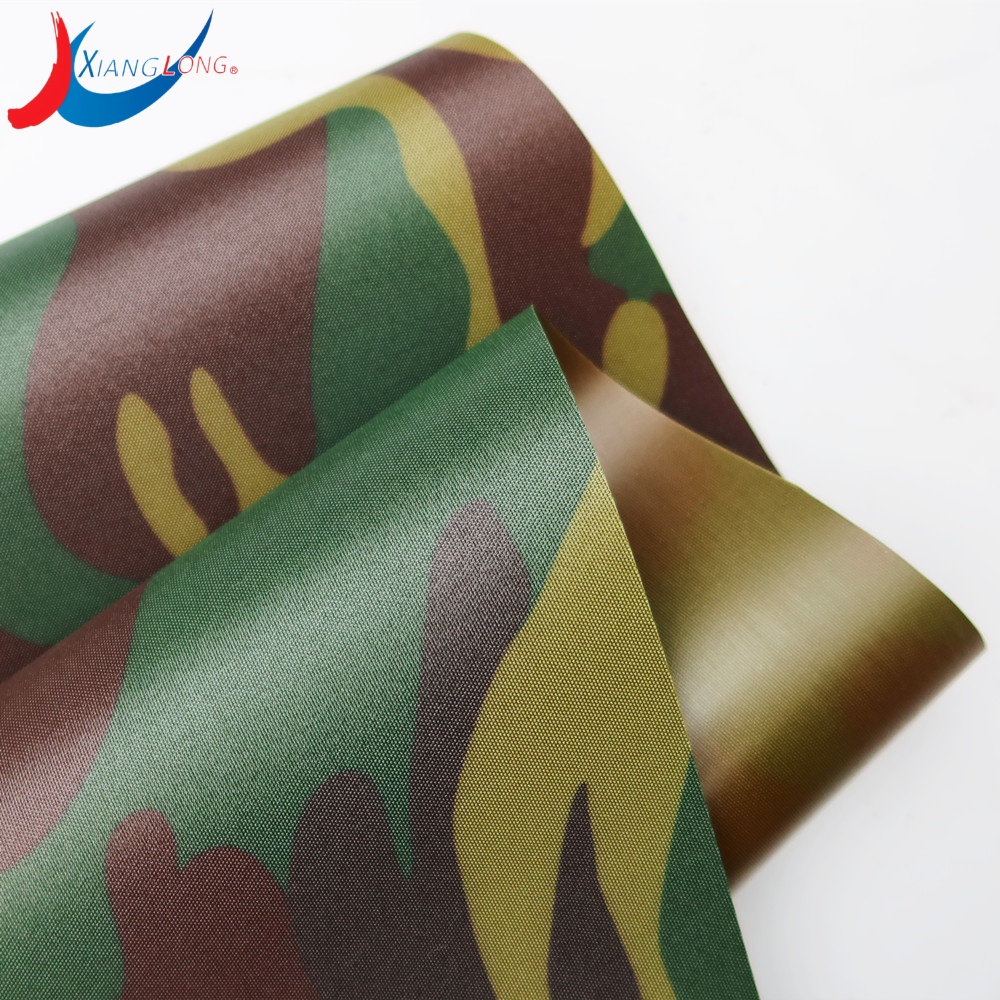
This fabric—XL TPU Coated 500D Polyester in Camouflage—is built for that. I will walk you through why the material choices make sense, where this fabric works, and what makes it different from cheaper alternatives.
Water Storage Is Not the Same as Dry Storage
A lot of people assume that if a fabric is waterproof, it works for water storage. That gets them into trouble.
Dry storage is easy. You put stuff in a bag. The bag sits there. The fabric just needs to keep water out.
Water storage is different. The water moves. It sloshes when you carry the container. It pushes outward constantly. It shifts weight every time you set the tank down.
Here is what the fabric has to handle that dry storage never deals with.
- Sloshing impacts. Water hits the walls repeatedly. Each impact puts stress on a small area. Over time, that stress wears down seams and creates weak spots.
- Constant outward pressure. A dry bag of clothes pushes outward a little. A water container pushes outward all the time. The sides have to hold that pressure hour after hour.
- Pressure changes. When you fill a tank, pressure rises. When you lift it, pressure shifts to the bottom. When you stack tanks, the bottom one takes more load. The fabric has to handle all of it.
For dry storage, a single-side coated fabric might work. For water storage, you need something tougher. That is why this fabric uses a 500D polyester base and a TPU coating on the water side.
Why 500D Polyester?
The base fabric is the skeleton. If you get the base wrong, the coating does not matter.
What 500D actually means
Denier measures fiber thickness. 500 denier is moderately thick. A standard backpack uses 210D. A heavy duffel uses 1000D.
500D sits right in the middle. It resists abrasion and tearing. But it is not so thick that the fabric becomes stiff or heavy. You can still fold it into a small package.
Polyester over nylon
Here is something nylon users learn the hard way. Nylon absorbs water. When it gets wet, it swells. When it dries, it shrinks. That movement puts stress on the coating. Eventually the coating can separate.
Polyester absorbs almost no water. It stays the same size wet or dry. For a fabric that will have water on one side constantly, that stability matters.
Real-world abrasion
I have seen what happens to water bladders in the field. They get dragged across gravel. They get thrown into truck beds next to metal tools. They get set down on rocky ground.
Lighter fabrics develop pinholes. Heavier fabrics become too stiff to fold. 500D hits the balance. It takes the abuse without being a pain to pack.
Why TPU Instead of PVC?
Every buyer asks this. PVC is cheaper. So why pay more for TPU?
Three reasons.
- Cold weather. PVC has plasticizers to keep it flexible. At minus 10 degrees Celsius, PVC starts to stiffen. At minus 20, it cracks. TPU uses no plasticizers. It stays flexible down to minus 30. If your water system will ever see winter, this matters.
- Weld strength. PVC welds easily but the seam is weak. TPU welds give you 80 to 90 percent of the base fabric strength. When you are holding hundreds of liters of water, stronger seams mean fewer field failures.
- No phthalates, no chlorine. PVC contains both. TPU contains neither. Many markets are restricting PVC because of these chemicals. TPU passes those regulations.
Here is a quick comparison. I have kept it to the points that actually matter for water storage.
| Property | TPU | PVC |
|---|---|---|
| Flexibility at -20°C | Yes | No |
| Weld strength vs base fabric | 80-90% | 60-70% |
| Contains plasticizers | No | Yes |
| Cold crack | No | Yes |
| Price | Higher | Lower |
If price is the only thing you care about, buy PVC. But if you need the water system to work in cold weather, last through repeated use, and pass modern regulations, TPU is the better choice.
Why Camouflage? It Is Not Just Styling
Some people see camo and think it is a cosmetic choice. In tactical and outdoor applications, it is functional.
Three situations where the camouflage pattern actually matters.
- Military and tactical operations. Equipment needs to blend in. A bright blue water tank stands out in the woods. That visibility can get people noticed when they do not want to be.
- Hunting and wildlife observation. Animals spook easily. A camouflaged water container is less likely to catch their attention than a shiny plastic tank.
- Off-grid and preparedness. Some users prefer not to advertise what they have. A camo pattern does not draw the same attention as bright outdoor gear.
The print goes onto the polyester before the TPU coating. The coating then protects the print from abrasion and sunlight. It does not rub off.
Seam Integrity Is Where Most Fabrics Fail
Here is a fact that surprises people new to water storage. The fabric itself almost never fails. The seams fail.
A pinprick leak at a seam can empty a whole bladder overnight. And those leaks are hard to find in the field.
Why sewing does not work
Most fabrics are sewn. Needle and thread. That is fine for dry goods. But for water storage, every needle hole is a potential leak. You can seal them with tape or glue, but that adds cost and creates another failure point.
Welding instead of sewing
This fabric is designed for high-frequency welding. HF welding uses radio waves to melt the TPU layers together. No needles. No thread. No holes.
The TPU layer on this fabric allows two pieces to become one. The resulting seam is almost as strong as the base fabric.
What welding gives you
- No needle holes means no leak paths.
- Seam strength hits 80 to 90 percent of the base fabric.
- Production is fast and repeatable.
For a water storage system that needs to work every time, welded seams are the only choice.
Transport and Deployment Are the Whole Point
If you do not need to move the water system, buy a rigid tank. They are cheap and they work fine.
But if you need to move it, flexible storage wins.
Folds when empty
A rigid 500-liter tank takes up the same space full or empty. That is a problem when you are moving it by truck or helicopter.
A collapsible bladder folds down to a fraction of its filled size. You can stack several in the same space one rigid tank would use.
Light weight
The fabric weighs about 400 to 600 grams per square meter. Compare that to a plastic tank. The difference is huge. One person can carry a folded bladder that holds hundreds of liters.
Deploys fast
When you need water, you do not want to spend an hour setting up a tank. These bladders unfold, connect to a hose, and fill. Some designs have fill ports and outlets welded right into the fabric.
Packs small
For smaller systems, a folded bladder fits in a backpack. For larger ones, they roll up and strap to a vehicle rack.
What Makes Xianglong’s Fabric Different?
Any supplier can coat polyester with TPU. But there is a difference between a fabric seller and someone who understands water storage.
Experience with containment
Xianglong has been making TPU coated fabrics for years. That experience shows in the details. The material choices, the welding recommendations, the quality control.
Certifications that matter
Quality matters when you are holding drinking water in the field. A failed seam can leave a team without water.
Xianglong holds ISO 9001, ISO 14001, ISO 45001, and ISO 10993. For water storage, the quality management systems ensure consistency. You get the same material every time you order.
Customization
Not every water system has the same needs. Some need thicker TPU for more abrasion resistance. Some need a different camo pattern. Some need specific fittings.
Xianglong customizes thickness, color, finish, and roll dimensions. They work with you rather than forcing a standard product.
Technical Specifications
For the engineers and procurement people who want the numbers, here is what this fabric delivers.
| Property | Specification |
|---|---|
| Base fabric | 500D Polyester with Camouflage Print |
| TPU type | Polyether-based or Polyester-based |
| Coating location | Inner layer (water contact side) |
| Total weight | Customizable, typically 400-600 gsm |
| Standard width | 140 cm or custom |
| Color | Camouflage (multiple patterns) |
| Temperature range | -30°C to +70°C |
| Welding method | High-frequency or hot air |
The TPU thickness and total weight can be adjusted based on tank size and expected conditions.
Where This Fabric Works Best
Not every water storage project needs this specific fabric. But for certain scenarios, it is the right fit.
Collapsible tanks for base camps. Military operations, disaster relief, remote construction. Fly in empty tanks, set them up on site, fill from a truck or pump.
Portable storage for hunting and field work. Hunters need water at a blind. A small bladder packs easily. The camo keeps it hidden.
Emergency reserves for vehicles. Overlanders and preppers keep water in their vehicles. Rigid tanks take too much space. Flexible bladders tuck into unused corners.
Rainwater collection. Off-grid cabins collect rain. A collapsible bladder under a downspout fills over time and stores water until needed.
Temporary agriculture storage. Farmers need water for livestock or irrigation. Move the system from pasture to pasture.
How to Get a Sample
Reading about a fabric is useful. Testing it yourself is the only way to know.
Send your specifications to Xianglong. Let them know the tank size, expected conditions, and any special requirements.
They will ship a sample roll. Lead time is usually five to seven business days.
Run the sample through your welding equipment. Check seam strength. Fill a test bladder and let it sit for a few days. Look for leaks.
If the sample works, bulk production takes about 15 to 25 business days.
Choosing fabric for collapsible water storage comes down to a few key decisions.
Use polyester, not nylon. It stays stable when wet.
Use TPU, not PVC. It handles cold, welds stronger, and passes regulations.
Use camouflage if the application needs discretion.
Weld the seams. Do not sew them.
Xianglong’s XL TPU Coated 500D Polyester – Camouflage fabric was built around these decisions. It is not a general-purpose fabric. It is for people who need to store water in places where rigid tanks do not work.
If that sounds like your project, get a sample. Weld a few seams. Fill it with water. See if it solves the problems you have been dealing with.