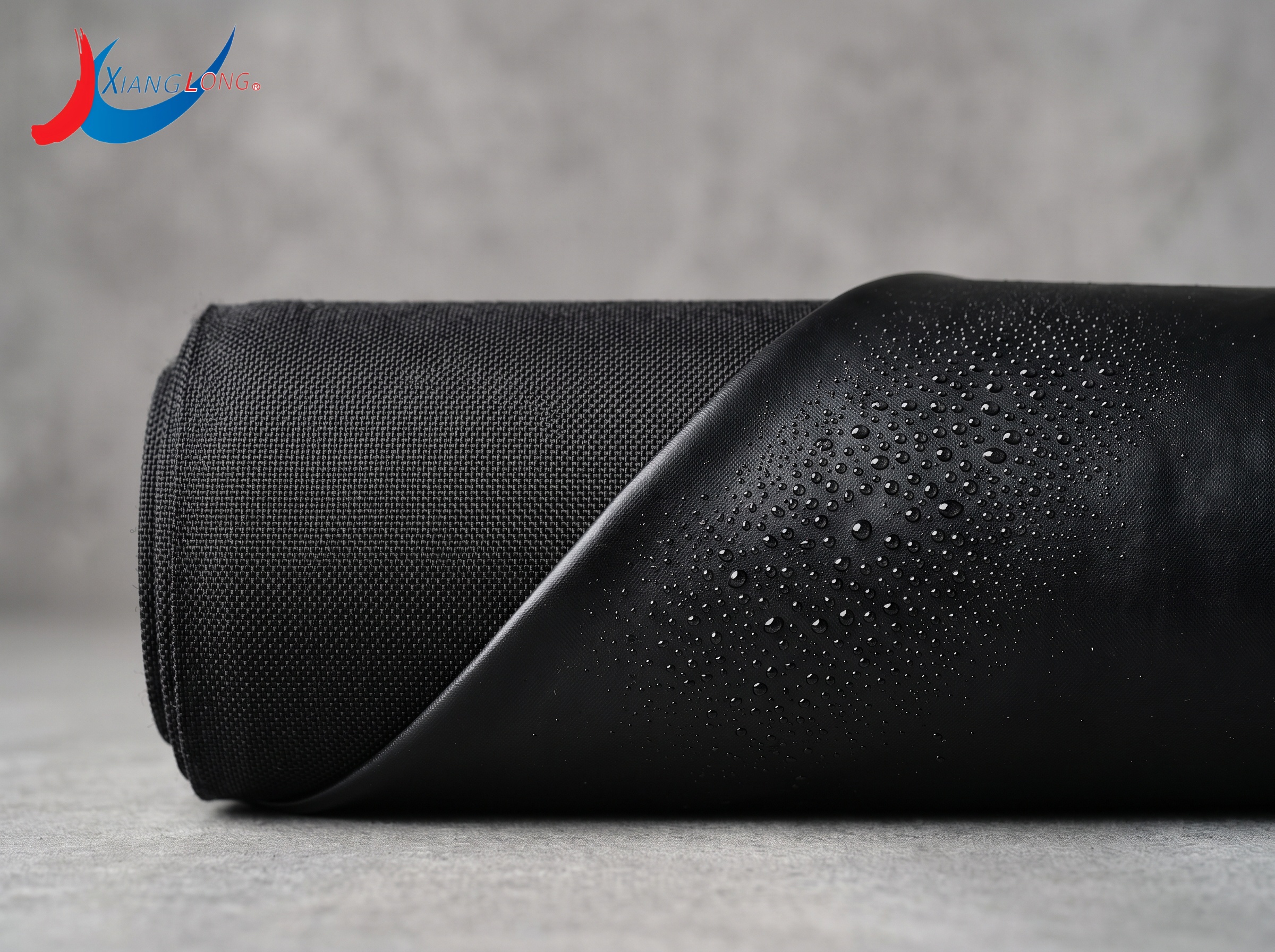
Come GRS Tessuto certificato, il materiale è indicato per prodotti in cui il contenuto riciclato e la tracciabilità delle fonti fanno parte dei requisiti di acquisto. L'uso di rPET offre ai produttori un'alternativa al poliestere vergine convenzionale, mantenendo al contempo le caratteristiche pratiche previste da un tessuto intrecciato 200D.
La finitura nera conferisce al tessuto un aspetto tecnico pulito e si adatta bene a borse per attività all'aperto, attrezzature per pendolari, prodotti da viaggio e attrezzatura da campeggio. La sua struttura relativamente leggera aiuta inoltre i produttori a controllare il peso del prodotto finito senza ricorrere a un substrato eccessivamente sottile o fragile.
Tessuto base in rPET 200D
Le prestazioni di questo materiale iniziano con la sua composizione in poliestere riciclato. I filati rPET 200D formano una base intrecciata stabile che resiste all'allungamento e alla deformazione quando il tessuto finito viene sottoposto a manipolazione normale, carico e piegatura ripetuta.
Per prodotti come zaini e borse da bici, la stabilità dimensionale è importante perché il tessuto deve mantenere la propria forma durante il trasporto dell'attrezzatura. Un allungamento eccessivo può compromettere l'aderenza di chiusure, cuciture, cinghie e componenti saldati. La struttura 200D offre un equilibrio pratico tra basso peso e resistenza meccanica.
La base in poliestere riciclato è inoltre ideale per applicazioni in cui il prodotto finito deve rimanere compatto durante lo stoccaggio o il trasporto. Questo rende il tessuto adatto a sacche secche leggere, borsette per attrezzature, prodotti per lo stoccaggio da campeggio e attrezzatura gonfiabile per esterni.
Rivestimento in TPU per protezione impermeabile e stagna
Lo strato in TPU fornisce la barriera funzionale che trasforma il tessuto rPET in un tessuto tecnico rivestito. Blocca la penetrazione dell'acqua sulla superficie rivestita e crea uno strato continuo che può anche supportare una costruzione stagna del prodotto.
Questa combinazione rende rPET TPU Tessuto rivestito particolarmente utile per attrezzature da esterno esposte a pioggia, spruzzi d'acqua, umidità e condizioni meteorologiche variabili. Per sacche secche e zaini con chiusura a rotolo, la superficie rivestita aiuta a proteggere il contenuto dall'umidità esterna. Nei materassini gonfiabili e nei materassi ad aria da campeggio, lo strato in TPU contribuisce inoltre alla tenuta dell'aria quando il tessuto viene trasformato in camere sigillate.
Rispetto a una cucitura che lascia buchi di ago attraverso il materiale, la saldatura TPU può creare cuciture continue senza ricorrere a cuciture convenzionali attraverso la barriera impermeabile. Ciò è particolarmente utile per prodotti in cui la resistenza all'acqua o la tenuta dell'aria sono parte integrante della specifica del prodotto finito.
Forma stabile sotto carico
L'attrezzatura da esterno opera raramente in condizioni completamente statiche. Uno zaino può essere caricato e scaricato ripetutamente, una borsa da bici può vibrare durante un lungo viaggio, e un materasso ad aria da campeggio può essere piegato, gonfiato e riposto più volte.
La struttura in poliestere 200D offre una buona stabilità dimensionale sotto queste sollecitazioni quotidiane. Il suo allungamento relativamente basso aiuta i prodotti finiti a mantenere la forma prevista, mentre il rivestimento in TPU aggiunge ulteriore resistenza all'umidità e all'usura superficiale.
Per i produttori che si riforniscono Tessuto in poliestere riciclato con rivestimento in TPU, questo equilibrio tra peso, resistenza e flessibilità può essere particolarmente utile quando la costruzione del prodotto richiede un tessuto che abbia una sensazione strutturata senza diventare inutilmente pesante.
Adatto alla saldatura HF e ad aria calda
La flessibilità produttiva è un altro importante vantaggio di questo materiale. XL TPU Coated 200D rPET nero è compatibile con i processi di saldatura ad alta frequenza e saldatura ad aria calda, offrendo ai produttori alternative alla tradizionale cucitura.
La saldatura HF può produrre cuciture pulite e continue per strutture di prodotto idonee, mentre la saldatura ad aria calda è utile per unire pannelli di tessuto rivestito in assemblaggi più grandi o flessibili. I parametri di processo adeguati dipendono dalla costruzione finale, dallo spessore del rivestimento, dalle attrezzature e dalle condizioni di produzione, ma la superficie in TPU fornisce uno strato di saldatura adatto a entrambi gli approcci produttivi.
Per Tessuto in TPU per sacche secche, la costruzione saldata può contribuire a creare cuciture impermeabili affidabili intorno a aperture, angoli e connessioni tra pannelli. Lo stesso principio vale per prodotti da stoccaggio per esterni, materassini gonfiabili e altre attrezzature in cui le prestazioni delle cuciture influiscono direttamente sulla funzionalità del prodotto.
Contenuto riciclato per lo sviluppo di prodotti da esterno
L'uso di rPET offre ai produttori di prodotti l'opportunità di incorporare poliestere riciclato in prodotti tecnici per esterni. Il PET riciclato è prodotto da materiali recuperati di polietilene tereftalato e può ridurre la dipendenza da materie prime vergini di poliestere.
Per marchi che sviluppano attrezzature sostenibili per esterni, questo rappresenta un modo pratico per incorporare materiali riciclati in prodotti che richiedono comunque impermeabilità, resistenza meccanica e lavorazione affidabile. Il tessuto può quindi essere scelto come materiale per tessuto impermeabile sostenibile applicazioni in cui le considerazioni ambientali devono andare di pari passo con le prestazioni convenzionali del prodotto.
La posizione del materiale relativa alla GRS è rilevante anche per marchi e produttori con politiche di approvvigionamento di contenuto riciclato. I requisiti di certificazione devono essere confermati secondo la catena produttiva specifica e l'ambito del certificato applicabile.