

Halloween‑Aufblasdekorationen sind zu einer beliebten Wahl für private Dekorationen, kommerzielle Veranstaltungsorte, Einkaufszentren, Themenparks und saisonale Events geworden. Große Kürbisse, Geister, Skelette, Spukhäuser und beleuchtete Figuren können einen beeindruckenden visuellen Effekt erzeugen, ohne dass aufwändige, permanente Strukturen erforderlich sind. Für Hersteller ist es jedoch nur ein Teil der Aufgabe, eine attraktive Aufblasdekoration herzustellen. Das Material muss zudem dem Außeneinsatz, wiederholtem Auf- und Abpumpen, der Handhabung bei der Installation sowie der Lagerung zwischen den Saisonveranstaltungen standhalten.
Die Auswahl des Materials hat direkten Einfluss auf die Lebensdauer, das Aussehen, das Gewicht und die Herstellungskosten des Endprodukts. Traditionelle Aufblasmaterialien bieten zwar Wasserdichtigkeit oder ausreichende Festigkeit, doch sie bieten nicht immer die optimale Balance aus Flexibilität, Gewicht, Luftdichtheit und Verarbeitungseigenschaften für jedes Design.
TPU-beschichtetes Gewebe bietet Herstellern eine weitere Materialoption. Durch die Kombination eines textilen Grundmaterials mit einer Beschichtung aus thermoplastischem Polyurethan lassen sich nützliche Eigenschaften für unterschiedliche aufblasbare Konstruktionen erzielen – von leichten Dekorationsfiguren bis hin zu größeren Outdoor‑Requisiten, die eine höhere mechanische Festigkeit benötigen. Die geeignete Konstruktion hängt von der Produktstruktur, den Einsatzbedingungen und der erwarteten Lebensdauer ab.
Welche Materialeigenschaften sind bei Halloween‑Aufblasdekorationen entscheidend?
Halloween‑Aufblasdekorationen werden häufig in Umgebungen eingesetzt, in denen Wetter- und Handhabungsbedingungen schwer kontrollierbar sind. Eine Dekoration im Vorgarten kann Regen, Sonnenlicht, Temperaturschwankungen sowie Kontakt mit Gras, Pflastersteinen oder anderen Objekten ausgesetzt sein. Kommerzielle Installationen können zudem häufiges Transportieren, Montieren und Demontieren erfordern.
Diese Bedingungen stellen mehrere Anforderungen an das Material.
Wasserbeständigkeit für Außenpräsentationen
Regen und Bodenfeuchtigkeit können das Aussehen und die Leistung von Dekorationen im Freien beeinträchtigen. Ein Gewebe mit einer geeigneten wasserdichten Beschichtung verhindert, dass Wasser durch die Textilstruktur dringt. Dies ist besonders wichtig für dekorative Figuren, die auf Rasenflächen, nahe Eingängen oder in offenen kommerziellen Bereichen platziert werden.
Die Wasserbeständigkeit sollte zusammen mit der Gesamtkonstruktion des Produkts betrachtet werden. Nähte, Verbindungsstellen, Reißverschlüsse, Ventile und andere Öffnungen können Wasser eindringen lassen, selbst wenn das Hauptgewebe über eine wasserdichte Beschichtung verfügt. Hersteller müssen daher die gesamte Struktur bewerten und sich nicht allein auf die Beschichtung verlassen.
Flexibilität beim Auf- und Abpumpen
Aufblasdekorationen ändern ihre Form immer wieder, wenn sie aufgeblasen, gefaltet, verpackt und gelagert werden. Das Gewebe muss diese Bewegungen aushalten, ohne übermäßig steif zu werden oder Schäden an stark beanspruchten Stellen zu entwickeln.
Flexible TPU‑Beschichtungen können helfen, die Biegsamkeit des Materials zu erhalten, doch die endgültige Leistung hängt von der TPU‑Formulierung, der Beschichtungsdicke, dem textilen Trägermaterial und der Betriebstemperatur ab. Ein Gewebe, das für ein kompaktes aufblasbares Ornament geeignet ist, eignet sich möglicherweise nicht für eine große Struktur, die stärkeren Spannungen ausgesetzt ist.
Mechanische Festigkeit für den wiederholten Einsatz
Dekorationen im Freien können bewegt, gefaltet, gezogen und versehentlichem Kontakt ausgesetzt sein. Dünne Materialien können das Produkt leichter machen, sind jedoch oft weniger geeignet für Designs mit hohen Belastungen an Ecken, Befestigungspunkten oder tragenden Strukturen.
Rissfestigkeit und Abriebfestigkeit sollten daher bei der Materialauswahl berücksichtigt werden. Das Gewebe sollte den erwarteten Handhabungsbedingungen entsprechen und nicht nur ein Mindestgewicht erreichen.
Geeignetes Gewicht für Transport und Installation
Viele saisonale Dekorationen sind dafür konzipiert, nach der Nutzung verstaut zu werden. Ein geringeres Gewicht des Gewebes kann die Transport- und Lageranforderungen verringern, insbesondere bei großen Dekorationsfiguren. Allerdings sollte eine leichte Konstruktion nicht auf Kosten der notwendigen Festigkeit des Produkts gehen.
Das richtige Gleichgewicht hängt von den Abmessungen, der Aufblasmethode, der internen Struktur und der erwarteten Exposition der Dekoration ab.
Wie unterstützt TPU‑beschichtetes Gewebe die Produktion von Aufblasdekorationen?
TPU‑beschichtetes Gewebe besteht aus einem textilen Trägermaterial, das mit einer Schicht aus thermoplastischem Polyurethan kombiniert ist. Das Textil liefert den Großteil der mechanischen Unterstützung, während die TPU‑Beschichtung Eigenschaften wie Wasserdichtigkeit, Flexibilität und die Möglichkeit wärmebasierter Verbindungstechniken beiträgt.
Diese Kombination bietet Herstellern die Möglichkeit, verschiedene Gewebeaufbauten für unterschiedliche Aufblasanwendungen auszuwählen.
Eine Kombination aus Textilfestigkeit und Beschichtungsleistung
Das Grundgewebe beeinflusst Zugfestigkeit, Rissfestigkeit, Dimensionsstabilität und das Gesamtgewicht. Nylon und Polyester sind häufig verwendete Trägermaterialien in technischen beschichteten Stoffen, doch ihre Leistungsmerkmale unterscheiden sich.
Nylon wird oft gewählt, wenn Flexibilität und mechanische Festigkeit wichtig sind. Polyester kann sinnvoll sein, wenn Dimensionsstabilität und Resistenz gegen feuchtigkeitsbedingte Veränderungen Priorität haben. Auch die Beschichtungskonstruktion muss berücksichtigt werden, denn das Trägermaterial allein bestimmt nicht die Leistung des fertigen Materials.
Für Halloween‑Aufblasdekorationen sollten Hersteller das gesamte TPU‑beschichtete Gewebe bewerten und nicht nur das Material anhand seiner textilen Spezifikation auswählen.
Wasserdichter Schutz für den Außeneinsatz
TPU‑Beschichtungen können eine schützende Schicht über dem textilen Trägermaterial bilden. Wenn die Beschichtung lückenlos und fachgerecht aufgetragen ist, hilft sie, das Eindringen von Wasser durch das Gewebe selbst zu verhindern.
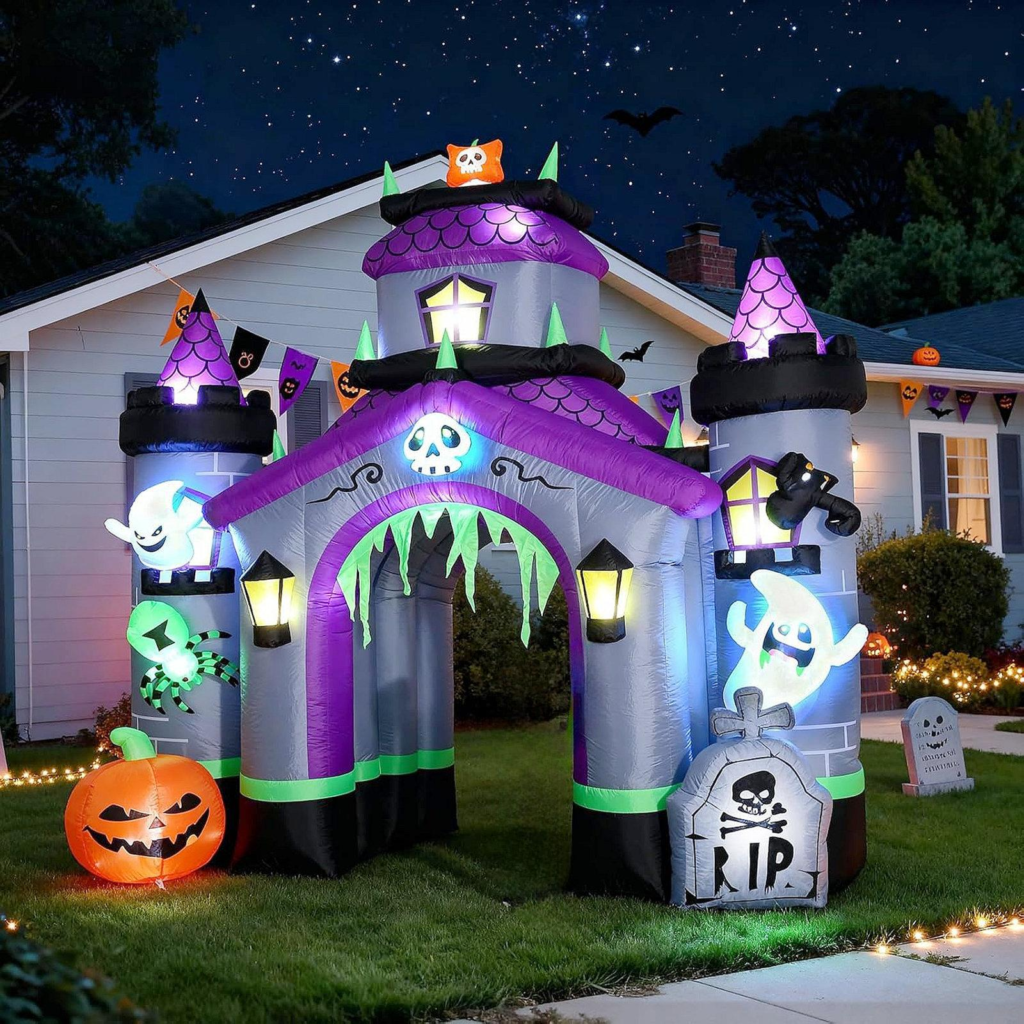
Dies macht TPU‑beschichtete Materialien für aufblasbare Kürbisse, Geister, Skelette, dekorative Bögen und andere saisonale Requisiten im Freien empfehlenswert. Dennoch gilt es, Nähte, Verschlüsse und Verbindungsstellen zu prüfen, denn die Wasserdichtigkeit des fertigen Produkts hängt von mehr als nur der Gewebeoberfläche ab.
Flexibilität beim Falten und Lagern
Saisonale Dekorationen bleiben nicht immer das ganze Jahr über aufgeblasen. Viele Produkte werden abgelassen, gefaltet, verpackt und über mehrere Monate gelagert, bevor sie erneut verwendet werden.
Ein flexibles beschichtetes Gewebe kann das Falten und Handling erleichtern. Bei der Materialauswahl sollten wiederholte Biegungen und Kompressionen berücksichtigt werden, insbesondere an Faltlinien, Ecken und Stellen, an denen das Gewebe mit inneren Stützen in Kontakt kommt.
Hersteller sollten Muster durch wiederholte Zyklen von Aufpumpen, Ablassen und Falten testen. Ein Gewebe, das unter neuen Bedingungen gut funktioniert, kann sich nach längerer Lagerung oder wiederholtem Gebrauch anders verhalten.
Ist leichtes TPU‑Gewebe für aufblasbare Halloween‑Dekorationen geeignet?
Gewicht ist für Hersteller von Aufblasdekorationen ein wichtiger Aspekt. Große Figuren können erhebliche Mengen an Gewebe erfordern, und das Material trägt zum Gesamtgewicht des Produkts bei. Eine leichtere Konstruktion kann Transport, Installation und saisonale Lagerung erleichtern.
Leichte TPU‑beschichtete Gewebe können für kleinere Dekorationsfiguren und aufblasbare Produkte in Betracht gezogen werden, bei denen Portabilität oberste Priorität hat.
Beispielsweise könnten TPU‑beschichtete 20D‑Nylon‑ und leichte Polyesterkonstruktionen für kompakte Aufblasdekorationen, kleine Kürbisse, leichte Geister und andere Produkte mit relativ geringen strukturellen Anforderungen geprüft werden. Ihre Eignung hängt von der spezifischen Gewebespezifikation und dem Design des fertigen Produkts ab.
Wo leichte Materialien praktischen Nutzen bieten
Leichte Gewebe können mehrere vorteilhafte Aspekte in der Herstellung und beim Endprodukt bringen:
- Ein geringeres Materialgewicht kann das Gesamtgewicht kompakter Aufblasprodukte senken.
- Flexible Konstruktionen können das Falten und Verpacken erleichtern.
- Kleinere Gewebepakete können Transport und Lagerung vereinfachen.
- Leichte Materialien können für Produkte geeignet sein, die keine hohen mechanischen Belastungen erfahren.
- Die Flexibilität des Materials kann dekorative Formen mit geschwungenen Oberflächen und mehreren Paneelen unterstützen.
These benefits are most relevant when the product design does not require heavy reinforcement or high resistance to repeated physical contact.
Why lightweight should not be the only selection criterion
A large outdoor inflatable decoration may experience wind pressure, movement around its anchor points, and tension across its panels. A very lightweight fabric may not provide sufficient resistance for these conditions.
Manufacturers should consider fabric weight together with tensile strength, tear resistance, coating adhesion, and the dimensions of the inflatable structure. Reinforcement may also be required around tie-down points, seams, and other concentrated stress areas.
A lightweight fabric is not automatically the most economical option. If the finished decoration requires frequent repairs or replacement, the initial material savings may be offset by higher service costs.
When Should Manufacturers Choose 210D, 420D, or 840D TPU Coated Fabric?
Not every Halloween inflatable decoration needs a lightweight fabric. Larger outdoor props, reusable commercial displays, and products exposed to frequent handling may require a more robust textile construction.
TPU coated nylon fabrics in 210D, 420D, and 840D constructions provide different options for manufacturers evaluating strength, weight, and handling requirements. Denier describes the linear density of the yarn, but it should not be treated as a direct measurement of finished fabric strength. Weave construction, coating, yarn quality, and manufacturing processes also influence performance.
| Fabric construction | Potential application direction | Main selection consideration |
|---|---|---|
| 210D TPU coated nylon | Medium-sized decorative inflatables and general-purpose props | Balance between weight and mechanical performance |
| 420D‑TPU‑beschichtetes Nylon | Larger outdoor decorations and reusable event props | Greater fabric robustness for repeated handling |
| 840D‑TPU‑beschichtetes Nylon | Heavy-duty decorative structures and demanding applications | Higher material weight and the need for stronger construction |
The table provides a starting point for material evaluation rather than a universal specification. Actual suitability must be confirmed through technical data and product testing.
210D for moderate material requirements
A 210D construction may be worth evaluating for inflatable decorations that need a balance between manageable weight and fabric strength. It can be considered for medium-sized pumpkins, ghosts, and other decorative figures, provided the design does not place excessive stress on the material.
The coating type and thickness should be matched to the intended application. Manufacturers should also check whether the selected construction can be processed using their planned joining method.
420D for larger and reusable props
A 420D TPU coated nylon fabric may be more appropriate when the decoration has a larger surface area or is expected to undergo frequent transportation and installation.
For example, commercial event operators may reuse the same inflatable decorations across several seasonal campaigns. In this case, resistance to handling damage becomes an important part of material selection.
Manufacturers should pay particular attention to the areas around attachment points, seams, and corners. These locations may experience more concentrated stress than the main fabric panels.
840D for demanding applications
An 840D construction can be considered for applications where a heavier textile base is needed. Large outdoor props, rugged event structures, and decorations that experience frequent handling may require this type of material evaluation.
However, a heavier fabric can also increase the total product weight and affect folding, transportation, and installation. It may not be necessary for small decorative figures or products designed for occasional indoor use.
The best construction is the one that meets the product’s mechanical requirements without adding unnecessary material weight or cost.
How Does TPU Coated Fabric Perform in Outdoor Halloween Conditions?
Outdoor use introduces several variables that manufacturers cannot fully control. Rain, sunlight, temperature changes, wind, and contact with surrounding surfaces can all affect the finished decoration.
Material selection should therefore be based on the actual operating environment.
Rain and moisture exposure
Waterproof TPU coated fabric can help protect the textile substrate from direct water penetration. This is useful for inflatable decorations displayed in gardens, outdoor shopping areas, and public event spaces.
However, the finished product still needs appropriate construction around seams, zippers, electrical connections, and other openings. For blower-driven inflatables, the design may also include ventilation openings that are part of normal operation. These should not be confused with defects in the coated fabric.
Manufacturers should test the complete decoration under conditions that reflect its intended use.
Sunlight and outdoor aging
Decorations displayed outdoors may receive prolonged exposure to sunlight. UV radiation can gradually affect polymers, coatings, colors, and other exposed components.
The degree of change depends on the TPU formulation, pigments, stabilizers, coating thickness, and exposure conditions. A general TPU fabric specification does not automatically establish long-term UV resistance.
For products intended for repeated outdoor use, manufacturers should request relevant test information from the material supplier and conduct aging evaluations where necessary. Color retention should also be checked, especially for bright orange, purple, green, and other colors commonly used in Halloween designs.
Temperature changes
Halloween displays may be installed in different climates. Some products are used in relatively warm autumn conditions, while others may experience cold nights or sudden temperature changes.
TPU formulations vary in low-temperature flexibility. Manufacturers should confirm the operating temperature range of the selected fabric rather than assuming that all TPU coated materials behave identically.
Cold-temperature testing can help identify whether the material becomes too stiff, develops surface cracks, or loses flexibility during folding and handling.
Wind and repeated movement
Large inflatable decorations can move under wind pressure. This movement may transfer stress to seams, anchor points, and connection areas.
Fabric strength is only one part of the solution. The decoration also needs suitable anchoring, balanced panel design, and reinforcement at stress concentration points.
For outdoor installations, manufacturers should evaluate the complete structure under realistic conditions rather than expecting the coated fabric alone to prevent wind-related damage.
Does Airtight TPU Fabric Suit Every Type of Halloween Inflatable?
The term inflatable decoration covers several different product structures. Some products use a sealed air chamber, while others rely on a continuous air supply from an electric blower. These two designs have different material and construction requirements.
Understanding the difference is important when selecting TPU coated fabric.
Sealed inflatable structures
A sealed inflatable product is designed to retain air within an enclosed chamber. Examples in other industries include inflatable sleeping pads, pillows, air cells, and certain portable structures.
For this type of construction, airtightness is a major material requirement. The coated fabric and its joining points must work together to limit air leakage.
Airtight TPU fabrics may be considered for sealed decorative products where the design requires air retention. Manufacturers need to verify the coating construction, joining compatibility, and air retention performance of the selected material.
Continuous-air inflatable decorations
Many large Halloween lawn decorations use an electric blower to maintain their shape. These products are not necessarily designed to retain air after the blower is switched off. Instead, air continuously enters the structure and escapes through designated openings or fabric areas.
For this type of product, the material requirements may place greater emphasis on lightweight construction, tear resistance, water resistance, flexibility, and seam durability.
Selecting a fabric only because it has high airtightness may not provide a meaningful advantage if the product is designed for continuous airflow. Manufacturers should match the material to the actual inflation method.
Why product structure should guide material selection
Before requesting a fabric quotation, manufacturers should clarify several design details:
- Is the product sealed or continuously inflated by a blower?
- What are the finished dimensions and expected operating pressure?
- Will the decoration be used indoors, outdoors, or in both environments?
- How frequently will it be inflated, deflated, folded, and transported?
- Are there areas that require additional reinforcement?
- Which joining process will be used during production?
These details help suppliers recommend a more suitable construction and reduce the risk of selecting a material that does not match the finished product.
How Does Fabric Joining Affect the Durability of Inflatable Decorations?
The durability of an inflatable decoration depends on both the fabric and the way its panels are joined. Even a technically suitable coated material can fail if the seams are poorly designed or processed.
For TPU coated fabric, high-frequency welding is one possible joining method, depending on the material construction and processing requirements. The compatibility of a specific fabric with HF welding should always be confirmed through production trials.
HF welding and seam consistency
High-frequency welding uses electromagnetic energy to generate heat within compatible thermoplastic materials. Under suitable processing conditions, it can create a bonded seam without relying on conventional needle stitching.
For inflatable products, seam quality affects air retention, structural strength, and long-term reliability. Manufacturers should evaluate welding temperature, pressure, processing time, electrode design, and material thickness.
A production setting that works for one TPU coated fabric may not work for another. Changes in coating formulation, substrate, and thickness can affect the welding window.
Reinforcement around high-stress areas
Certain parts of a Halloween inflatable decoration experience more stress than others. These may include:
- Tie-down and anchoring points
- Connections between the main body and decorative components
- Corners and curved transitions
- Valve or blower connection areas
- Handles and transportation points
Additional fabric layers or structural reinforcement may be required in these locations. The reinforcement design should distribute the load instead of creating an abrupt transition that concentrates stress at its edge.
Balancing appearance and manufacturing performance
Halloween decorations often contain complex shapes, contrasting colors, printed patterns, and multiple connected components. The material must support the intended visual design while remaining practical for cutting, joining, and assembly.
Manufacturers should test the complete panel construction before mass production. A visually attractive design may still create production difficulties if narrow seams, sharp corners, or complicated panel intersections are difficult to process consistently.
What Tests Should Manufacturers Conduct Before Mass Production?
Material samples and finished product prototypes should be evaluated before large-scale production. Testing helps identify weaknesses that may not be obvious from a technical data sheet or a visual inspection.
The exact test plan depends on whether the decoration is sealed or blower-driven, its size, and the conditions under which it will be used.
| Test item | What it evaluates | Warum es wichtig ist |
|---|---|---|
| Zugfestigkeit | Resistance to pulling forces | Helps assess fabric suitability for structural loads |
| Reißfestigkeit | Resistance to tear propagation | Important around corners and damaged areas |
| Haftung der Beschichtung | Bonding between coating and textile | Helps identify coating separation risks |
| Wasserbeständigkeit | Resistance to water penetration | Relevant to outdoor displays |
| Flexibility testing | Material behavior during bending and folding | Supports repeated storage and handling |
| Seam strength | Strength of joined fabric panels | Helps assess finished product reliability |
| Air retention testing | Leakage through fabric and seams | Required for sealed inflatable structures |
| Aging evaluation | Changes after environmental exposure | Useful for products intended for repeated outdoor use |
For sealed products, air leakage testing should include both the fabric and the finished seams. For continuous-air decorations, manufacturers should instead evaluate blower performance, airflow, structural stability, and the behavior of the material during extended operation.
A prototype should also be inflated and deflated repeatedly. This helps identify problems around welded seams, folds, valves, and reinforced areas before production quantities increase.
How Can Manufacturers Select the Right TPU Fabric Supplier?
The material supplier plays an important role in maintaining product consistency. For manufacturers producing seasonal decorations, material availability, specification control, and technical communication can influence production schedules and final product quality.
A supplier should be able to provide more than a general product description.
Check the technical specifications
Manufacturers should request information about the textile substrate, denier, coating type, thickness, weight, and relevant performance test results.
For TPU coated fabrics, it is also useful to clarify whether the coating is single-sided or double-sided and whether the material uses a polyester-based or polyether-based TPU formulation. These details can influence application suitability and processing behavior.
Confirm processing compatibility
If the production line uses HF welding, the supplier should help confirm whether the selected construction is compatible with the planned process. Sample testing is still necessary because actual welding performance depends on the material and machine settings.
Manufacturers should also check the material’s suitability for cutting, printing, folding, and other operations involved in the production process.
Evaluate customization options
Halloween products often use distinctive colors and visual designs. Material customization may involve color, substrate, coating thickness, fabric weight, and other construction details.
A supplier with customization capabilities can help manufacturers match the material to a specific product design. However, any change in formulation or construction should be reviewed because it may affect mechanical properties and processing performance.
Consider supply consistency
Seasonal production schedules can be demanding. Manufacturers may need to prepare materials well before the Halloween selling period and maintain consistent specifications across different production batches.
A reliable supply arrangement should include clear technical specifications, sample approval, production planning, and quality checks. These steps help reduce unexpected changes during mass production.
Final Considerations for Halloween Inflatable Decoration Manufacturers
TPU coated fabric can provide a useful material option for manufacturers producing Halloween inflatable decorations, particularly where waterproof protection, flexibility, manageable weight, and textile strength are important.
Lightweight TPU coated nylon and polyester constructions may suit compact decorative products, while 210D, 420D, and 840D TPU coated nylon fabrics can be evaluated for larger or more demanding applications. Airtight TPU fabrics may also be relevant to sealed inflatable structures, but they should not be treated as a universal requirement for blower-driven decorations.
The most suitable material depends on the product’s inflation method, dimensions, outdoor exposure, handling frequency, and manufacturing process. Fabric testing, seam evaluation, and prototype trials are essential before mass production.
Xianglong Polymer Fabric supplies TPU coated fabrics in different textile constructions for inflatable, outdoor, and technical applications. Manufacturers can evaluate suitable options according to their required fabric weight, substrate, coating construction, and finished product design. Selecting the material around real production and operating conditions is a more reliable approach than choosing a fabric based on a single specification.