

Cadılar Bayramı şişme dekorasyonları, konutlarda, ticari mekanlarda, alışveriş merkezlerinde, tematik parklarda ve dönemsel etkinliklerde popüler bir tercih haline gelmiştir. Büyük balkabakları, hayaletler, iskeletler, perili evler ve ışıklı figürler, karmaşık kalıcı yapılar gerektirmeden etkileyici görsel efektler yaratabilir. Ancak üreticiler için, çekici görünen bir şişme dekorasyon üretmek işin yalnızca bir parçasıdır. Malzeme aynı zamanda açık hava koşullarına, defalarca şişirilip boşaltılmasına, kurulum sırasında elle taşınmasına ve sezon aralarında depolanmasına dayanabilmelidir.
Kumaş seçimi, bitmiş ürünün kullanım ömrü, görünümü, ağırlığı ve üretim maliyeti üzerinde doğrudan etkiye sahiptir. Geleneksel şişme malzemeler su geçirmez koruma veya yeterli mukavemet sunabilir, ancak her tasarım için esneklik, ağırlık, hava sızdırmazlığı ve işleme performansı açısından doğru dengeyi her zaman sağlayamaz.
TPU kaplı kumaş üreticilere başka bir malzeme seçeneği sunmaktadır. Tekstil bir alt tabakayı termoplastik poliüretan kaplama ile birleştirerek, hafif dekoratif figürlerden daha büyük, yüksek mekanik mukavemet gerektiren dış mekan sahnelere kadar çeşitli şişme yapılar için faydalı özellikler sağlayabilir. Uygun yapı, ürünün yapısına, çalışma koşullarına ve beklenen kullanım ömrüne bağlıdır.
Cadılar Bayramı Şişme Dekorasyonları İçin Hangi Malzeme Özellikleri Önemlidir?
Cadılar Bayramı şişme dekorasyonları, genellikle hava koşulları ve elle taşınma şartlarının kontrol edilmesi zor olan ortamlarda kullanılır. Ön bahçede sergilenen bir dekorasyon yağmur, güneş ışığı, sıcaklık değişiklikleri ile çim, kaldırım taşı ya da çevredeki nesnelerle temas gibi etkenlerle karşı karşıya kalabilir. Ticari kurulumlar ise sık sık taşınma, montaj ve sökme gerektirebilir.
Bu koşullar birkaç malzeme gereksinimi doğurur.
Dış mekan sergilemeleri için su geçirmezlik
Yağmur ve topraktaki nem, dış mekan dekorasyonlarının görünümünü ve performansını etkileyebilir. Uygun su geçirmez kaplamaya sahip kumaş, suyun tekstil yapısından geçmesini önler. Bu özellikle çimlerde, girişlerin yakınında veya açık ticari alanlarda yer alan dekoratif figürler için son derece önemlidir.
Su geçirmezlik, bitmiş ürünün yapısıyla birlikte değerlendirilmelidir. Dikiş delikleri, bağlantı noktaları, fermuarlar, vanalar ve diğer açıklıklar, ana kumaş su geçirmez kaplamaya sahip olsa bile suyun içeri girmesine izin verebilir. Üreticiler, yalnızca kaplamaya güvenmek yerine tamamen yapıyı değerlendirmelidir.
Şişirme ve boşaltma sırasında esneklik
Şişme dekorasyonlar, şişirilip katlanıp paketlenip saklandıkça tekrar tekrar biçim değiştirir. Kumaş, bu hareketlere aşırı sertleşmeden veya sıkça gerilen bölgelerde hasar oluşmadan tolerans göstermelidir.
Esnek TPU kaplamalar, malzemenin esnekliğini korumaya yardımcı olabilir; ancak nihai performans, TPU formülasyonuna, kaplama kalınlığına, tekstil alt tabakaya ve çalışma sıcaklığına bağlıdır. Kompakt bir şişme süs için uygun bir kumaş, daha fazla gerilime maruz kalan büyük bir yapı için uygun olmayabilir.
Defalarca kullanılabilen mekanik mukavemet
Dış mekan dekorasyonları taşınabilir, katlanabilir, çekilir ve kazara temaslara maruz kalabilir. İnce malzemeler ürünün ağırlığını azaltabilir, ancak köşeler, bağlantı noktaları veya destek yapıları etrafında yüksek gerilim bulunan tasarımlar için daha az uygun olabilir.
Bu nedenle, yırtılma direnci ve aşınma direnci malzeme seçiminde dikkate alınmalıdır. Kumaş, yalnızca minimum ağırlık hedefine ulaşmak yerine, beklenen elle taşınma koşullarına uygun olmalıdır.
Taşıma ve kurulum için uygun ağırlık
Çoğu dönemsel dekorasyon, kullanım sonrası kaldırılmak üzere tasarlanır. Daha düşük kumaş ağırlığı, özellikle büyük dekoratif figürler için taşıma ve depolama ihtiyaçlarını azaltabilir. Ancak hafif yapı, ürünün gerektirdiği mukavemetten ödün vermemelidir.
Doğru denge, dekorasyonun boyutlarına, şişirme yöntemine, iç yapısına ve beklenen maruziyete bağlıdır.
TPU Kaplamalı Kumaş, Şişme Dekorasyon Üretimini Nasıl Destekler?
TPU kaplamalı kumaş, bir tekstil alt tabakası ile termoplastik poliüretan bir katmanın birleşiminden oluşur. Tekstil mekanik desteği büyük ölçüde sağlarken, TPU kaplama su geçirmezlik, esneklik ve ısıyla birleştirme işlemlerine olanak sağlayan özellikleri de sunar.
Bu kombinasyon, üreticilere farklı şişme uygulamaları için farklı kumaş yapıları seçme özgürlüğü tanır.
Tekstil mukavemeti ile kaplama performansının birleşimi
Alt kumaş, kopma mukavemeti, yırtılma direnci, boyutsal kararlılık ve genel ağırlık üzerinde etkilidir. Naylon ve polyester, teknik kaplamalı kumaşlarda yaygın olarak kullanılan alt tabakalardır; ancak performans özellikleri farklıdır.
Esneme ve mekanik mukavemet önemli olduğunda naylon tercih edilir. Boyutsal kararlılık ve nem kaynaklı değişimlere karşı direnç öncelikli olduğu durumlarda polyester faydalı olabilir. Ayrıca, alt tabakanın tek başına bitmiş malzemenin performansını belirlemediğini göz önünde bulundurarak kaplama yapısı da değerlendirilmelidir.
Cadılar Bayramı şişme dekorasyonları için, üreticiler yalnızca tekstil spesifikasyonuna göre malzeme seçmek yerine, tam TPU kaplamalı kumaşı değerlendirmelidir.
Dış mekan uygulamaları için su geçirmez koruma
TPU kaplamalar, tekstil alt tabakasının üzerine koruyucu bir katman oluşturabilir. Kaplama kesintisiz ve düzgün şekilde üretildiğinde, suyun kumaşın kendisinden geçmesini engellemeye yardımcı olur.
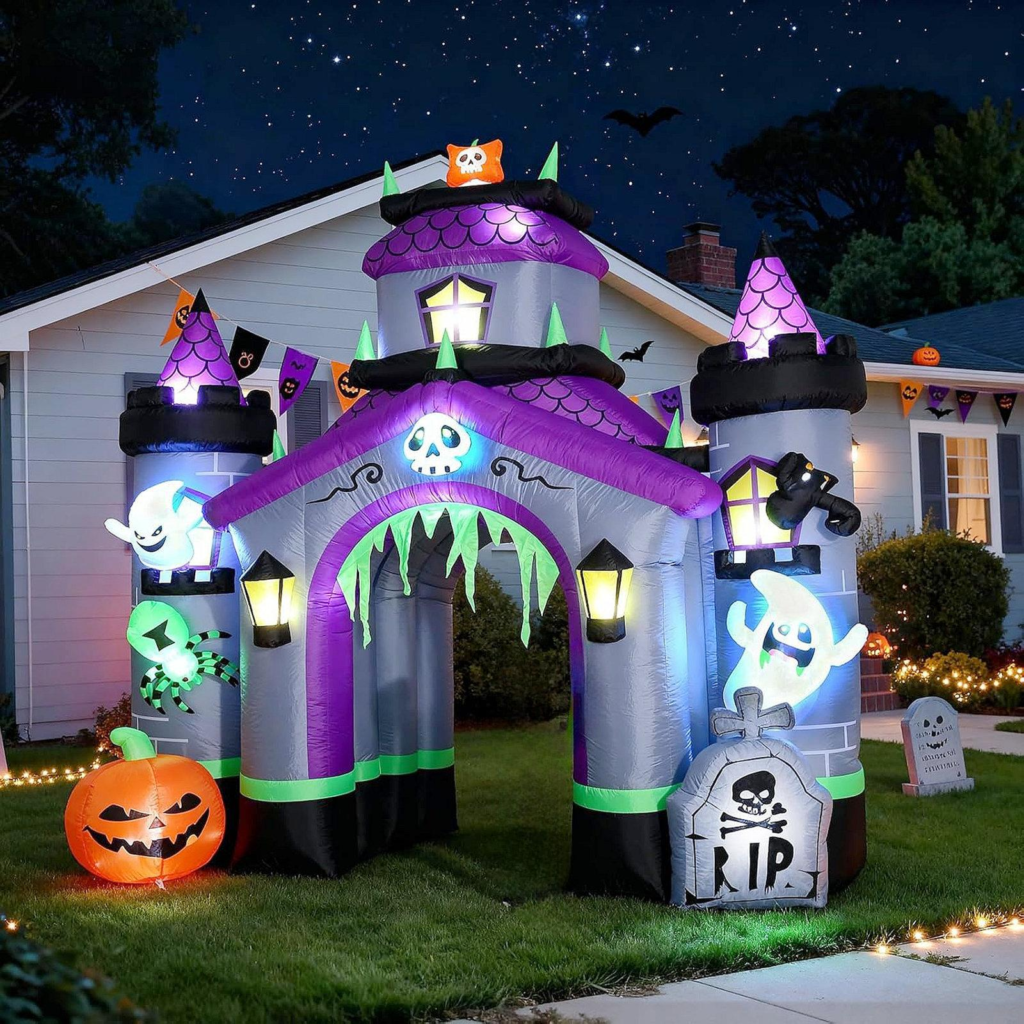
Bu, TPU kaplamalı malzemeleri dış mekan şişme balkabakları, hayaletler, iskeletler, dekoratif kemerler ve diğer dönemsel sahnelere değerli bir seçenek haline getirir. Yine de, bitmiş ürünün su geçirmezliği yalnızca kumaş yüzeyinden ibaret olmadığı için dikişler, kapaklar ve bağlantı noktaları da değerlendirilmelidir.
Katlanma ve depolama için esneklik
Dönemsel dekorasyonlar yıl boyunca her zaman şişik tutulmaz. Çoğu ürün, yeniden kullanılmadan önce birkaç ay boyunca boşaltılarak, katlanıp paketlenip depolanır.
Esnek kaplamalı bir kumaş, katlanma ve elle taşınmayı kolaylaştırabilir. Malzeme seçimi, özellikle katlanma, köşe ve kumaşın iç desteklerle temas ettiği bölgelerde, defalarca bükülüp sıkıştırılmasını hesaba katmalıdır.
Üreticiler, örnekleri defalarca şişirme, boşaltma ve katlama döngüleriyle test etmelidir. Yeni durumda iyi performans gösteren bir kumaş, uzun süreli depolama veya tekrarlı kullanım sonrasında farklı davranabilir.
Hafif TPU Kumaşı, Şişme Cadılar Bayramı Dekorasyonları İçin Uygun Mu?
Ağırlık, şişme dekorasyon üreticileri için önemli bir husustur. Büyük figürler çok miktarda kumaş gerektirebilir ve malzeme ürünün toplam ağırlığına katkıda bulunur. Daha hafif bir yapı, taşıma, kurulum ve sezon aralarındaki depolama sürecini daha pratik hale getirebilir.
Hafif TPU kaplamalı kumaşlar, portatiflik önceliği olan küçük dekoratif figürler ve şişme ürünler için değerlendirilebilir.
Örneğin, TPU kaplamalı 20D naylon ve hafif polyester yapılar, kompakt şişme dekorasyonlar, küçük balkabakları, hafif hayaletler ve diğer görece basit yapısal talepleri olan ürünler için değerlendirilebilir. Uygunlukları, özel kumaş spesifikasyonuna ve bitmiş ürünün tasarımına bağlıdır.
Hafif malzemelerin pratik değeri nerede vardır?
Hafif kumaşlar, birçok imalat ve ürün avantajı sağlayabilir:
- Daha düşük malzeme ağırlığı, kompakt şişme ürünlerin toplam ağırlığını azaltabilir.
- Esnek yapılar, katlama ve paketleme işlemlerini daha pratik hale getirebilir.
- Daha küçük kumaş paketleri, taşıma ve depo saklamayı kolaylaştırabilir.
- Hafif malzemeler, yüksek mekanik stres yaşamayan ürünler için uygun olabilir.
- Malzeme esnekliği, kıvrımlı yüzeylere ve çok sayıda paneli olan dekoratif şekilleri destekleyebilir.
Bu faydalar, ürün tasarımının ağır takviye gerektirmemesi veya tekrarlanan fiziksel temaslara karşı yüksek direnç göstermesi gerekmemesi durumunda en çok önem taşır.
Neden hafiflik yalnızca tek seçim kriteri olmamalıdır
Büyük bir açık hava şişme dekorasyonu, rüzgâr basıncı, ankraj noktaları etrafındaki hareketler ve paneller üzerindeki gerilmeler gibi etkilere maruz kalabilir. Çok hafif bir kumaş, bu koşullar için yeterli direnişi sağlayamayabilir.
Üreticiler, kumaşın ağırlığını; gerilme mukavemeti, yırtılma direnci, kaplama yapışma gücü ve şişme yapının boyutlarıyla birlikte değerlendirmelidir. Ayrıca bağlama noktaları, dikişler ve diğer yoğun stres alanları çevresinde takviyeye de ihtiyaç duyulabilir.
Hafif bir kumaş, otomatik olarak en ekonomik seçenek değildir. Hazır dekorasyonun sık sık onarım veya değiştirme gerektirmesi halinde, başlangıçtaki malzeme tasarrufu, daha yüksek bakım ve servis maliyetleriyle dengeleyebilir.
When Should Manufacturers Choose 210D, 420D, or 840D TPU Coated Fabric?
Not every Halloween inflatable decoration needs a lightweight fabric. Larger outdoor props, reusable commercial displays, and products exposed to frequent handling may require a more robust textile construction.
TPU coated nylon fabrics in 210D, 420D, and 840D constructions provide different options for manufacturers evaluating strength, weight, and handling requirements. Denier describes the linear density of the yarn, but it should not be treated as a direct measurement of finished fabric strength. Weave construction, coating, yarn quality, and manufacturing processes also influence performance.
| Fabric construction | Potential application direction | Main selection consideration |
|---|---|---|
| 210D TPU coated nylon | Medium-sized decorative inflatables and general-purpose props | Balance between weight and mechanical performance |
| 420D TPU kaplamalı naylon | Larger outdoor decorations and reusable event props | Greater fabric robustness for repeated handling |
| 840D TPU kaplamalı naylon | Heavy-duty decorative structures and demanding applications | Higher material weight and the need for stronger construction |
The table provides a starting point for material evaluation rather than a universal specification. Actual suitability must be confirmed through technical data and product testing.
210D for moderate material requirements
A 210D construction may be worth evaluating for inflatable decorations that need a balance between manageable weight and fabric strength. It can be considered for medium-sized pumpkins, ghosts, and other decorative figures, provided the design does not place excessive stress on the material.
The coating type and thickness should be matched to the intended application. Manufacturers should also check whether the selected construction can be processed using their planned joining method.
420D for larger and reusable props
A 420D TPU coated nylon fabric may be more appropriate when the decoration has a larger surface area or is expected to undergo frequent transportation and installation.
For example, commercial event operators may reuse the same inflatable decorations across several seasonal campaigns. In this case, resistance to handling damage becomes an important part of material selection.
Manufacturers should pay particular attention to the areas around attachment points, seams, and corners. These locations may experience more concentrated stress than the main fabric panels.
840D for demanding applications
An 840D construction can be considered for applications where a heavier textile base is needed. Large outdoor props, rugged event structures, and decorations that experience frequent handling may require this type of material evaluation.
However, a heavier fabric can also increase the total product weight and affect folding, transportation, and installation. It may not be necessary for small decorative figures or products designed for occasional indoor use.
The best construction is the one that meets the product’s mechanical requirements without adding unnecessary material weight or cost.
How Does TPU Coated Fabric Perform in Outdoor Halloween Conditions?
Outdoor use introduces several variables that manufacturers cannot fully control. Rain, sunlight, temperature changes, wind, and contact with surrounding surfaces can all affect the finished decoration.
Material selection should therefore be based on the actual operating environment.
Rain and moisture exposure
Waterproof TPU coated fabric can help protect the textile substrate from direct water penetration. This is useful for inflatable decorations displayed in gardens, outdoor shopping areas, and public event spaces.
However, the finished product still needs appropriate construction around seams, zippers, electrical connections, and other openings. For blower-driven inflatables, the design may also include ventilation openings that are part of normal operation. These should not be confused with defects in the coated fabric.
Manufacturers should test the complete decoration under conditions that reflect its intended use.
Sunlight and outdoor aging
Decorations displayed outdoors may receive prolonged exposure to sunlight. UV radiation can gradually affect polymers, coatings, colors, and other exposed components.
The degree of change depends on the TPU formulation, pigments, stabilizers, coating thickness, and exposure conditions. A general TPU fabric specification does not automatically establish long-term UV resistance.
For products intended for repeated outdoor use, manufacturers should request relevant test information from the material supplier and conduct aging evaluations where necessary. Color retention should also be checked, especially for bright orange, purple, green, and other colors commonly used in Halloween designs.
Temperature changes
Halloween displays may be installed in different climates. Some products are used in relatively warm autumn conditions, while others may experience cold nights or sudden temperature changes.
TPU formulations vary in low-temperature flexibility. Manufacturers should confirm the operating temperature range of the selected fabric rather than assuming that all TPU coated materials behave identically.
Cold-temperature testing can help identify whether the material becomes too stiff, develops surface cracks, or loses flexibility during folding and handling.
Wind and repeated movement
Large inflatable decorations can move under wind pressure. This movement may transfer stress to seams, anchor points, and connection areas.
Fabric strength is only one part of the solution. The decoration also needs suitable anchoring, balanced panel design, and reinforcement at stress concentration points.
For outdoor installations, manufacturers should evaluate the complete structure under realistic conditions rather than expecting the coated fabric alone to prevent wind-related damage.
Does Airtight TPU Fabric Suit Every Type of Halloween Inflatable?
The term inflatable decoration covers several different product structures. Some products use a sealed air chamber, while others rely on a continuous air supply from an electric blower. These two designs have different material and construction requirements.
Understanding the difference is important when selecting TPU coated fabric.
Sealed inflatable structures
A sealed inflatable product is designed to retain air within an enclosed chamber. Examples in other industries include inflatable sleeping pads, pillows, air cells, and certain portable structures.
For this type of construction, airtightness is a major material requirement. The coated fabric and its joining points must work together to limit air leakage.
Airtight TPU fabrics may be considered for sealed decorative products where the design requires air retention. Manufacturers need to verify the coating construction, joining compatibility, and air retention performance of the selected material.
Continuous-air inflatable decorations
Many large Halloween lawn decorations use an electric blower to maintain their shape. These products are not necessarily designed to retain air after the blower is switched off. Instead, air continuously enters the structure and escapes through designated openings or fabric areas.
For this type of product, the material requirements may place greater emphasis on lightweight construction, tear resistance, water resistance, flexibility, and seam durability.
Selecting a fabric only because it has high airtightness may not provide a meaningful advantage if the product is designed for continuous airflow. Manufacturers should match the material to the actual inflation method.
Why product structure should guide material selection
Before requesting a fabric quotation, manufacturers should clarify several design details:
- Is the product sealed or continuously inflated by a blower?
- What are the finished dimensions and expected operating pressure?
- Will the decoration be used indoors, outdoors, or in both environments?
- How frequently will it be inflated, deflated, folded, and transported?
- Are there areas that require additional reinforcement?
- Which joining process will be used during production?
These details help suppliers recommend a more suitable construction and reduce the risk of selecting a material that does not match the finished product.
How Does Fabric Joining Affect the Durability of Inflatable Decorations?
The durability of an inflatable decoration depends on both the fabric and the way its panels are joined. Even a technically suitable coated material can fail if the seams are poorly designed or processed.
For TPU coated fabric, high-frequency welding is one possible joining method, depending on the material construction and processing requirements. The compatibility of a specific fabric with HF welding should always be confirmed through production trials.
HF welding and seam consistency
High-frequency welding uses electromagnetic energy to generate heat within compatible thermoplastic materials. Under suitable processing conditions, it can create a bonded seam without relying on conventional needle stitching.
For inflatable products, seam quality affects air retention, structural strength, and long-term reliability. Manufacturers should evaluate welding temperature, pressure, processing time, electrode design, and material thickness.
A production setting that works for one TPU coated fabric may not work for another. Changes in coating formulation, substrate, and thickness can affect the welding window.
Reinforcement around high-stress areas
Certain parts of a Halloween inflatable decoration experience more stress than others. These may include:
- Tie-down and anchoring points
- Connections between the main body and decorative components
- Corners and curved transitions
- Valve or blower connection areas
- Handles and transportation points
Additional fabric layers or structural reinforcement may be required in these locations. The reinforcement design should distribute the load instead of creating an abrupt transition that concentrates stress at its edge.
Balancing appearance and manufacturing performance
Halloween decorations often contain complex shapes, contrasting colors, printed patterns, and multiple connected components. The material must support the intended visual design while remaining practical for cutting, joining, and assembly.
Manufacturers should test the complete panel construction before mass production. A visually attractive design may still create production difficulties if narrow seams, sharp corners, or complicated panel intersections are difficult to process consistently.
What Tests Should Manufacturers Conduct Before Mass Production?
Material samples and finished product prototypes should be evaluated before large-scale production. Testing helps identify weaknesses that may not be obvious from a technical data sheet or a visual inspection.
The exact test plan depends on whether the decoration is sealed or blower-driven, its size, and the conditions under which it will be used.
| Test item | What it evaluates | Neden önemli? |
|---|---|---|
| Çekme mukavemeti | Resistance to pulling forces | Helps assess fabric suitability for structural loads |
| Yırtılma direnci | Resistance to tear propagation | Important around corners and damaged areas |
| Kaplama yapışması | Bonding between coating and textile | Helps identify coating separation risks |
| Su direnci | Resistance to water penetration | Relevant to outdoor displays |
| Flexibility testing | Material behavior during bending and folding | Supports repeated storage and handling |
| Seam strength | Strength of joined fabric panels | Helps assess finished product reliability |
| Air retention testing | Leakage through fabric and seams | Required for sealed inflatable structures |
| Aging evaluation | Changes after environmental exposure | Useful for products intended for repeated outdoor use |
For sealed products, air leakage testing should include both the fabric and the finished seams. For continuous-air decorations, manufacturers should instead evaluate blower performance, airflow, structural stability, and the behavior of the material during extended operation.
A prototype should also be inflated and deflated repeatedly. This helps identify problems around welded seams, folds, valves, and reinforced areas before production quantities increase.
How Can Manufacturers Select the Right TPU Fabric Supplier?
The material supplier plays an important role in maintaining product consistency. For manufacturers producing seasonal decorations, material availability, specification control, and technical communication can influence production schedules and final product quality.
A supplier should be able to provide more than a general product description.
Check the technical specifications
Manufacturers should request information about the textile substrate, denier, coating type, thickness, weight, and relevant performance test results.
For TPU coated fabrics, it is also useful to clarify whether the coating is single-sided or double-sided and whether the material uses a polyester-based or polyether-based TPU formulation. These details can influence application suitability and processing behavior.
Confirm processing compatibility
If the production line uses HF welding, the supplier should help confirm whether the selected construction is compatible with the planned process. Sample testing is still necessary because actual welding performance depends on the material and machine settings.
Manufacturers should also check the material’s suitability for cutting, printing, folding, and other operations involved in the production process.
Evaluate customization options
Halloween products often use distinctive colors and visual designs. Material customization may involve color, substrate, coating thickness, fabric weight, and other construction details.
A supplier with customization capabilities can help manufacturers match the material to a specific product design. However, any change in formulation or construction should be reviewed because it may affect mechanical properties and processing performance.
Consider supply consistency
Seasonal production schedules can be demanding. Manufacturers may need to prepare materials well before the Halloween selling period and maintain consistent specifications across different production batches.
A reliable supply arrangement should include clear technical specifications, sample approval, production planning, and quality checks. These steps help reduce unexpected changes during mass production.
Final Considerations for Halloween Inflatable Decoration Manufacturers
TPU coated fabric can provide a useful material option for manufacturers producing Halloween inflatable decorations, particularly where waterproof protection, flexibility, manageable weight, and textile strength are important.
Lightweight TPU coated nylon and polyester constructions may suit compact decorative products, while 210D, 420D, and 840D TPU coated nylon fabrics can be evaluated for larger or more demanding applications. Airtight TPU fabrics may also be relevant to sealed inflatable structures, but they should not be treated as a universal requirement for blower-driven decorations.
The most suitable material depends on the product’s inflation method, dimensions, outdoor exposure, handling frequency, and manufacturing process. Fabric testing, seam evaluation, and prototype trials are essential before mass production.
Xianglong Polymer Fabric supplies TPU coated fabrics in different textile constructions for inflatable, outdoor, and technical applications. Manufacturers can evaluate suitable options according to their required fabric weight, substrate, coating construction, and finished product design. Selecting the material around real production and operating conditions is a more reliable approach than choosing a fabric based on a single specification.