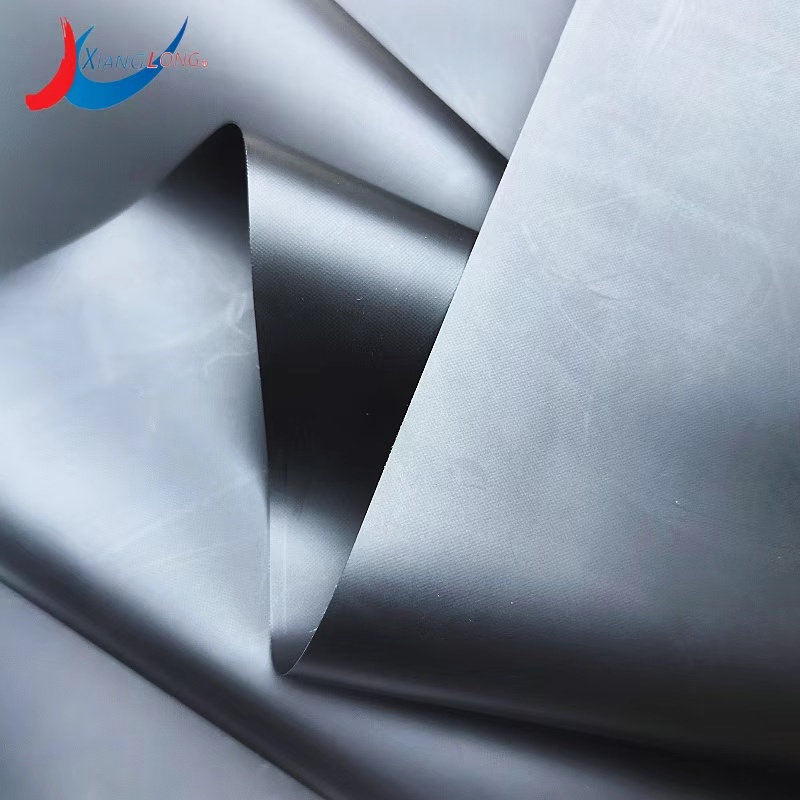
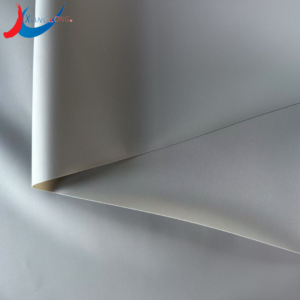
The XL Double-sided TPU Coated Nylon66 210D Black is developed for manufacturers producing medical inflatable products where stable air retention, long service life, and dependable mechanical performance are expected throughout daily clinical use. Combining a high-tenacity 210D Nylon66 woven fabric with medical-grade TPU coatings on both sides, this material offers an excellent balance between structural strength, flexibility, airtight performance, and manufacturing efficiency.
Instead of relying on heavy coatings to compensate for a weak substrate, this construction begins with a stronger textile foundation. Nylon66 provides higher tensile strength and better dimensional stability than many conventional nylon fabrics, allowing the finished material to maintain its shape even after repeated inflation, folding, transportation, and patient movement. The TPU coating then creates a continuous airtight barrier while protecting the woven structure from moisture, biological fluids, cleaning chemicals, and everyday abrasion.
For manufacturers of Medical Inflatable Fabrics, long-term consistency is often more important than maximum mechanical values measured under laboratory conditions. Air chambers may inflate and deflate thousands of times during the service life of a pressure relief mattress or patient transfer system. Maintaining stable material performance throughout those cycles is one of the primary reasons why many medical device manufacturers continue to select TPU Coated Nylon66 Fabric for pressure-controlled medical equipment.
Material Construction
Material selection has a direct influence on the reliability of inflatable medical products. The woven base fabric carries the mechanical load, while the TPU coating determines airtightness, weldability, chemical resistance, and surface durability. Both components must work together without creating weak points that shorten product life.
The 210D Nylon66 substrate provides a compact woven structure with excellent tear resistance and low deformation under continuous loading. Compared with standard nylon fabrics, Nylon66 maintains better dimensional stability during repeated pressure cycling, helping air chambers retain their original geometry over extended periods of use. Stable chamber dimensions contribute to more predictable pressure distribution inside alternating pressure mattresses and other dynamic medical support systems.
Medical-grade TPU is laminated to both sides of the fabric using a controlled coating process that produces a uniform protective layer across the entire surface. Because both sides share the same material characteristics, manufacturers gain greater flexibility during fabrication while the finished product benefits from balanced mechanical behavior throughout the laminate.
The double-sided construction also creates a smoother surface that is less likely to trap contaminants than textured woven fabrics. Daily cleaning becomes faster, while repeated exposure to commonly used hospital disinfectants has less impact on the appearance and physical performance of the material.
Consistent Performance During Pressure Cycling
Many inflatable medical devices spend their entire service life under changing internal pressure rather than remaining in a fully inflated condition. Dynamic pressure redistribution mattresses, inflatable positioning systems, rehabilitation cushions, and patient transfer equipment repeatedly alternate between inflation and deflation to improve comfort and reduce localized pressure on the body.
This operating environment introduces a different type of material fatigue. Instead of resisting a single high load, the fabric must withstand thousands of smaller deformation cycles without losing elasticity or compromising airtight performance.
The combination of Nylon66 and TPU performs particularly well under these conditions. The woven structure provides the strength needed to support internal pressure, while the elastic TPU coating follows the movement of the fabric rather than separating from it. This coordinated behavior helps reduce stress concentration around welded areas and minimizes the risk of coating fatigue during long-term operation.
For manufacturers producing Medical Air Mattress Fabric, maintaining pressure stability is often one of the most important product requirements. Small variations in material performance may influence chamber inflation speed, pressure distribution, and overall therapeutic effectiveness. A stable fabric structure allows engineers to focus on product performance without compensating for inconsistent material behavior.
The same advantages are valuable in Medical Transfer Mattress Fabric, inflatable evacuation systems, and rehabilitation equipment that experience frequent movement throughout everyday clinical use. Repeated folding for storage, transportation between departments, and rapid deployment during emergencies all place additional demands on the material beyond simple tensile strength.
Double-sided TPU Protection
Applying TPU to both sides of the fabric provides more than an airtight layer. It creates a balanced laminate in which every surface contributes to overall durability.
The inner TPU layer forms a dependable air barrier that helps maintain internal pressure throughout extended operating periods. The outer layer protects the woven reinforcement against abrasion, moisture, body fluids, and routine contact with hospital equipment. Because the protective coating completely covers both sides of the fabric, the textile reinforcement remains isolated from many of the external factors that gradually reduce the service life of conventional coated materials.
This symmetrical construction also improves fabrication flexibility. During production, both surfaces are compatible with high-frequency welding, allowing manufacturers to simplify assembly while maintaining consistent seam quality across different product designs.
The smooth matte black surface provides another practical advantage. Compared with lighter materials, it maintains a cleaner appearance during repeated handling and reduces the visibility of stains caused by everyday clinical use. For medical equipment that remains in service for extended periods, appearance is closely connected with product quality and user confidence.
Reliable HF Welding Performance
For inflatable medical equipment, seam quality is just as important as the fabric itself. Even a material with excellent mechanical properties cannot deliver stable performance if the welded joints become the weakest point of the product. Air leakage, uneven pressure distribution, and premature product failure are often traced back to inconsistent welding rather than the base material.
The TPU layers on both sides of this fabric respond consistently during high-frequency welding, allowing manufacturers to produce clean, uniform seams with repeatable results. Stable welding characteristics help reduce process variation during mass production and improve the overall consistency of inflatable chambers.
For products containing multiple air cells, internal baffles, or complex chamber layouts, uniform weld quality becomes increasingly important. Manufacturers can achieve reliable sealing without introducing excessive heat that may damage the woven reinforcement. This contributes to better production efficiency while maintaining the airtight performance expected from HF Weldable TPU Fabric used in medical equipment.
The material is also compatible with automated cutting and digital manufacturing processes commonly adopted by medical device producers. Consistent material thickness and coating distribution help improve dimensional accuracy throughout production, supporting both prototype development and high-volume manufacturing.
Resistance to Hospital Cleaning and Daily Clinical Use
Unlike outdoor inflatable products, medical devices are exposed to frequent cleaning throughout their service life. Surfaces may be wiped several times a day using alcohol-based cleaners, disinfectant solutions, or other hospital-approved cleaning agents. Materials that deteriorate after repeated cleaning can shorten equipment life and increase replacement costs.
The continuous TPU coating acts as a protective layer that limits the penetration of moisture and biological fluids into the woven structure. Daily cleaning can be carried out efficiently because the smooth surface is easier to wipe than uncoated textiles with exposed fibers.
Repeated contact with common hospital disinfectants has minimal impact on the appearance of the coating when appropriate cleaning procedures are followed. The material also resists moisture absorption, helping maintain dimensional stability in environments where humidity and routine sanitation are part of daily operation.
For manufacturers developing Medical Grade TPU Coated Fabric products, long-term cleanability has become just as important as tensile strength or airtight performance. A material that retains its surface quality after years of clinical use contributes directly to lower maintenance requirements and a longer product service life.
Patient Comfort Begins with Material Selection
Performance specifications are only one part of medical product development. Patient comfort remains equally important, particularly for equipment used over extended periods.
The TPU surface provides a smooth contact layer that reduces friction between the product and external protective covers. This helps minimize unnecessary abrasion during repositioning while improving the overall handling characteristics of inflatable medical devices.
The flexibility of the material also allows inflatable chambers to respond more naturally to changes in body position. Instead of creating excessive resistance during movement, the fabric follows pressure variations while maintaining chamber integrity. This characteristic is valuable for products intended to support pressure redistribution, patient positioning, rehabilitation therapy, and prolonged bed care.
The matte black finish further improves the appearance of finished medical products by creating a clean, professional surface that remains visually consistent throughout repeated use.