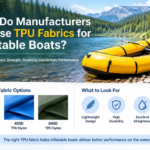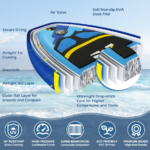


インフレータブルカヤックに使用される素材は、見た目以上の影響を及ぼします。空気の保持性能、収納時の折りたたみやすさ、ユーザーが運ぶ必要のある重量、そして水や装備、粗い表面との繰り返し接触に対する構造の耐久性などを左右するのです。
メーカーにとって、素材の選定は通常、生地の強度、柔軟性、気密性、そして生産要件の間で適切なバランスを見つけることに帰着します。TPUコーティングナイロンは、織物ベースに熱可塑性ポリウレタン(TPU)層を組み合わせた素材であり、インフレータブル製品に用いられる選択肢の一つです。ナイロンが構造的な支持力を提供し、TPU層が空気の保持を助け、かつ溶着加工に対応しています。
しかし、すべてのインフレータブルカヤックに適した単一の生地仕様というものは存在しません。軽量なレクリエーションモデルと、ツーリング用カヤックやより過酷な水域での使用を想定したモデルでは、求められる性能が異なります。生地のデニール数、コーティング構造、厚み、縫製デザインなど、完成品との関連性を考慮して選定する必要があります。
インフレータブルカヤックにはどのような素材が使われているのか?
インフレータブルカヤックは一般的に、コーティングされたテキスタイル素材で製造されます。生地は気密性のある構造を形成しつつ、折りたたみや輸送、日常的な取り扱いに十分な柔軟性を備えている必要があります。
PVCコーティング生地とTPUコーティング生地は、インフレータブル製品の製造において見られる二つの素材オプションです。どちらも適切な構造で使用可能ですが、素材特性や加工要件は異なります。
PVCコーティング生地
PVCコーティング生地は長年にわたりインフレータブル製品に使用されてきました。テキスタイルベースに塩化ビニル(PVC)コーティングを施し、防水性と、互換性のある接合方法で加工可能な表面を実現しています。
メーカーにとっては、材料コスト、既存の生産設備、確立された製造プロセスが重要な要素となる場合、PVCが検討対象となります。その適否は、具体的な配合、生地構造、および想定される使用条件によって決まります。
考慮すべき点の一つは、繰り返しの折りたたみや保管における素材の挙動です。一部のPVC構造は、特定の環境条件下での長期曝露後に柔軟性を失うことがあります。実際の結果は配合や製品設計に依存するため、メーカーは関連する経年劣化試験や折りたたみ試験を通じて素材を評価する必要があります。
TPUコーティングナイロン
TPUコーティングナイロンは、織り込まれたナイロン基材に熱可塑性ポリウレタン(TPU)コーティングを組み合わせたものです。この二層はそれぞれ異なる機能を果たします。
ナイロン基材は引張強度と耐裂け性に寄与します。一方、TPUコーティングは柔軟なバリアとして気密構造を支え、適切なヒートシールまたは高周波溶着プロセスで接合可能です。
インフレータブルカヤックにおいて、機械的強度、柔軟性、空気保持のバランスが求められる場合には、この組み合わせを評価する価値があります。
TPUコーティングナイロンにはさまざまな生地構造があります。メーカーは、必要な重量、機械的特性、部品設計に応じて210Dと420Dのナイロンを比較検討できます。デニール数だけでは最終的な性能を判断することはできません。
インフレータブルカヤック向けTPU対PVC生地
TPUとPVCの選択は、ある素材が常に優れているという一般的な思い込みではなく、完成したカヤックの要求仕様に基づいて行うべきです。
両素材ともに異なる配合や構造を持ち、その性能はテキスタイルベース、コーティングの厚み、添加剤、製造工程、環境曝露によって変化します。
| 評価要因 | TPUコーティングナイロン | PVCコーティング生地 |
|---|---|---|
| テキスタイルベース | 一般的に織られたナイロン | ポリエステルやその他のテキスタイルベース |
| 柔軟性 | TPUの配合と構造に依存する | PVCの配合と可塑剤システムに依存する |
| 気密性 | 適切な気密バリア性能を提供できる | 適切な気密バリア性能を提供できる |
| 接合方法 | 適切なHF溶着およびヒートシールに対応する | 適切な溶着プロセスに対応する |
| 折りたたみ挙動 | 繰り返しの折りたたみ下での評価が必要 | 繰り返しの折りたたみ下での評価が必要 |
| 素材の選定 | 柔軟性が重視される技術系インフレータブルでよく検討される | 確立されたPVC加工とコストが優先される場合にもよく検討される |
柔軟性と繰り返し折りたたみ
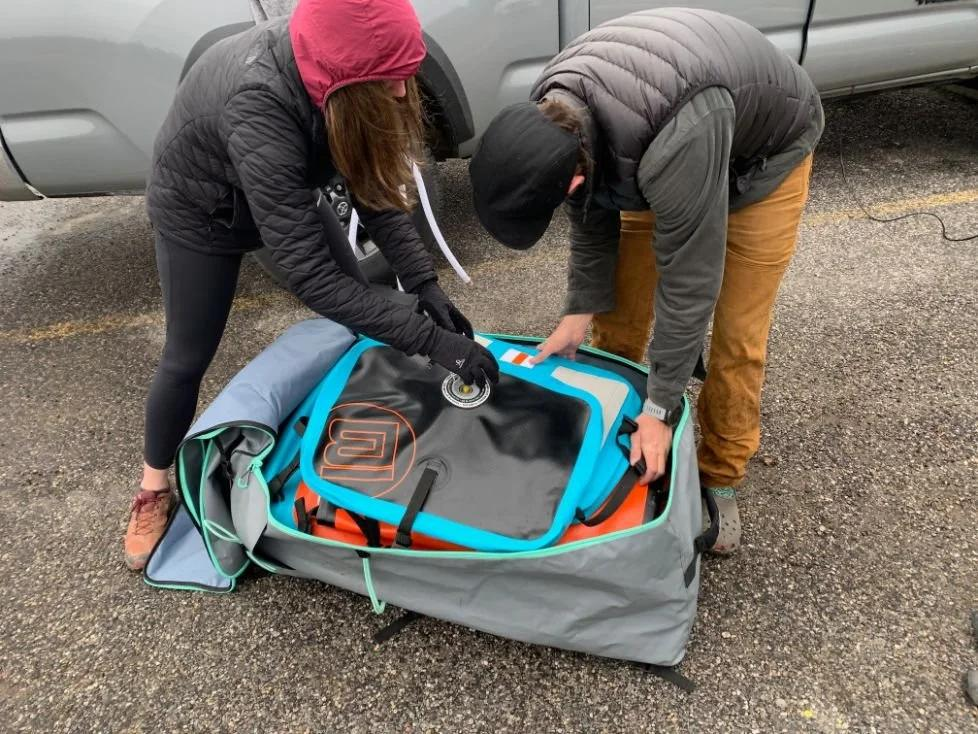
インフレータブルカヤックは使用後、頻繁に空気を抜かれます。生地は収納バッグに折りたたまれ、車両で運ばれ、次の旅行のために再び展開されます。
この過程で、コーティングはテキスタイルベースにしっかりと付着した状態を保つ必要があります。繰り返しの曲げにより、コーティングや二層間の界面にストレスがかかる可能性があります。
TPUコーティングナイロンは、折りたたみ時の柔軟性が重要な製品にしばしば選ばれます。ただし、結果はTPUの配合、コーティングの厚み、生地構造に依存します。
メーカーは、実際のサンプルを繰り返しの折りたたみサイクルでテストする必要があります。試験後は、表面のひび割れ、コーティングの剥離、気密性能の変化がないか確認してください。
気密性と縫製構造
コーティング生地は、表面からの空気透過を抑制しなければなりません。同時に、縫い目やバルブ接続部は信頼性の高い密封を維持する必要があります。
TPUには熱可塑性の特性があり、適切なTPUコーティング生地は高周波溶着やヒートシールに対応できます。これらのプロセスにより、従来の針縫いに頼らずに密封された継ぎ目を作ることができます。
完成した縫い目の品質は、依然として素材の適合性、接合デザイン、装置設定、作業者の操作に依存します。TPUもPVCも、自動的に漏れのないカヤックを保証するものではありません。
環境曝露
インフレータブルカヤックは、水、日光、湿度、温度変化などの環境下で使用されます。素材選択は、想定される使用条件を反映したものでなければなりません。
加水分解耐性が重要な場合、特に長時間湿気にさらされる製品には、ポリエーテル系TPUがよく検討されます。ただし、メーカーは、すべてのTPUコーティングが同じレベルの耐性を提供すると決めつけるのではなく、具体的な配合と入手可能な試験データを確認する必要があります。
頻繁な屋外使用を想定した製品については、環境経年劣化試験により、コーティングやテキスタイル構造が所定の特性を維持しているかどうかを評価することができます。
210Dと420DのTPUコーティングナイロン、どちらがインフレータブルカヤックに適しているのか?
デニールは、ナイロン生地を比較する際に重要な仕様です。これは糸の線密度を示します。デニール数が高いほど一般的に糸は重くなりますが、完成した生地がすべての用途でより優れた性能を発揮するわけではありません。
インフレータブルカヤックの開発においては、210Dと420DのTPUコーティングナイロンの二つの構造を比較検討する価値があります。その適否は、目標とする製品重量、機械的要件、コーティング構造、および製造プロセスに依存します。
重量を意識した設計向けの210D TPUコーティングナイロン
製品チームが要求される構造性能を維持しつつ生地の重量を抑える必要がある場合、210D TPUコーティングナイロンが検討対象となります。
より軽量なテキスタイル構造は、完成したカヤックの総重量に占める素材の寄与を低減するのに役立ちます。これは、ユーザーが車両・保管場所・離水地点間で持ち運ぶ必要のあるレクリエーション向けモデルにおいて特に重要です。
ただし、軽量化は必要な強度を犠牲にしてはなりません。メーカーは引張強度、耐裂性、コーティング密着性、および溶着部の挙動を評価する必要があります。
Xianglong社の XL TPUコーティング210Dナイロン は、TPUコーティングを施した210Dナイロンベースを使用しています。公表されている製品情報には、片面TPUコーティングの厚さが0.15mm、生地の総重量が300±15g/m²と記載されています。これらの仕様は初期比較の参考になりますが、特定のカヤックに対する素材の適合性は、サンプル試験によって最終的に確認する必要があります。
より厳しい構造要件に対応する420D TPUコーティングナイロン
420D TPUコーティングナイロンは、強度・耐摩耗性・重量のバランスを変更する必要があるプロジェクトにおいて、メーカーが評価対象とすることができる、より重いテキスタイル構造を提供します。
選択されたカヤック部品や、より過酷な取り扱い条件にさらされることが予想される製品に採用が検討される場合があります。カヤック全体に適しているかどうかは、設計内容および試験結果次第です。
Xianglong社の XL TPUコーティング420Dナイロン は、製品仕様書において片面TPUコーティングの厚さが0.15mm、生地の総重量が375±20g/m²と公表されています。記載されているベース生地は420Dナイロンです。
この構造を210Dと比較する際は、デニール数が高いからといって自動的に要求される性能が得られるとは限らないため、メーカーは仕様全体を見渡す必要があります。
両オプションをどのように比較すべきか?
製品チームは、同一の評価基準を用いて両素材を比較するべきです。
重要な測定項目には以下が含まれます:
- 生地の総重量および厚さ
- 経糸および緯糸方向の引張強度
- 裂け抵抗
- Abrasion resistance
- コーティングの密着性
- 空気透過率
- 繰り返し折りたたみ後の柔軟性
- 溶着部の強度および漏れ防止性能
結果は、カヤックの用途と併せて考慮する必要があります。レクリエーション用湖沼カヤックに求められる性能を満たす素材でも、岩が多い河川岸辺での頻繁な接触を想定した製品には適さない場合があります。
インフレータブルカヤックのどの部分に強度の高い生地が必要か?
インフレータブルカヤックは複数の構成部品からなり、各部品は異なる荷重を受けます。メインエアチェンバー、フロア、シートエリア、および取り付け部は、必ずしも同一の素材要件を持つとは限りません。
これらの違いを考慮した製品設計により、必要な性能を維持しながら素材の重量を抑制することが可能です。
サイドチェンバーやメインエアチューブ
サイドチェンバーはカヤックの膨らませる構造を維持します。空気を保持し、設計形状を保ち、使用中に発生する荷重に耐える必要があります。
素材選定では、空気保持力、引張強度、コーティング密着性、および縫製構造を考慮する必要があります。
チェンバーの形状も重要です。湾曲したパネル、端部、長尺の溶着継手などは、それぞれ異なる生産条件を生じさせる可能性があります。メーカーは、素材承認前に意図した設備を用いて代表的なサンプルを加工するべきです。
フロアパネル
フロアは異なる環境条件にさらされます。ユーザーは座ったり、装備を移動させたり、バッグやその他の物品を表面に置いたりします。離水時や着水時には、下面が砂・小石・荒れた地面に接触することもあります。
製品設計によっては、サイドチェンバーよりもフロアに対してより高強度な生地構造を評価する場合があります。
一部のフロア設計については、420D TPUコーティングナイロン構造の試験が価値あるものとなる可能性があります。予想される耐摩耗性や機械的荷重が追加の素材重量を正当化する場合には、より重いオプションも検討できます。
最終的な決定は、耐摩耗性・耐穿刺性・耐裂性および完成品試験によって裏付けられるべきです。
シートサポートおよび取り付け部
ハンドル、シートサポート、フットレスト、アクセサリー取り付け部などは、比較的小さな面積に荷重を集中させることがあります。
補強パネルを追加することでこれらの荷重を分散できる場合がありますが、その形状や接合方法も同様に重要です。不適切に設計された補強材は、荷重を軽減するどころか、むしろ追加パネルの端部に応力を集中させてしまう可能性があります。
メーカーは、適切な引張試験または繰り返し荷重試験を通じて、取り付け構造全体をテストするべきです。周囲の生地や溶着部に変形や剥離がないか確認する必要があります。
なぜ気密性TPU生地がインフレータブルカヤックに適しているのか?
気密性は、インフレータブルカヤックにとって最も重要な素材要件の一つです。生地は表面からの空気漏れを抑えなければならず、完成した構造体は信頼性の高い溶着部やバルブ接続を維持する必要があります。
気密性TPU生地の性能は、いくつかの関連因子に依存します。
TPUコーティングの厚さと均一性
コーティング厚さは生地の総重量、柔軟性、およびバリア特性に影響を与えます。厚いコーティングが必ずしも優れているわけではなく、素材の剛性や加工特性を変化させる可能性もあるため注意が必要です。
均一なコーティングは、安定した素材性能のために重要です。コーティング厚さや表面状態のばらつきは、空気保持力と溶着結果の両方に影響を及ぼす可能性があります。
メーカーはサプライヤーにコーティング仕様を要求し、入荷検査および試験を通じて重要な特性を確認するべきです。
コーティング密着性
TPUコーティングは、折りたたみ、膨張、収縮、および通常の取り扱い中にナイロンベースにしっかりと接着していなければなりません。
密着性が不十分な場合、コーティングがテキスタイル基材から剥がれる可能性があります。これにより、素材の表面状態や長期的な密封性能に影響を及ぼす恐れがあります。
コーティング密着性は適切な試験方法を用いて評価する必要があります。繰り返し折りたたみが予想される製品については、コンディショニング後または機械的サイクル試験を行うことで、追加情報を得ることができます。
空気透過率
空気透過率試験は、定義された条件下で生地を通過する空気量を評価するのに役立ちます。
ただし、生地レベルでの試験は評価の一要素にすぎません。完成したカヤックには溶着部、バルブ、その他の接続部も存在し、これらが圧力保持に影響を与える可能性があります。
そのため、メーカーは素材試験と同時に完成品の漏れチェックも実施するべきです。これにより、生地自体の問題か組立に関連する問題かを区別することができます。
How Are TPU Fabrics Welded During Inflatable Kayak Production?
The joining process has a direct effect on the quality of the finished kayak. Even a suitable fabric can produce inconsistent results if the welding process is not properly matched to the material.
TPU-coated nylon can be processed using compatible high-frequency welding or heat-sealing equipment.
高周波溶着
High-frequency welding uses electromagnetic energy to generate heat within compatible thermoplastic materials. Pressure is applied during the process to create a bonded joint.
For inflatable kayak production, the method may be used for chamber seams and other suitable connections.
The welding result depends on several factors:
- TPU formulation and coating construction
- Fabric thickness and number of layers
- Electrode shape and contact area
- Welding time and applied pressure
- Equipment condition and process consistency
- Material positioning and surface cleanliness
Manufacturers should establish a suitable processing window through sample trials. The same parameters should not be assumed to work for every TPU-coated fabric.
ヒートシール
Heat sealing uses controlled temperature and pressure to join compatible thermoplastic surfaces.
The process needs to be adjusted to the specific fabric. Insufficient heat may result in incomplete bonding, while excessive heat can damage the coating or affect the textile base.
Production trials should examine the seam appearance, bonding strength, and air leakage. The results should be documented so that the process can be repeated consistently.
Why Seam Testing Matters
Airtight fabric does not guarantee airtight seams. Joint design, overlap width, welding conditions, and panel alignment all affect the finished connection.
Manufacturers should evaluate welded samples before moving into full prototype production.
Useful checks include peel strength, seam tensile strength, visual inspection, and leakage testing under defined pressure conditions. Representative kayak assemblies should also be tested because flat welded samples cannot reproduce every condition found in the finished product.
What Tests Should Be Completed Before an Inflatable Kayak Goes into Production?
Material approval should connect supplier specifications with actual manufacturing conditions. A fabric that looks suitable on paper may behave differently after cutting, welding, folding, and inflation.
A practical validation process should cover the material, the welded joints, and the finished kayak.
Fabric Inspection
Incoming material should be checked against the approved specification.
The inspection may include fabric weight, thickness, width, coating appearance, surface defects, and batch consistency. Where required, samples can be retained for comparison with later deliveries.
Mechanical Testing
Tensile strength and tear resistance provide information about how the fabric responds to mechanical loads. Abrasion and puncture tests may also be necessary depending on the kayak’s intended use.
The test methods should be agreed upon before material approval. Results from different methods should not be treated as directly comparable.
Folding and Inflation Cycles
Repeated folding and inflation can place stress on the coating and welded joints.
Manufacturers can develop a cycling test based on the expected product handling conditions. After the test, the fabric and seams should be inspected for coating damage, separation, deformation, and leakage.
Environmental Evaluation
Outdoor kayaks may be exposed to sunlight, moisture, and temperature changes during use and storage.
Where relevant, manufacturers may conduct UV exposure, humidity, hydrolysis, or temperature-aging tests. The selection of test conditions should reflect the intended market and expected service environment.
After conditioning, the material should be checked for changes in flexibility, adhesion, appearance, mechanical performance, and air retention.
Prototype Water Testing
A finished prototype should be evaluated under controlled water-use conditions before production approval.
The test plan may include pressure retention, load performance, stability, handling, and inspection of high-stress areas. Any abnormal pressure loss should be investigated to determine whether it comes from the fabric, a welded seam, a valve, or another component.
This step helps prevent material changes from being made when the actual issue lies elsewhere in the product structure.
How Can Manufacturers Keep Inflatable Kayak Material Costs Under Control?
Material cost is an important part of product development, but choosing the lowest-priced fabric does not always result in the lowest total production cost.
A fabric that is difficult to weld or produces inconsistent seams can increase scrap rates and labor requirements. A material that does not meet the expected service conditions may also increase warranty and replacement costs.
Product teams should evaluate the complete manufacturing impact.
Consider the Weight of the Finished Product
The weight of one fabric sample does not show the full impact on the finished kayak. Manufacturers need to calculate material consumption across all panels, reinforcements, and accessories.
A heavier fabric may be justified in a high-wear area but unnecessary in other components. Reviewing the material distribution can help avoid adding weight where it does not address a specific requirement.
Balance Material Cost and Production Yield
The fabric should be compatible with the cutting and welding process. Material consistency can affect panel alignment, seam appearance, and production yield.
During sample production, manufacturers should record processing parameters and identify any recurring defects. This information helps the team assess whether a material is suitable for regular production rather than just a single prototype.
Control Changes Between Material Batches
A change in fabric weight, coating thickness, or surface condition may affect welding performance.
Manufacturers should maintain an approved material specification and review any proposed supplier or construction changes before using them in production. Incoming inspection and batch records help identify differences before they affect finished kayaks.
Where Can Manufacturers Source TPU-Coated Nylon for Inflatable Kayaks?
Material sourcing should begin with the actual product requirements. Suppliers need information about the kayak type, target weight, component structure, expected operating conditions, and joining process before they can recommend suitable fabric constructions.
Xianglong Polymer Fabric provides TPU-coated nylon options for inflatable applications, including 210D and 420D constructions. These materials can be reviewed against the required fabric weight, mechanical properties, coating structure, and welding process.
The Airtight TPU Fabrics collection includes fabric options for inflatable boats, kayaks, and rescue rafts. Manufacturers can review the available constructions and compare them according to their product requirements.
For water-based applications, the Water Sports & Marine material range provides further information about TPU fabrics used in inflatable and marine equipment.
Before confirming an order, manufacturers should request the relevant technical data sheet and samples. The selected fabric should be processed using the intended production equipment and validated through mechanical, welding, and finished-product tests.
The best material for an inflatable kayak depends on how the finished product will be used. TPU-coated nylon is worth considering when manufacturers need a combination of textile strength, flexible construction, airtight performance, and compatibility with suitable welding processes.
A 210D construction may be evaluated for designs where weight is important, while 420D nylon may be considered when the product requires a different balance of strength and weight. The floor, side chambers, and reinforcement areas may also have different material requirements.
The final specification should be based on complete fabric data, sample processing, seam testing, and prototype evaluation. Comparing materials under the same conditions gives manufacturers a more reliable basis for product development and production approval.