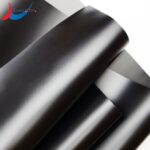








Selecting a TPU coated nylon fabric often appears to be a simple comparison of specifications. Product catalogs list denier, fabric weight, coating thickness, tensile strength and tear resistance, making it easy to assume that choosing the material with the highest numbers will naturally produce the best product.
In reality, product development rarely works that way.
Experienced product managers know that every material decision creates a chain reaction throughout the entire project. Changing the nylon base fabric does more than affect mechanical performance. It influences product weight, manufacturing efficiency, shipping costs, retail pricing, user experience and even long-term brand reputation.
This is why development meetings rarely begin with a discussion about whether 210D, 420D or 840D nylon is “better.” Instead, the conversation usually starts with a different question:
What kind of product are we trying to build, and what experience do we want to deliver to the end user?
Once that objective becomes clear, material selection becomes much more logical.
For manufacturers producing inflatable boats, hydration reservoirs, medical air mattresses, dry bags, rescue equipment and industrial containment systems, choosing the right nylon base fabric is not simply a purchasing decision. It is one of the most important product strategy decisions made during development.
Every Successful Product Starts with the Right Material Decision
Many people think of TPU coated fabric as a single material. From an engineering perspective, however, it is a composite system made up of two distinct components that perform different functions.
The nylon base fabric provides structural strength. It carries the tensile loads generated during inflation, repeated folding and everyday use. The TPU coating contributes airtight performance, waterproof protection, flexibility and weldability while shielding the reinforcement layer from moisture and environmental exposure.
Neither layer can perform effectively without the other.
This relationship explains why two fabrics with the same TPU coating may behave very differently once different nylon substrates are introduced.
Why Product Managers Rarely Begin with Fabric Specifications
When a new project starts, product managers usually focus on market requirements rather than material properties.
Questions discussed during the early planning stage often include:
- Who will use the product?
- How frequently will it be transported?
- Will lightweight performance be a selling point?
- How long is the expected service life?
- Which environments will the product operate in?
- What retail price should the finished product achieve?
Only after these questions have been answered does the engineering team begin evaluating suitable materials.
This approach prevents one of the most common mistakes in product development—choosing materials based solely on impressive specifications rather than actual product requirements.
Product Manager’s Note
Material selection should support the product strategy, not define it. Starting with the fabric instead of the customer often leads to unnecessary cost, additional weight and reduced competitiveness.
One Material Decision Influences the Entire Product Lifecycle
Changing from 210D nylon to 420D nylon may appear to be a minor engineering adjustment, yet its effects can be felt throughout the product lifecycle.
A heavier fabric increases the weight of every finished unit, which directly affects freight costs and warehouse handling. It may also require different welding parameters during production, influence cycle times on the manufacturing line and change the way customers perceive the product once they hold it in their hands.
For brands selling internationally, these differences become increasingly important.
A few hundred grams saved on each product may reduce shipping expenses across thousands of units while also improving portability for end users.
Conversely, choosing a fabric that is too light for the intended application can increase warranty claims, repair costs and negative customer feedback.
Successful products are built on balance rather than extremes.
Why the Nylon Base Fabric Matters More Than Most Buyers Realize
Many first-time buyers assume the TPU coating is responsible for most of the fabric’s strength because it forms the visible outer surface.
In practice, the opposite is true.
The woven nylon reinforcement absorbs the majority of structural loads, while the TPU coating enables sealing, flexibility and environmental protection.
Thinking of the TPU coating as the “armor” and the nylon fabric as the “skeleton” provides a useful analogy. Both are essential, but they perform very different jobs.
The Base Fabric Carries the Load, TPU Protects It
During inflation, internal air pressure creates tensile forces throughout the structure.
These forces are transferred primarily through the woven reinforcement fabric.
Meanwhile, the TPU layer performs several equally important functions:
- Creates an airtight barrier
- Prevents water penetration
- Enables heat or RF welding
- Improves abrasion resistance
- Protects the textile from environmental exposure
This division of responsibilities explains why selecting the right nylon substrate is just as important as choosing the appropriate TPU formulation.
Why Denier Is Only One Part of the Story
Denier is one of the first numbers buyers notice when comparing fabrics.
Higher denier generally indicates thicker yarns and greater potential strength, but it should never be treated as the only indicator of material performance.
Several additional factors influence the finished fabric, including:
- Yarn quality
- Weaving density
- Ripstop construction
- TPU formulation
- Coating thickness
- Lamination consistency
- Welding compatibility
Two 420D TPU coated fabrics may carry the same denier rating while delivering noticeably different performance because their construction methods differ.
Product managers therefore evaluate the complete material system rather than focusing on a single specification.
Choosing 210D: When Lightweight Creates More Value Than Strength
For many outdoor brands, reducing weight has become one of the strongest selling points available.
Consumers expect modern equipment to be lighter than previous generations without sacrificing reliability.
This trend has increased demand for 210D nylon across numerous inflatable applications.
The objective is not simply to reduce fabric weight.
It is to improve the overall product experience.
Products Designed to Be Carried, Not Dragged
Certain products spend most of their service life on a customer’s back rather than in a warehouse or industrial environment.
Examples include:
- Hydration reservoirs
- Soft flasks
- Lightweight dry bags
- Inflatable camping pillows
- Portable medical air bladders
- Emergency water storage bags
In these applications, every gram matters.
Reducing material weight improves portability without significantly affecting performance when loads remain relatively modest.
This is why many premium outdoor brands continue investing in lightweight composite fabrics despite their higher material costs.
The customer notices reduced pack weight every time the product is carried.
The Hidden Benefits of Reducing Every Gram
Weight influences much more than user comfort.
For product managers, lighter materials create advantages throughout the supply chain.
A lighter product can:
- Lower transportation costs
- Reduce warehouse handling effort
- Improve packing efficiency
- Support premium ultralight branding
- Increase portability for end users
These commercial advantages are often discussed long before tensile strength values enter the conversation.
Reducing unnecessary weight is not simply an engineering achievement.
It is frequently a competitive advantage.
Development Scenario
During the development of a portable hydration system, the initial proposal specified 420D nylon because of its higher strength. After reviewing the target market, the product team realized their customers were long-distance hikers who valued pack weight above all else. By switching to 210D nylon while maintaining appropriate safety margins, the finished product became significantly lighter without compromising its intended performance. The material decision aligned the product with customer expectations rather than maximizing specifications.
When 210D Is the Wrong Choice
Despite its many advantages, 210D is not suitable for every application.
Products exposed to continuous abrasion, heavy impact or high structural loads may exceed the practical limits of lightweight reinforcement fabrics.
Applications such as floating work platforms, commercial inflatable boats or industrial containment equipment generally demand greater structural durability.
Attempting to reduce weight in these environments may shorten service life and increase maintenance costs.
Good product managers understand that lightweight design is valuable only when it supports the intended application.
Choosing the lightest material available is no smarter than automatically selecting the heaviest one.
Why 420D Has Become the Industry’s Preferred Balance
When product teams have not yet finalized every design detail, 420D nylon often becomes the starting point for technical discussions.
It is not because 420D is universally better.
It is because it consistently delivers a balance that suits a remarkably wide range of products.
Rather than maximizing one performance characteristic, 420D offers a practical combination of strength, flexibility, weldability and manageable weight.
That balance explains why it appears in so many successful inflatable products across outdoor recreation, marine equipment and emergency response industries.
The Balance Between Weight and Durability
Compared with lighter fabrics, 420D provides greater resistance to puncture, abrasion and repeated mechanical loading while remaining flexible enough for products that require frequent folding and transportation.
This balance makes it particularly attractive for manufacturers seeking one material platform capable of supporting multiple product lines.
Instead of creating separate production processes for every application, companies can standardize around a fabric that satisfies a broad range of performance requirements.
For growing brands, this consistency simplifies purchasing, inventory management and manufacturing while maintaining reliable product quality.
Why Product Managers Continue to Choose 420D for Diverse Product Lines
While 420D nylon is often described as the “middle option,” experienced product managers rarely view it as a compromise. Instead, they see it as a material that reduces risk across the entire product development process.
For many inflatable products, the challenge is not achieving the highest possible tensile strength. The challenge is delivering a product that performs consistently in manufacturing, transportation and daily use while remaining commercially competitive.
That is where 420D TPU Coated Nylon Fabric has earned its reputation.
Manufacturing Stability Matters as Much as Material Performance
A successful product is not defined solely by laboratory test results. It must also be manufactured efficiently and consistently.
During production, fabrics with moderate thickness generally provide a wider processing window for heat welding or RF welding. Operators can achieve more stable seam quality, and production parameters are often easier to control compared with extremely lightweight or very heavy constructions.
For product managers, stable manufacturing translates into measurable business value:
- Higher production consistency
- Lower defect rates
- Reduced material waste
- Shorter production adjustment times
- More predictable delivery schedules
These factors may never appear on a material data sheet, but they directly affect profitability and customer satisfaction.
Product Manager’s Note
Customers judge the finished product, not the fabric specification. A material that delivers consistent manufacturing quality often creates greater long-term value than one with slightly higher mechanical properties.
When 840D Is Worth the Extra Weight
One of the most common misconceptions in the market is that 840D nylon represents the “premium” choice for every TPU coated fabric application.
In reality, heavier fabrics are selected because specific products demand higher structural durability—not because larger numbers automatically indicate better design.
The additional strength of 840D comes with clear trade-offs, including increased weight, reduced flexibility and higher transportation costs. Product managers accept these compromises only when they support the product’s intended purpose.
Heavy-Duty Products Require a Different Development Strategy
Certain applications operate under conditions that place exceptional stress on the material.
Examples include:
- Inflatable floating docks
- Industrial containment systems
- Oil booms
- Military inflatable shelters
- Heavy-duty rescue equipment
- Commercial inflatable platforms
In these environments, abrasion resistance, puncture resistance and long-term structural stability become more important than minimizing product weight.
The objective shifts from portability to durability.
More Durability Always Comes with Trade-Offs
Choosing 840D nylon influences far more than product strength.
A heavier base fabric may also:
- Increase packaging dimensions
- Raise international freight costs
- Reduce folding flexibility
- Require more storage space
- Increase retail pricing
For industrial equipment, these trade-offs are often acceptable.
For consumer outdoor products, they may reduce market competitiveness.
This is why experienced product managers never ask, “Which fabric is the strongest?”
Instead, they ask:
“Which fabric delivers the best value for this specific product?”
Higher Denier Doesn’t Automatically Create a Better Product
Material selection should always be linked to product positioning.
A heavier fabric may improve one performance characteristic while reducing another that customers value even more.
Consider the following examples.
A hydration reservoir designed for long-distance hikers benefits from lightweight construction and compact packability. Upgrading from 210D to 840D might increase tensile strength, but the additional weight would negatively affect the user experience.
On the other hand, applying 210D nylon to an industrial floating platform could reduce durability and shorten product life.
Neither decision is universally correct or incorrect.
Both depend entirely on the product’s intended application.
Bigger Numbers Can Be Misleading
Many buyers instinctively compare denier in the same way they compare engine horsepower or battery capacity.
However, product development is rarely about maximizing a single specification.
Increasing denier does not automatically improve:
- Customer satisfaction
- Ease of transportation
- Manufacturing efficiency
- Retail competitiveness
- Product usability
The most successful products are those in which material performance supports the overall product concept.
Looking Beyond Fabric Specifications
Experienced product managers evaluate TPU coated nylon fabric as part of a much larger development strategy.
Material properties are only one piece of the decision-making process.
Other equally important considerations include:
Product Positioning
Is the product intended for professional users or recreational consumers?
Will customers prioritize portability, durability or price?
Manufacturing Process
Can existing welding equipment process the selected fabric efficiently?
Will changing the material increase production costs or reduce output?
Supply Chain Stability
Can the material be sourced consistently over the product’s lifecycle?
Will specification changes affect inventory planning?
Customer Expectations
How will customers judge product quality?
Will they notice additional durability, or will they notice additional weight first?
These questions often shape material decisions more than laboratory performance data.
A Practical Material Selection Reference
The following table illustrates how product managers commonly approach nylon base fabric selection for different applications.
| Application | Recommended Base Fabric | Primary Selection Reason |
|---|---|---|
| Hydration Reservoirs | 210D Nylon | Lightweight, compact and easy to carry |
| Soft Flasks | 210D Nylon | Flexible construction and excellent packability |
| Medical Air Mattresses | 210D or 420D Nylon | Balance between comfort, durability and production efficiency |
| Dry Bags | 210D or 420D Nylon | Weight depends on intended outdoor use |
| Packrafts | 420D Nylon | Balanced abrasion resistance and manageable weight |
| Inflatable Kayaks | 420D Nylon | Reliable structural performance for recreational use |
| Rescue Boats | 420D or 840D Nylon | Higher durability for demanding environments |
| Floating Docks | 840D Nylon | Long-term abrasion and load resistance |
| Oil Booms | 840D Nylon | Heavy-duty industrial performance |
It is worth noting that these recommendations are starting points rather than fixed rules. Final material selection should always consider product dimensions, chamber design, welding method, operating conditions and expected service life.
Questions Every Product Manager Should Answer Before Selecting Nylon Fabric
Before requesting material samples, experienced development teams usually clarify several key questions.
What Problem Is the Product Solving?
Products designed for ultralight hiking require different priorities than products intended for industrial containment or marine applications.
How Will Customers Actually Use It?
Will the product spend most of its life inside a backpack, on rough ground, in saltwater or inside a hospital?
The answer influences the appropriate balance between weight and durability.
Which Performance Matters Most?
Every project involves trade-offs.
The priority may be:
- Lower weight
- Higher abrasion resistance
- Better foldability
- Longer service life
- Lower manufacturing cost
- Faster production
Clear priorities make material selection significantly easier.
Can the Manufacturing Process Support the Material?
Even an excellent material can become a poor choice if existing production equipment cannot process it efficiently.
Development success depends on balancing engineering performance with manufacturing capability.
Development Scenario
An outdoor equipment manufacturer initially specified 840D nylon for a premium waterproof storage bag, believing the heavier fabric would strengthen the product’s market appeal. During prototype evaluation, the product team found that the increased weight reduced carrying comfort and made folding more difficult. After switching to 420D TPU Coated Nylon Fabric, the product retained excellent durability while becoming noticeably lighter and easier to pack. Customer testing showed stronger overall preference for the revised version.
Choosing between 210D, 420D and 840D nylon is not about identifying the strongest fabric.
It is about identifying the material that best supports the product’s purpose.
A lightweight hydration reservoir, a medical air mattress, a rescue boat and an industrial floating platform all place different demands on TPU Coated Nylon Fabric. Expecting one base fabric to satisfy every application ignores the realities of product engineering.
Successful product managers rarely begin with material specifications alone. They start by understanding the customer, defining product goals, evaluating manufacturing capability and considering long-term commercial success. Only then do they determine which nylon base fabric provides the right balance of weight, durability, production efficiency and user experience.
For manufacturers developing inflatable products, the most effective question is no longer “Which denier is the best?”
A far more valuable question is:
“Which nylon base fabric allows this product to achieve its intended performance while delivering the greatest value to both the manufacturer and the end user?”
That shift in thinking transforms material selection from a purchasing decision into a product strategy—one that ultimately shapes product quality, brand reputation and market competitiveness.