









Air Leakage Is a Material Problem, Not Just a Product Defect
In inflatable products and airtight systems, pressure loss rarely comes from a single failure. It builds up over time.
PVC-coated fabrics and standard PU coated fabrics are still widely used, but their limitations are well known in real applications. They can pass initial testing, but once the product is exposed to repeated folding, internal pressure, humidity, and temperature changes, performance starts to drop.
Air slowly diffuses through the material. At the same time, seams become weaker. Stitching creates needle holes. Adhesives lose strength. Coating layers begin to age. These changes are gradual, but they are consistent.
What users experience is simple:
The product does not hold air as expected.
This leads to frequent re-inflation in air mattresses, unstable pressure in medical systems, and higher maintenance in industrial equipment. Over time, it also increases return rates and reduces product reliability.
The key issue is not the assembly or sealing technique.
The issue is that the material itself was never designed for long-term airtight performance.
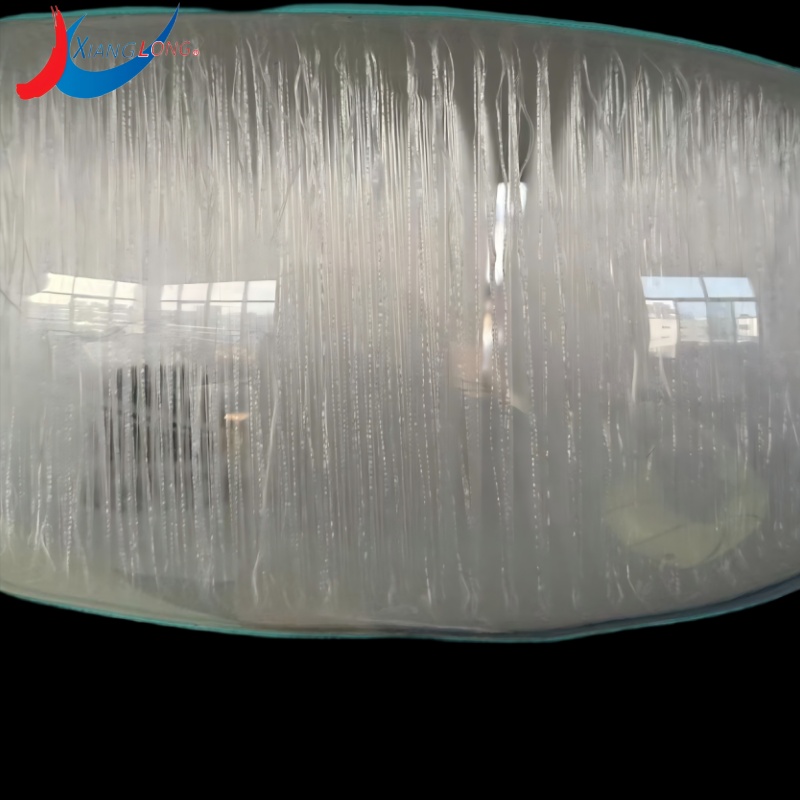
Airtight TPU Fabrics: Designed to Maintain Air Retention Over Time
Airtight TPU Fabrics are different because they are built for stability, not just initial performance.
PVC and PU coatings rely on a surface layer to provide barrier properties. That layer changes over time. In PVC, plasticizers migrate, which leads to stiffness and small cracks. In PU systems, especially polyester-based ones, hydrolysis breaks down the material under heat and humidity. These are not rare cases—they are expected aging behaviors.
TPU does not rely on those mechanisms. It forms a continuous thermoplastic layer that remains flexible without additive migration. Its internal structure stays stable even after repeated use, which helps maintain consistent air barrier performance.
Just as important, Airtight TPU Fabrics are not single-layer materials. They are composite structures. A typical configuration includes a textile core for strength and TPU layers on both sides. The textile carries mechanical load, while TPU provides the air barrier and the welding interface.
This structure matters because airtight performance is not tested in static conditions. It is tested in real use—under folding, pressure, and repeated deformation.
Instead of asking whether a fabric is airtight at the start, a better question is:
Can it still hold air after thousands of use cycles?
The difference between materials becomes clear when looking at long-term behavior:
| Material Type | Long-Term Change | Result in Airtight Use |
|---|---|---|
| PVC Coated Fabric | Plasticizer loss, brittleness | Micro leakage over time |
| PU Coated Fabric | Hydrolysis, structural breakdown | Gradual loss of barrier |
| Airtight TPU Fabrics | Stable structure, no migration | Consistent air retention |
This is why TPU coated fabric is increasingly used in applications where pressure stability is critical. It offers more predictable performance over time, which is often more important than initial test results.
Welding Performance: Eliminating the Weakest Point in Airtight Structures
In most airtight products, failure does not start from the surface. It starts at the seams.
Traditional fabrics rely on stitching combined with seam tape or adhesives. These methods introduce weak interfaces. Under pressure and repeated movement, these interfaces fatigue. Small gaps form, and air begins to escape.
This is difficult to detect early, but it affects performance over time.
Airtight TPU Fabrics solve this problem by enabling welding instead of bonding.
Because TPU is a thermoplastic material, it can be processed using high-frequency (RF) welding, heat press welding, or hot air welding. During this process, the TPU layers melt and fuse. After cooling, the seam becomes part of the same continuous material.
This changes how airtight products are built.
In inflatable mattresses, welded seams remove stitch holes completely, reducing the main source of leakage. In medical air systems, consistent weld quality helps maintain stable pressure during repeated use. In waterproof outdoor gear, welding allows full sealing instead of partial protection.
From a production perspective, welding also improves consistency. The process can be controlled and repeated, which reduces variation between batches.
Instead of relying on adhesives or manual sealing, manufacturers can build airtight structures with more predictable results.
This is not just a process improvement. It is a change in how airtight systems are designed.
Performance Data That Impacts Real Use and Cost
Material performance is often presented as isolated test values, but what matters in practice is how those values change over time.
Airtight TPU Fabrics help reduce pressure loss significantly in inflatable applications. Over 72 hours, pressure drop can be kept within a low range, while traditional coated fabrics often lose several times more under the same conditions. This means fewer re-inflation cycles and a more stable user experience.
Mechanical durability also plays a role. TPU coated fabrics maintain tensile strength and tear resistance even after repeated folding. Flex fatigue performance can reach tens of thousands of cycles without visible damage, which is important for products that are packed, unfolded, and reused.
These improvements directly affect product lifespan. Materials that maintain structure require less maintenance and fewer replacements. For industrial users, this reduces downtime. For brands, it helps control return rates and improve product consistency.
In many cases, the initial material cost is higher, but the overall cost per use cycle is lower.
Why Manufacturers Work with Xianglong
Wuxi Xianglong Polymer Fabric Co., Ltd. focuses on TPU coated fabric, PVC fabric, and TPU film production, with an emphasis on performance stability in demanding applications.
The company operates a 9,167 m² production facility and supports a daily output of over 100,000 meters. With more than 15 years of experience, their team works across material development, lamination, and application support.
Their materials are used in outdoor gear, inflatable structures, medical products, and industrial containment systems. These applications require not only strength and flexibility, but also consistent airtight performance.
We approach material development from the application side. That means starting with how the product will be used, and then defining the structure, coating, and processing method accordingly. From substrate selection to TPU lamination, each step is aligned with the final performance requirement.
This approach helps reduce the gap between lab testing and real-world performance.
With certifications including ISO9001, ISO14001, ISO10993, and GRS, Xianglong supports customers who require compliance with environmental, medical, and industrial standards.
Airtight Performance Depends on Material Stability
Airtight TPU Fabrics are not just an upgrade from PVC or PU coated fabrics. They solve the problem at its source.
By maintaining a stable structure and enabling welded seams, they reduce air leakage over time and improve overall product reliability.
If your product depends on holding air, the material choice will define how it performs after repeated use—not just at the start.
Choosing the right TPU coated fabric is not only about performance. It is about consistency, durability, and long-term cost control.