








Cotton has a familiar texture that many outdoor and lifestyle brands want to retain in their products. The difficulty is that untreated cotton does not provide the waterproof barrier required for dry bags, protective covers, inflatable camping products and other equipment exposed to moisture. Adding a polymer layer changes the fabric’s function, but the choice of coating also affects flexibility, appearance and manufacturing options.
Tissu en coton enduit de TPU XL combines a cotton textile base with a biodegradable TPU membrane. The cotton gives the composite a natural textile appearance, while the TPU layer provides a continuous barrier against water and air loss. For manufacturers developing outdoor accessories and lifestyle products, this construction offers an alternative to conventional synthetic waterproof fabrics.
Material selection still needs to begin with the finished product. A fabric intended for a tote bag may have different requirements from one used in an inflatable mattress or a ground mat. The cotton structure, TPU formulation, membrane thickness and seam design all influence the final result.
Why Combine Cotton with a TPU Membrane?
Cotton and TPU perform different functions in the composite.
The cotton substrate contributes the woven surface, textile hand-feel and visual character. It can suit products where a canvas-like appearance is part of the design, including travel accessories, picnic products and camping equipment.
The TPU membrane provides the functional barrier. It helps restrict water penetration and, in suitable constructions, air loss. The membrane also allows the fabric to be considered for products that need to fold, roll or take on a shaped form.
This combination can be useful when a product needs both a textile exterior and a barrier layer. Rather than relying on the cotton itself to provide waterproofing, the design uses the TPU membrane to perform that role.
The finished material should be assessed as a composite. Cotton weight and weave, membrane formulation, coating adhesion and total thickness can all affect how it handles during cutting, sewing, welding and use.
Cotton Texture for Bags and Lifestyle Products
Material appearance can influence how customers perceive a product. A smooth synthetic surface may suit technical equipment, while a cotton textile can provide a more familiar look for everyday bags and outdoor accessories.
Tissu en coton enduit de TPU can be considered for products such as:
- Waterproof tote bags and commuter bags
- Dry bags and equipment storage bags
- Luggage covers and protective cases
- Reusable packaging and storage products
- Picnic accessories and outdoor mats
- Camping accessories and lifestyle gear
The cotton surface can help create a textile-oriented appearance, while the TPU layer supplies the barrier function. Designers can use this combination when the product needs to sit between conventional canvas goods and technical outdoor equipment.
For bags, the material specification should account for how the product will be used. A tote bag exposed to occasional rain may have different requirements from a dry bag intended to protect contents during more demanding conditions. Closure design, seam construction and the way the bag is handled are just as important as the fabric itself.
Waterproof Performance Depends on the Complete Construction
A TPU membrane can provide a water-resistant barrier across the fabric, but the material alone does not determine whether the finished product is waterproof.
Seams, zippers, closures, attachment points and stitched areas can create paths for water entry. Even when the fabric itself meets a specified waterproof requirement, the assembled product may need additional design features to achieve its intended level of protection.
For waterproof bags and outdoor products, manufacturers should review:
Seam construction: Determine whether seams will be welded, stitched, taped or made using a combination of methods. Stitching through the barrier may require additional sealing measures.
Closure design: Roll-top closures, zippers, flaps and other openings influence the product’s overall water resistance.
Contact and abrasion: Areas that rub against the ground, equipment or other surfaces may need particular attention during material selection.
Folding and storage: Repeated folding can place stress on the composite, especially around creases and seams.
Exposure conditions: Rain, splashes, damp ground and prolonged water exposure are different use conditions. The required performance should be defined accordingly.
For this reason, waterproof testing should be planned around both the material and the finished product. A fabric test cannot replace evaluation of the assembled bag, cover or camping accessory.
Biodegradable TPU Fabric: Define the Claim Carefully
The TPU membrane used in this construction is described as biodegradable. For product developers, the term should be connected to the specific formulation and the conditions under which degradation has been evaluated.
Biodegradability does not automatically mean that a material will break down quickly in ordinary outdoor environments. Temperature, moisture, microbial activity, exposure conditions and the test method can affect the outcome. Industrial composting conditions, for example, should not be treated as equivalent to home composting, soil, freshwater or marine environments.
The cotton base and TPU membrane should also be considered separately when assessing the environmental profile of the complete composite. A claim about the TPU component does not automatically establish the degradation behavior of the entire finished product, particularly where it includes thread, zippers, valves, coatings or other materials.
Manufacturers developing products marketed as Tissu imperméable biodégradable should request technical documentation that identifies the relevant formulation, test method, test environment and scope of the claim. Any environmental statement used on the finished product should match the evidence available for that specific construction.
Polyether-Based or Polyester-Based TPU: What Should Buyers Consider?
The fabric can be supplied with polyether-based or polyester-based TPU. These TPU families can have different performance characteristics, so the choice should be linked to the intended operating environment and product requirements.
The appropriate formulation may depend on factors such as:
- Exposure to moisture and humidity
- Expected temperature range
- Flexing and folding frequency
- Contact avec des huiles, des nettoyants ou d'autres produits chimiques
- Required bonding and welding behavior
- Expected service life
Neither formulation should be selected on the basis of its name alone. Buyers should compare the available technical data and conduct testing using the actual cotton substrate and intended manufacturing process.
Where a product will be exposed to prolonged moisture or repeated flexing, the team should pay particular attention to the relevant durability data. Where welding is required, the selected TPU formulation must also be compatible with the joining equipment and process settings.
Welding TPU Coated Cotton Fabric
Welding can be used to join compatible TPU-coated areas and create sealed seams. XL TPU Coated Cotton Fabric is specified as suitable for high-frequency (HF) welding and hot-air welding, subject to the construction and process conditions.
The selected method should be confirmed during product development. Welding performance can be affected by TPU formulation, membrane thickness, fabric structure, equipment settings and joint geometry.
A useful welding trial should include more than a straight seam. Product designs may contain corners, curves, overlaps and valve or accessory attachment areas, each of which can behave differently during fabrication.
During the trial, manufacturers should examine:
- Whether the joint forms consistently
- Whether the seam has visible defects or distortion
- Whether the welded area retains the required strength
- Whether leakage occurs under the specified test conditions
- Whether the process can be repeated across production samples
Sewing may still be needed for handles, straps, decorative elements or other components. However, needle holes through an airtight section can compromise the barrier. The assembly design should identify where stitching is acceptable and where a sealed joint is required.
Is Cotton TPU Fabric Suitable for Inflatable Camping Products?
The combination of a textile surface and an air-retaining membrane makes this material a candidate for selected inflatable products, including camping mattresses, air loungers and pillows.
These products may benefit from a cotton exterior when the design calls for a softer, more natural-looking surface than conventional synthetic materials. The TPU membrane provides the barrier needed to retain air, but the finished construction must be engineered for its intended pressure and use conditions.
Before approving the fabric, product developers should consider the chamber layout, inflation pressure, seam arrangement, product dimensions and expected number of inflation cycles. Folding, packing and outdoor exposure may also affect the material’s service requirements.
Prototype testing should include the actual welded structure. Air retention, seam integrity and durability should be assessed under conditions that represent the finished product. A fabric’s suitability for one inflatable design does not automatically establish suitability for every product or pressure range.
Customization for OEM Manufacturing
XL TPU Coated Cotton Fabric is available with customizable weight and width. The standard width is 140 cm, with other widths available subject to the order requirements. Patterns can also be specified for projects requiring a particular appearance.
Customization should be tied to the product design rather than treated as a purely cosmetic decision.
| Nylon 20D | Available details | Points to confirm during development |
|---|---|---|
| Tissu de base | Coton | Weave, weight and required textile hand-feel |
| Type de TPU | Polyether-based or polyester-based TPU | Environmental exposure, durability and process compatibility |
| Poids total | Personnalisable | Product weight, handling and construction requirements |
| Largeur | 140 cm standard or custom | Cutting layout, roll handling and material yield |
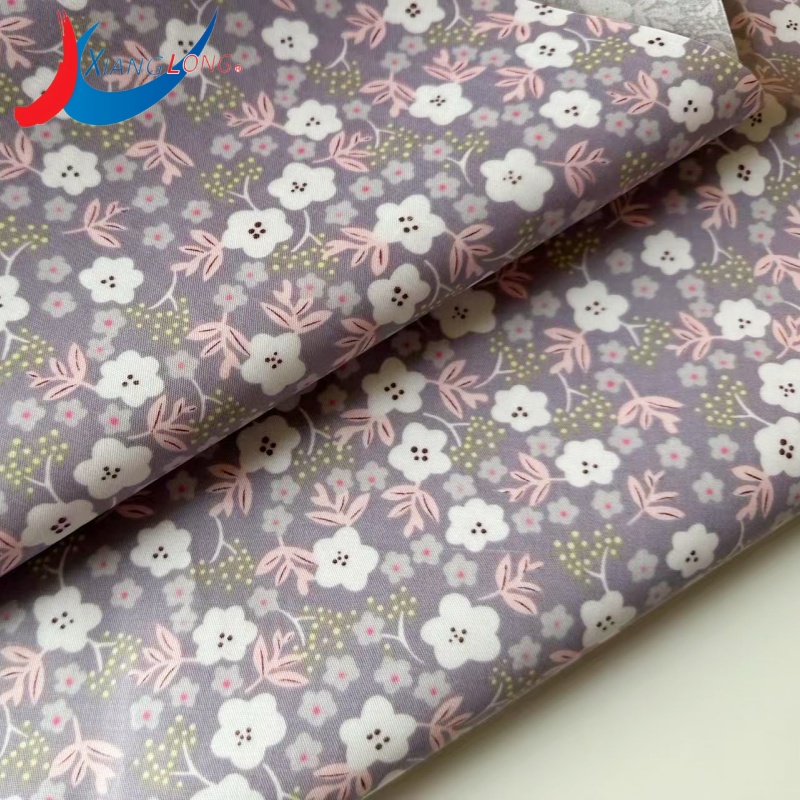
| Color and pattern | Patterns available | Appearance, consistency and product design requirements |
| Traitement | HF welding and hot-air welding | Equipment compatibility, seam strength and sealing performance |
| Material structure | Cotton textile with TPU membrane | Barrier orientation, coating coverage and finished construction |
For an OEM project, it is useful to agree on the material specification before placing a production order. Sample approval should cover appearance, dimensions, bonding, relevant mechanical properties and fabrication performance.
How to Qualify the Material Before Mass Production
A structured trial can help identify problems before the material enters regular production.
Start with the product requirements. Define whether the main function is waterproof protection, air retention, surface durability or a combination of these. Record the expected use conditions and the finished product’s acceptance criteria.
Review the material documentation. Confirm the cotton construction, TPU type, thickness or coating details, width and available test information. Check that any biodegradability claim applies to the specified TPU formulation.
Inspect the sample. Review the surface, dimensions and composite condition. Any visible irregularities should be recorded and discussed before fabrication.
Run a representative manufacturing trial. Use the intended welding or assembly method. Include the seam types and shaped sections present in the product design.
Test the finished prototype. Evaluate water resistance or air retention as appropriate, along with seam integrity and relevant durability properties. The test conditions should reflect the product’s intended use.
Confirm production controls. Document the approved construction, key parameters and inspection requirements. Establish how material or process changes will be reviewed.
This process gives engineering, purchasing and quality teams a shared basis for deciding whether the fabric is ready for production.
A Material Option for Textile-Look Waterproof Products
XL TPU Coated Cotton Fabric combines a cotton textile surface with a TPU membrane designed to provide waterproof and, in suitable constructions, airtight performance. The material can be considered for bags, camping accessories, picnic products, protective covers, equipment liners and selected inflatable goods.
Its value lies in the combination of textile appearance and polymer barrier function. Cotton contributes the familiar surface character, while the TPU layer supports the functional requirements of the product.
Pour les fabricants qui s'approvisionnent Tissu en coton enduit de TPU, Tissu en TPU biodégradable, Tissu imperméable biodégradable or Tissu en coton imperméable, the next step is to match the material construction to the intended application. Reviewing the technical documentation, confirming the environmental claim and testing representative seams and finished products will help establish whether the selected fabric meets the project’s requirements.