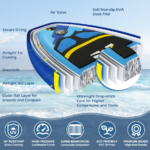


공기주입식 보트와 스탠드업 패들보드는 모두 수상 환경에서 사용되지만, 각 제품에 요구되는 원단 특성은 서로 다릅니다. 공기주입식 보트는 부두, 모래, 바위 및 기타 표면과의 반복적인 접촉에도 견딜 수 있어야 하며, 승객, 장비 및 추가 하중을 운반해야 합니다. 반면 공기주입식 SUP 보드는 압력 하에서 형태를 유지하고 탑승자의 체중을 지지하며 물 위에서 이동할 때 안정성을 유지해야 합니다.
제조업체 입장에서 적합한 소재를 선택하는 일은 단순히 원단이 방수 기능을 갖추고 있는지 확인하는 것 이상을 포함합니다. 섬유 베이스, TPU coating, 원단 무게, 인장강도, 내파성, 치수 안정성 및 접합 방법 등 모든 요소가 최종 제품에 영향을 미칩니다. 가벼운 공기주입식 액세서리에 적합한 소재가 고압을 필요로 하는 SUP 보드에는 구조적 지지를 제공하지 못할 수도 있습니다.
공기주입식 보트와 SUP 보드용 TPU 원단은 코팅 나일론, 코팅 폴리에스터, 드롭스티치 소재 등 다양한 구조로 제공됩니다. 각각은 서로 다른 용도에 맞춰 설계되었습니다. 이러한 구조의 작동 원리를 이해하면 제조업체가 소재를 제품 디자인, 생산 공정 및 예상 운영 조건에 적합하게 선택하는 데 도움이 됩니다.

공기주입식 보트 원단을 선택하기 전에 무엇을 고려해야 할까요?
공기주입식 보트는 정상적인 운행 중 여러 종류의 기계적 스트레스에 노출됩니다. 선체 하부는 해변이나 진수대와 마찰될 수 있으며, 측면 튜브는 공기 주입 시 발생하는 압력과 수상 이동 시 받는 힘을 겪습니다. 또한 승객의 체중, 장비 하중, 견인 작업 및 반복적인 접힘 역시 시간이 지나면서 원단에 영향을 줄 수 있습니다.
따라서 해당 소재는 동시에 여러 가지 요구 사항을 충족해야 합니다.
인장력 및 파열력에 대한 저항성
원단은 보트가 공기 주입되고 하중을 받을 때 발생하는 힘을 견뎌야 합니다. 인장강도는 재료가 파손되기 전까지 견딜 수 있는 인장력을 나타냅니다. 내파성은 이미 생긴 절단부나 손상된 지점이 확대되는 것을 얼마나 잘 막아주는지를 측정합니다.
두 성질 모두 중요하지만 서로 다른 파손 상태를 설명합니다. 인장강도가 우수하더라도 내파성이 의도된 구조에 비해 부족하다면 신중한 평가가 필요합니다.
여기서 섬유 베이스가 중요한 역할을 합니다. 고강도 나일론 원단은 기계적 특성과 유연성 덕분에 일반적으로 공기주입식 구조물에 사용됩니다. 그러나 최종 성능은 실의 품질, 직조 밀도, 코팅 구조 및 패널 접합 방식에도 좌우됩니다.
사용 중 마모에 대한 저항성
공기주입식 보트는 거친 표면과 자주 접촉합니다. 하부는 모래, 자갈, 보트 램프 및 부두 가장자리와 마주칠 수 있습니다. 측면 튜브는 운송 및 보관 과정에서 다른 보트나 장비와 마찰될 수 있습니다.
따라서 마모 저항성은 특히 반복적인 접촉이 발생하는 부분에서 중요한 선택 기준입니다. 제조업체는 원단의 표면 내구성을 평가하고 접촉이 집중되는 부위에는 추가 보강을 고려해야 합니다.
무거운 베이스 원단을 선택하는 것이 까다로운 용도에는 적합할 수 있지만, 원단 무게만으로 마모 성능을 판단할 수는 없습니다. 코팅 두께, 실 구조 및 표면 특성도 함께 고려해야 합니다.
공기 주입 압력 하에서의 치수 안정성
공기주입식 보트 튜브는 공기 주입 후 의도된 형태를 유지해야 합니다. 원단의 과도한 변형은 보트의 외관에 영향을 미칠 수 있으며, 구조 전체에 걸쳐 하중 분산 방식이 달라질 수도 있습니다.
치수 안정성은 섬유 구조, 코팅, 패널 배치, 이음새 설계 및 작동 압력에 따라 달라집니다. 제조업체는 최종 제품에 명시된 압력 하에서 소재가 어떻게 작동하는지 평가해야 하며, 공기 주입 전 원단 샘플만으로 판단해서는 안 됩니다.
물 및 환경 저항성
수상 제품에서는 물 노출이 불가피합니다. 적절한 TPU 코팅은 원단 자체를 통한 수분 침투를 차단하는 장벽을 제공할 수 있습니다. 그러나 최종 제품의 방수 성능은 용접 이음새, 밸브, 피팅 및 기타 연결 부위에도 크게 좌우됩니다.
해안 환경에서 사용되는 보트의 경우 염수 노출 및 외부 노화에 대한 저항성도 고려해야 합니다. 특정 원단이 모든 수상 조건에 적합하다는 포괄적인 주장보다는 소재의 구성 성분과 시험 결과가 더 유용합니다.
TPU 코팅 나일론 원단은 공기주입식 보트에 좋은 선택일까요?
TPU 코팅 나일론 원단은 직조된 나일론 기판에 열가소성 폴리우레탄 코팅을 결합한 제품입니다. 나일론 베이스가 섬유 구조를 제공하고, TPU 층은 방수성을 부여하며 원단과 접합 공정이 적절히 설계되면 기밀 구조를 지원할 수 있습니다.
이러한 조합으로 인해 TPU 코팅 나일론 원단은 공기주입식 보트에 고려할 만한 가치가 있습니다. 특히 제조업체가 기계적 강도, 유연성 및 관리 가능한 무게 사이의 균형을 추구할 때 더욱 그렇습니다.
나일론이 베이스 원단으로 사용되는 이유
나일론은 강도 대 무게 비율과 유연성 때문에 기술용 섬유에서 높은 평가를 받습니다. 그 직조 구조는 인장 및 파열에 대한 저항성을 제공하는 동시에 취급 시 재료가 구부러지고 접히는 것을 허용합니다.
공기주입식 보트 제조업체에게 이러한 특성은 튜브 구조, 측면 패널 및 반복적인 기계적 스트레스를 받는 기타 부품과 관련이 있습니다.
다양한 제품 요구 사항을 충족하기 위해 서로 다른 데니어 구조가 제공됩니다. 예를 들어 210D, 420D 및 840D 나일론 원단은 각각 다른 실의 선형 밀도를 나타냅니다. 하지만 완성된 원단의 강도는 직조 구조, 실 특성, 코팅 및 가공 방식에도 의존하므로 이를 직접적인 성능 등급으로 간주해서는 안 됩니다.
TPU 코팅이 기여하는 바
TPU 층은 요구 사항에 맞춰 제조될 경우 연속적인 코팅 표면을 제공합니다. 제형과 구조에 따라 다음과 같은 효과를 제공할 수 있습니다:
- 수상 응용 분야를 위한 방수성.
- 접거나 취급할 때의 유연성.
- 호환 가능한 열접합 공정에 적합한 표면.
- 재료와 이음새가 적절히 설계되었을 때 잠재적인 기밀 성능.
- 다양한 코팅 두께와 원단 구조 옵션.
폴리에테르 TPU는 가수분해에 대한 내성을 갖추고 있어 장기간 습기에 노출되는 응용 분야에 자주 고려됩니다. 이는 습한 환경에서 사용되는 공기주입식 제품과 관련이 있을 수 있습니다. 다만 실제 성능은 공급업체의 기술 데이터와 적절한 노화 시험을 통해 반드시 확인해야 합니다.
전체 구조가 중요한 이유
원단은 코팅 유형만으로 선택해서는 안 됩니다. TPU 코팅 나일론으로 설명되는 두 소재라도 두께, 무게, 코팅 접착력, 인장강도 및 용접 특성이 다를 수 있습니다.
제조업체는 검토 중인 정확한 구조에 대한 기술 데이터 시트를 요청해야 합니다. 제품이 정해진 공기 주입 압력 하에서 작동할 예정이라면 샘플 테스트 역시 의도된 압력과 최종 패널 디자인을 반영해야 합니다.
210D, 420D 및 840D TPU 코팅 나일론을 어떻게 비교해야 할까요?
데니어는 실의 선형 밀도를 측정하는 단위입니다. 데니어 수치가 높을수록 실이 더 무겁다는 의미이지만, 이는 완성된 원단이 모든 방향에서 더 강하거나 모든 응용 분야에 더 적합하다는 것을 자동으로 의미하지는 않습니다.
210D, 420D 및 840D TPU 코팅 나일론을 비교할 때 제조업체는 전체 원단 사양과 최종 보트의 요구 사항을 함께 살펴봐야 합니다.
210D TPU 코팅 나일론
210D 구조는 낮은 원단 무게와 유연성이 중요한 경우에 고려될 수 있습니다. 일부 경량 공기주입식 부품이나 기계적 요구 사항이 중간 정도인 제품에 적합할 수 있습니다.
그러나 완전한 공기주입식 보트의 경우, 제조업체는 선택한 210D 구조가 의도된 작동 압력, 승객 하중, 취급 조건 및 마모 노출을 견딜 수 있는지 반드시 확인해야 합니다. 단순히 접기가 더 쉽거나 비용이 저렴하다는 이유만으로 선택해서는 안 됩니다.
420D TPU 코팅 나일론
420D 구조는 원단의 무게와 기계적 요구 사항 사이에서 균형을 맞추려는 제조업체에게 또 다른 선택지를 제공합니다. 이는 경량 구조보다 더 견고한 섬유 기반을 필요로 하는 범용 공기주입식 보트 구조물 및 해양 제품에 대해 검토될 수 있습니다.
최종 결정 시 인장 강도 및 인열 시험 결과, 코팅 밀착성, 두께, 그리고 용접 이음부의 성능을 고려해야 합니다. 이러한 세부 사항들은 단순히 데니어 값만으로 비교하는 것보다 훨씬 신뢰할 수 있는 근거를 제공합니다.
840D TPU 코팅 나일론
840D 구조는 더욱 까다로운 기계적 요구 사항을 가진 응용 분야에서 검토해 볼 만합니다. 더 두꺼운 원사 구조는 차별화된 구조적 기반을 제공할 수 있지만, 최종 성능은 여전히 직조 방식과 코팅 상태에 따라 달라집니다.
제조업체는 추가적인 무게와 취급 특성도 고려해야 합니다. 더 무거운 원단은 접이성, 운송 효율성, 그리고 생산 효율성에 영향을 미칠 수 있습니다. 따라서 모든 공기주입식 보트 부품에 반드시 최적의 선택지는 아닐 수 있습니다.
실질적인 비교 방법
제조업체는 단순히 데니어 값만으로 원단을 선택하기보다는 여러 사양을 나란히 비교하여 검토할 수 있습니다:
- 원단 무게(g/m²).
- 전체 두께 및 TPU 코팅 두께.
- 원단의 양방향 인장강도.
- 인열 저항성.
- 코팅 부착력.
- 마모 성능.
- 해당되는 경우 가수분해 저항성.
- 용접 적합성 및 이음새 강도.
필요한 값은 보트 설계와 적용 가능한 제품 요구사항에 따라 달라집니다. 공급업체는 다른 구조에서 가져온 일반적인 수치가 아닌 실제 소재에 대한 검증된 사양을 제공해야 합니다.
TPU 드롭스티치 원단이 SUP 보드에 특별한 이유는 무엇인가요?
SUP 보드는 기존의 팽창식 보트 튜브와는 다른 구조적 설계를 가지고 있습니다. 많은 팽창식 SUP 보드는 수천 개의 연결 실이 상하 원단층을 연결하는 드롭스티치 구조를 사용합니다. 보드가 팽창되면 이러한 실들이 두 표면 사이의 간격을 유지하고 비교적 평평하고 견고한 플랫폼을 형성하는 데 도움을 줍니다.
TPU 드롭스티치 원단은 이러한 유형의 구조를 위해 개발되었습니다. 내부 실 배열이 성능을 결정짓는 핵심 요소이므로 일반적인 TPU 코팅 섬유로 취급해서는 안 됩니다.
드롭스티치 구조의 작동 원리
일반적인 드롭스티치 구조는 수많은 내부 실로 연결된 두 개의 원단층으로 구성됩니다. 챔버가 팽창하면 내부 압력이 두 외부 층을 서로 밀어냅니다. 연결 실들은 이 분리를 방지하고 보드의 두께와 형태를 조절하는 데 기여합니다.
이 구조가 중요한 이유는 팽창식 SUP 보드가 단순히 공기 유지 기능만 필요한 것이 아니기 때문입니다. 또한 탑승자의 체중과 물 위에서의 이동 중에도 치수를 유지해야 합니다.
연결 실의 수, 배열, 재질 및 강도는 모두 최종 구조에 영향을 미칩니다. 외부 원단층과 TPU 코팅 역시 내부 실 시스템과 함께 작동해야 합니다.
치수 안정성이 중요한 이유
압력 하에서 상하 표면이 과도하게 변형되면 보드가 의도한 형태를 잃을 수 있습니다. 이는 강성, 균형 및 탑승자의 경험에 영향을 미칠 수 있습니다.
따라서 적합한 TPU 드롭스티치 구조는 지정된 팽창 압력 하에서의 치수 안정성을 평가해야 합니다. 완제품 보드에 대한 테스트가 필요합니다. 원단 사양만으로는 전체 구조의 성능을 확립할 수 없기 때문입니다.
TPU 코팅의 역할
TPU 코팅은 원단층의 보호 및 기능적 특성에 기여합니다. 소재 설계에 따라 방수성, 기밀 구조 및 호환 가능한 용접 공정을 지원할 수 있습니다.
제조업체에게 핵심 질문은 코팅, 베이스 원단 및 내부 드롭스티치 실 시스템이 서로 협력하도록 설계되었는가 하는 것입니다. 표준 TPU 코팅 나일론 원단은 고압 SUP 보드에서 제대로 설계된 드롭스티치 구조를 대체할 수 없습니다.
TPU 코팅 나일론과 TPU 드롭스티치 원단 중 어떤 것을 선택해야 할까요?
이 두 가지 소재 유형은 각각 다른 구조적 목적에 사용됩니다. TPU 코팅 나일론은 팽창식 보트 튜브, 챔버 및 기타 코팅 원단 부품에 사용할 수 있는 섬유 소재입니다. TPU 드롭스티치 원단은 팽창식 보드나 플랫폼의 두께와 형태를 유지하는 데 도움을 주는 특정 내부 구조를 중심으로 설계되었습니다.
선택은 단순한 소재 강도 순위가 아니라 제품 설계에 따라 달라집니다.
| 선택 요인 | TPU 코팅 나일론 | TPU 드롭스티치 원단 |
|---|---|---|
| 주요 구조 | 코팅된 직조 섬유 | 내부 실로 연결된 두 개의 외부 층 |
| 일반적인 역할 | 팽창식 보트 튜브 및 챔버 | 팽창식 SUP 보드 및 리지드 스타일 플랫폼 |
| 핵심 요구사항 | 강도, 유연성 및 공기 유지 | 공기 주입 압력 하에서의 치수 안정성 |
| 소재 평가 | 베이스 원단, 코팅 및 이음새 | 외부 층, 연결 실, 코팅 및 구조 |
| 제조 초점 | 패널 절단 및 호환 가능한 접합 | 드롭스티치 구조 및 밀봉 공정 |
팽창식 보트의 경우 주요 원단 선택은 튜브의 기계적 요구사항과 취급 손상에 대한 내구성에 집중될 수 있습니다. 팽창식 SUP 보드의 경우 내부 드롭스티치 구조가 제품의 형태와 강성의 핵심입니다.
일부 수상 스포츠 제품은 하나의 디자인에 서로 다른 원단 구조를 결합할 수 있습니다. 제조업체는 추가 보강이 필요한 부분에는 더 두꺼운 코팅 섬유를 사용하고 메인 보드 구조에는 특수 드롭스티치 소재를 사용할 수 있습니다. 정확한 배치는 제품 아키텍처와 생산 방법에 따라 달라집니다.
해양 환경에서 중요한 TPU 원단 특성은 무엇인가요?
수상 스포츠 장비는 물뿐만 아니라 다양한 요인에 노출됩니다. 염수, 햇빛, 온도 변화, 반복적인 접힘 및 장기간 보관은 소재에 영향을 미칠 수 있습니다.
수상 스포츠에 적합한 TPU 원단은 완제품이 작동할 실제 환경 조건에 맞춰 평가되어야 합니다.
수분 분해 저항성
가수분해는 물과의 반응을 통해 폴리머 사슬이 화학적으로 분해되는 현상입니다. 이는 특히 습기에 장기간 노출되고 온도가 높은 환경에서 일부 폴리우레탄 소재에 영향을 미칠 수 있습니다.
폴리에테르 기반 TPU는 가수분해 저항성이 중요한 응용 분야에서 일반적으로 고려됩니다. 이는 빈번한 물 노출이 발생하는 해양 및 팽창식 제품에 적합한 옵션입니다.
그러나 가수분해 저항성은 적절한 시험 정보를 통해 확인되어야 합니다. TPU 조성, 코팅 구조, 온도 및 노출 시간 모두 결과에 영향을 미칩니다.
염수 및 화학물질 노출
Marine equipment may come into contact with seawater, cleaning agents, oils, sunscreen, and other substances. The effect depends on the chemical involved, its concentration, contact duration, and the specific TPU formulation.
Manufacturers should identify the substances likely to contact the finished product and request compatibility information where necessary. A general statement about marine suitability is not a substitute for testing under relevant conditions.
UV and outdoor aging
Inflatable boats and SUP boards are often stored or used outdoors. Sunlight can gradually affect polymer materials, coatings, and colors.
UV resistance varies by TPU formulation and any stabilizing additives used during production. Manufacturers planning products for extended outdoor exposure should request supporting test data and consider accelerated aging evaluations.
Color retention also deserves attention. Changes in appearance may be especially noticeable on brightly colored marine equipment.
저온 유연성
Some water sports products are used in cool weather or stored in environments where temperatures fluctuate. A material that becomes excessively stiff may be more difficult to fold and handle.
Manufacturers should check the specified temperature range and evaluate flexibility under relevant conditions. The actual performance depends on the TPU grade and textile construction, not simply the product name.
How Does High-Frequency Welding Affect Inflatable Boat Fabric Performance?
Joining technology has a direct influence on the reliability of inflatable products. Even when the main fabric has suitable mechanical properties, weak seams can become a failure point under pressure or repeated handling.
High-frequency welding is one joining method used with compatible TPU coated materials. It uses electromagnetic energy to generate heat in suitable thermoplastic layers, allowing the material surfaces to bond under controlled pressure.
Material compatibility comes first
Not every coated fabric has the same welding behavior. TPU formulation, coating thickness, substrate, surface condition, and laminate construction can affect the welding process.
Before mass production, manufacturers should confirm that the selected TPU coated nylon is compatible with the available welding equipment. Sample trials help establish an appropriate processing window.
Welding parameters need to remain consistent
Temperature, pressure, processing time, electrode design, and material positioning all affect seam quality. Incorrect settings can result in incomplete bonding, uneven seams, or damage to the coating.
A production team should establish process parameters for the exact fabric construction and monitor consistency during manufacturing. Parameters developed for one TPU material should not automatically be transferred to another.
Seam strength and air retention require finished-product testing
A welded seam may look uniform but still require mechanical and leakage testing. Manufacturers should evaluate seam strength and inspect the finished inflatable structure under its intended operating conditions.
Testing should include areas around valves, corners, panel intersections, and reinforced sections. These locations may experience different stress levels from the main body of the product.
What Tests Should Manufacturers Request from a TPU Fabric Supplier?
A technical data sheet is a useful starting point when comparing TPU fabric suppliers. It provides information about the material construction and measured performance. However, manufacturers should also consider whether the listed tests match the requirements of the finished product.
The following items are particularly relevant to inflatable boats and SUP boards:
Tensile strength and elongation
Tensile testing measures resistance to pulling forces, while elongation indicates how much the material stretches before breaking. Both values help manufacturers assess how the textile may behave under load.
파손 저항성
Tear testing helps evaluate how the material responds when a cut or damaged point is subjected to further force. This is important for products exposed to rough handling or contact with hard surfaces.
코팅 부착력
The coating must remain bonded to the textile substrate. Poor adhesion may lead to separation during folding, handling, or environmental exposure.
Hydrolysis and aging tests
For marine products, testing after moisture exposure and relevant aging conditions can help assess whether the coating maintains its properties over time.
Welding and seam tests
The supplier’s material should be evaluated using the manufacturer’s actual production process. Seam strength and air retention should be checked on finished samples, not inferred from the fabric’s original specifications.
Dimensional and pressure testing
For inflatable SUP boards, the complete drop-stitch structure should be tested at the intended pressure and under representative loads. For inflatable boats, testing should reflect the design pressure, loading conditions, and relevant product safety requirements.
No single fabric test can establish the safety or service life of a finished boat or SUP board. Material data, production controls, structural design, and finished-product testing need to be considered together.
How Should You Evaluate an Inflatable Boat Fabric Supplier?
A supplier’s ability to provide the right material consistently is as important as the initial sample. Manufacturers may need several fabric weights, different coating constructions, customized colors, or specific joining characteristics for one product range.
Several points are worth confirming before placing a production order.
Ask for the exact fabric construction
Request the base fabric type, denier, weave information, coating type, thickness, and total weight. If the application requires polyether TPU, confirm the formulation rather than relying on a general TPU product description.
Review technical data before comparing prices
Two fabrics with similar weight may have different tensile strength, tear resistance, coating adhesion, and welding characteristics. Comparing prices without checking these details can lead to an unsuitable material choice.
Request samples for production trials
A sample should be tested using the same cutting, welding, and assembly process planned for mass production. This is particularly important for high-frequency welding, where small construction differences can affect the processing window.
Discuss customization requirements
Inflatable boat and SUP board manufacturers may require specific fabric weights, coating thicknesses, colors, and roll widths. These requirements should be confirmed before production planning begins.
Check batch consistency and supply arrangements
A material approved during prototype development should remain consistent in subsequent orders. Manufacturers should establish clear specifications and incoming inspection procedures to reduce the risk of differences between production batches.
Choosing the Right TPU Fabric for Your Next Water Sports Product
The right TPU fabric depends on the structure and operating conditions of the finished product. Inflatable boat manufacturers may prioritize tensile strength, tear resistance, abrasion performance, and reliable welded seams. SUP board manufacturers need to pay close attention to drop-stitch construction, dimensional stability, and performance under inflation pressure.
TPU coated 210D, 420D, and 840D nylon fabrics offer different construction options for marine and inflatable applications. TPU drop-stitch fabric serves a more specialized role in inflatable boards and platforms. Comparing these materials requires more than looking at denier or fabric weight; coating properties, textile structure, processing compatibility, and test results all matter.
Xianglong Polymer Fabric provides TPU coated nylon and polyester fabrics, along with specialized TPU drop-stitch materials for technical inflatable applications. Manufacturers can discuss their required substrate, fabric weight, coating construction, and performance specifications when evaluating material options for inflatable boats, SUP boards, and other water sports products.
A well-matched fabric construction gives the production team a more reliable starting point. Final performance still depends on the complete product design, manufacturing process, and verification under the conditions the equipment is expected to face.