[Tela de poliéster recubierta de TPU XL – Azul oscuro][Tela de poliéster recubierta de TPU XL azul oscuro]

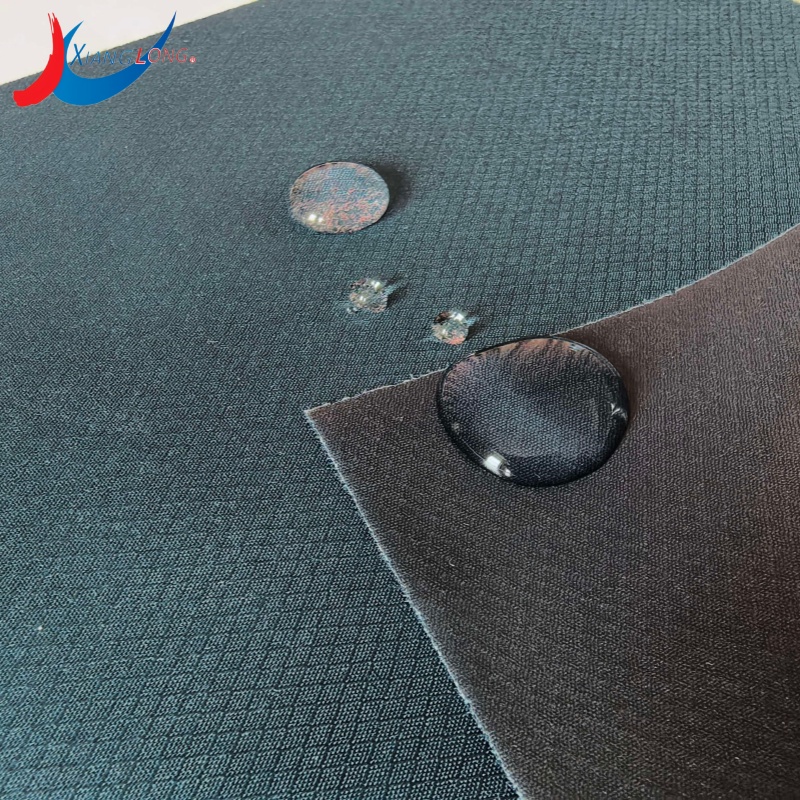
XL TPU Coated Polyester Fabric in Dark Blue is a lightweight technical textile developed for portable inflatable products and outdoor equipment that require air retention, water resistance, and dimensional stability. It combines a 75D polyester pongee base with a distinctive diamond ripstop pattern, a durable water repellent (DWR) face treatment, and a TPU film layer on the reverse side.

Descripción del producto

[Tela de poliéster recubierta de TPU XL – Azul oscuro][Tela de poliéster recubierta de TPU XL azul oscuro]

The woven base provides a lightweight textile structure, while the diamond ripstop pattern helps limit the spread of localized tears. The DWR finish reduces surface wetting when exposed to rain or splashes, and the TPU backing serves as the main barrier against water penetration and air loss. Together, these features make the material suitable for inflatable sleeping pads, camping air mattresses, packable pillows, and selected inflatable outdoor seating products.
Although the fabric is commercially referred to as a 4-way stretch style, its actual construction is non-stretch. This distinction matters when selecting material for inflatable chambers, where predictable dimensions and controlled expansion are important. The fabric is intended for products that need a balance of low material weight, a compact textile structure, and reliable performance during normal inflation and deflation cycles.

75D Diamond Ripstop Polyester Pongee

The base fabric uses 75D polyester pongee, commonly known as 75D Chun Yafang in the Chinese textile market. Its lightweight woven construction supports portable product development, particularly where the finished item needs to be folded, packed, transported, and deployed repeatedly.
The diamond ripstop pattern is a defining feature of this fabric. Its grid-like reinforcement structure helps restrict the propagation of a tear beyond the initially damaged area. For camping equipment and inflatable outdoor gear, this can help reduce the risk of a small tear spreading through the textile during handling or use.
Ripstop construction does not make the fabric immune to punctures or tearing. Actual resistance depends on yarn properties, weave construction, coating adhesion, cutting methods, and the forces applied during use. Manufacturers should assess the fabric against the mechanical demands of the finished product, especially where the material will contact rough ground, folded edges, or other equipment.
The diamond pattern also creates a distinctive surface appearance. Combined with the dark blue color, it gives the finished material a technical outdoor look suitable for contemporary camping products and portable inflatable equipment.

DWR Surface Treatment and TPU Barrier Protection

The fabric uses two functional layers to address different exposure conditions. The outer DWR treatment and the reverse-side TPU backing should be considered separately because they perform different roles.

DWR Treatment for Surface Water Repellency

The DWR finish helps water form droplets on the fabric surface rather than immediately soaking into the outer textile. This is useful for camping equipment and portable outdoor products that may encounter rain, splashes, or damp handling conditions.
By reducing surface wetting, DWR treatment can also make routine cleaning easier. However, water repellency may gradually decline with abrasion, repeated folding, washing, or prolonged use. The finish should therefore be evaluated according to the product’s expected maintenance requirements and outdoor exposure.

TPU Backing for Waterproof and Airtight Construction

The TPU layer on the reverse side provides the principal barrier against water penetration and air loss. In an inflatable product, the barrier layer works together with the welded seams and chamber structure to retain air during use.
This construction makes the material relevant to TPU coated polyester fabric for air mattresses, inflatable sleeping pads, and other products that require a flexible airtight surface. The finished performance depends on the TPU formulation, coating or lamination quality, welding parameters, and product design.
DWR treatment alone does not make a textile airtight. For this fabric, the outer finish helps manage surface water, while the TPU layer performs the primary barrier function.

Dimensional Stability for Inflatable Outdoor Equipment

Inflatable products require a fabric that behaves predictably when internal pressure changes. Excessive material deformation can affect chamber geometry, product shape, and the way loads are distributed across welded seams.
This dark blue TPU coated ripstop fabric uses a dimensionally stable, non-stretch construction. It does not rely on elastic fabric extension to accommodate inflation. Instead, the finished chamber’s shape and expansion behavior depend on the woven base, TPU layer, panel dimensions, seam layout, and operating pressure.
For manufacturers, this distinction is important when developing air mattresses, inflatable pillows, and compact seating products. A stable fabric structure can help maintain the intended chamber geometry, provided that the panel pattern and welding design are properly matched to the required operating conditions.
The finished product should still be tested at its intended pressure and under representative loading conditions. Fabric stability alone cannot prevent over-expansion, deformation, or seam failure if the chamber design or inflation pressure is unsuitable.

Lightweight Airtight Fabric for Packable Gear

Material weight affects how easily an outdoor product can be carried and stored. For camping equipment, trekking accessories, and travel products, reducing fabric weight can help limit the overall packed weight without requiring a bulky construction.
With a nominal total weight of 180 ± 15 g/m², this lightweight airtight fabric provides a practical option for products where portability is an important purchasing consideration. The 75D polyester base supports a relatively light textile structure, while the TPU backing adds the barrier function required for inflatable applications.
The suitability of the fabric depends on more than its weight. Manufacturers should also consider abrasion exposure, puncture risk, seam design, storage conditions, and the expected frequency of inflation and deflation. A lightweight specification should be selected according to the actual use environment rather than weight reduction alone.
For compact outdoor gear, the combination of a diamond ripstop surface and TPU barrier construction offers a useful starting point for balancing portability with functional requirements.

HF and Hot-Air Welding for Airtight Seams

The fabric is compatible with high-frequency (HF/RF) welding and hot-air welding, providing manufacturers with options for joining coated textile panels into sealed structures.
HF welding uses electromagnetic energy to generate heat within suitable thermoplastic materials, allowing compatible TPU-coated layers to form welded seams. Hot-air welding applies heated air to the joining area before pressure is used to bond the materials. The appropriate method depends on the fabric construction, equipment, product geometry, and production requirements.
For inflatable products, the welded seam is part of the pressure-bearing structure. Seam width, panel alignment, welding temperature or power, dwell time, pressure, and tooling can all affect joint consistency. Production trials should be carried out before mass production to establish suitable process parameters.
Finished samples should be checked for seam continuity, air retention, and resistance to repeated inflation and deflation. Where the product will experience frequent folding or localized loading, additional testing around corners, connection points, and other stress concentrations can help identify potential weaknesses.
Especificaciones técnicas

PropiedadEspecificación
Nombre del producto[Tela de poliéster recubierta de TPU XL – Azul oscuro][Tela de poliéster recubierta de TPU XL azul oscuro]
Fabric Construction75D Polyester Pongee
Surface PatternDiamond Ripstop
Face TreatmentDWR Water-Repellent Finish
Tipo TPUBasado en poliéter
Peso total180 ± 15 g/m²
Anchura estándar140 cm or wider, subject to confirmation; custom widths available
ColorDark Blue
Stretch CharacteristicsNon-stretch, dimensionally stable construction
Métodos de soldaduraHF/RF Welding, Hot-Air Welding
Primary FunctionsAir Barrier, Water Resistance, Lightweight Construction
Main ApplicationsInflatable Sleeping Pads, Air Mattresses, Pillows, Inflatable Outdoor Seating

Consideraciones de especificación para proyectos OEM

When sourcing TPU coated polyester fabric for inflatable products, manufacturers should confirm the intended chamber pressure, panel dimensions, seam configuration, and required service conditions before selecting the final specification. These factors determine whether the fabric’s weight, construction, and barrier layer are appropriate for the finished product.
The 75D diamond ripstop base is relevant to projects that need a lightweight textile structure with resistance to tear propagation. The DWR finish supports surface water repellency, while the TPU backing provides the main barrier against air and water penetration. HF and hot-air welding compatibility also gives manufacturers options when developing sealed inflatable structures.
For products intended for repeated outdoor use, sample evaluation should cover air retention, seam strength, folding durability, abrasion exposure, and the effect of the expected cleaning and storage conditions. If hydrolysis resistance is a key purchasing requirement, buyers should request the relevant test data and test conditions for the specific material grade rather than relying on the product category name alone.
XL TPU Coated Polyester Fabric – Dark Blue combines a 75D polyester pongee base, diamond ripstop texture, DWR surface treatment, and polyether-based TPU backing in a lightweight composite. It provides a material option for manufacturers developing portable inflatable outdoor equipment that requires controlled dimensions, practical handling characteristics, and sealed construction.

Aplicaciones recomendadas

Inflatable Sleeping Pads and Camping Air Mattresses

The lightweight construction is suitable for portable sleeping pads and air mattresses where packability, air retention, and a manageable material weight are important. Panel design and welded seam performance should be matched to the product’s intended pressure and user load.

Inflatable Camping Pillows and Travel Neck Cushions

Compact pillows and travel cushions require flexible chamber materials that can be deflated and packed into a small space. The TPU backing provides the air barrier, while the woven polyester base contributes to the textile structure and surface appearance.

Portable Inflatable Loungers and Outdoor Seating

For selected inflatable loungers and seating components, the fabric can serve as part of the airtight chamber construction. Product developers should evaluate abrasion, localized pressure, contact with the ground, and seam loading before finalizing the material specification.

Packable Outdoor Equipment

The fabric may also be considered for other portable inflatable products where a lightweight woven base, water-repellent face, and TPU barrier are required. Final suitability depends on the equipment’s operating conditions and mechanical performance requirements.

[Tela de poliéster recubierta de TPU XL – Azul oscuro][Tela de poliéster recubierta de TPU XL azul oscuro]

The woven base provides a lightweight textile structure, while the diamond ripstop pattern helps limit the spread of localized tears. The DWR finish reduces surface wetting when exposed to rain or splashes, and the TPU backing serves as the main barrier against water penetration and air loss. Together, these features make the material suitable for inflatable sleeping pads, camping air mattresses, packable pillows, and selected inflatable outdoor seating products.
Although the fabric is commercially referred to as a 4-way stretch style, its actual construction is non-stretch. This distinction matters when selecting material for inflatable chambers, where predictable dimensions and controlled expansion are important. The fabric is intended for products that need a balance of low material weight, a compact textile structure, and reliable performance during normal inflation and deflation cycles.

75D Diamond Ripstop Polyester Pongee

The base fabric uses 75D polyester pongee, commonly known as 75D Chun Yafang in the Chinese textile market. Its lightweight woven construction supports portable product development, particularly where the finished item needs to be folded, packed, transported, and deployed repeatedly.
The diamond ripstop pattern is a defining feature of this fabric. Its grid-like reinforcement structure helps restrict the propagation of a tear beyond the initially damaged area. For camping equipment and inflatable outdoor gear, this can help reduce the risk of a small tear spreading through the textile during handling or use.
Ripstop construction does not make the fabric immune to punctures or tearing. Actual resistance depends on yarn properties, weave construction, coating adhesion, cutting methods, and the forces applied during use. Manufacturers should assess the fabric against the mechanical demands of the finished product, especially where the material will contact rough ground, folded edges, or other equipment.
The diamond pattern also creates a distinctive surface appearance. Combined with the dark blue color, it gives the finished material a technical outdoor look suitable for contemporary camping products and portable inflatable equipment.

DWR Surface Treatment and TPU Barrier Protection

The fabric uses two functional layers to address different exposure conditions. The outer DWR treatment and the reverse-side TPU backing should be considered separately because they perform different roles.

DWR Treatment for Surface Water Repellency

The DWR finish helps water form droplets on the fabric surface rather than immediately soaking into the outer textile. This is useful for camping equipment and portable outdoor products that may encounter rain, splashes, or damp handling conditions.
By reducing surface wetting, DWR treatment can also make routine cleaning easier. However, water repellency may gradually decline with abrasion, repeated folding, washing, or prolonged use. The finish should therefore be evaluated according to the product’s expected maintenance requirements and outdoor exposure.

TPU Backing for Waterproof and Airtight Construction

The TPU layer on the reverse side provides the principal barrier against water penetration and air loss. In an inflatable product, the barrier layer works together with the welded seams and chamber structure to retain air during use.
This construction makes the material relevant to TPU coated polyester fabric for air mattresses, inflatable sleeping pads, and other products that require a flexible airtight surface. The finished performance depends on the TPU formulation, coating or lamination quality, welding parameters, and product design.
DWR treatment alone does not make a textile airtight. For this fabric, the outer finish helps manage surface water, while the TPU layer performs the primary barrier function.

Dimensional Stability for Inflatable Outdoor Equipment

Inflatable products require a fabric that behaves predictably when internal pressure changes. Excessive material deformation can affect chamber geometry, product shape, and the way loads are distributed across welded seams.
This dark blue TPU coated ripstop fabric uses a dimensionally stable, non-stretch construction. It does not rely on elastic fabric extension to accommodate inflation. Instead, the finished chamber’s shape and expansion behavior depend on the woven base, TPU layer, panel dimensions, seam layout, and operating pressure.
For manufacturers, this distinction is important when developing air mattresses, inflatable pillows, and compact seating products. A stable fabric structure can help maintain the intended chamber geometry, provided that the panel pattern and welding design are properly matched to the required operating conditions.
The finished product should still be tested at its intended pressure and under representative loading conditions. Fabric stability alone cannot prevent over-expansion, deformation, or seam failure if the chamber design or inflation pressure is unsuitable.

Lightweight Airtight Fabric for Packable Gear

Material weight affects how easily an outdoor product can be carried and stored. For camping equipment, trekking accessories, and travel products, reducing fabric weight can help limit the overall packed weight without requiring a bulky construction.
With a nominal total weight of 180 ± 15 g/m², this lightweight airtight fabric provides a practical option for products where portability is an important purchasing consideration. The 75D polyester base supports a relatively light textile structure, while the TPU backing adds the barrier function required for inflatable applications.
The suitability of the fabric depends on more than its weight. Manufacturers should also consider abrasion exposure, puncture risk, seam design, storage conditions, and the expected frequency of inflation and deflation. A lightweight specification should be selected according to the actual use environment rather than weight reduction alone.
For compact outdoor gear, the combination of a diamond ripstop surface and TPU barrier construction offers a useful starting point for balancing portability with functional requirements.

HF and Hot-Air Welding for Airtight Seams

The fabric is compatible with high-frequency (HF/RF) welding and hot-air welding, providing manufacturers with options for joining coated textile panels into sealed structures.
HF welding uses electromagnetic energy to generate heat within suitable thermoplastic materials, allowing compatible TPU-coated layers to form welded seams. Hot-air welding applies heated air to the joining area before pressure is used to bond the materials. The appropriate method depends on the fabric construction, equipment, product geometry, and production requirements.
For inflatable products, the welded seam is part of the pressure-bearing structure. Seam width, panel alignment, welding temperature or power, dwell time, pressure, and tooling can all affect joint consistency. Production trials should be carried out before mass production to establish suitable process parameters.
Finished samples should be checked for seam continuity, air retention, and resistance to repeated inflation and deflation. Where the product will experience frequent folding or localized loading, additional testing around corners, connection points, and other stress concentrations can help identify potential weaknesses.
Especificaciones técnicas

PropiedadEspecificación
Nombre del producto[Tela de poliéster recubierta de TPU XL – Azul oscuro][Tela de poliéster recubierta de TPU XL azul oscuro]
Fabric Construction75D Polyester Pongee
Surface PatternDiamond Ripstop
Face TreatmentDWR Water-Repellent Finish
Tipo TPUBasado en poliéter
Peso total180 ± 15 g/m²
Anchura estándar140 cm or wider, subject to confirmation; custom widths available
ColorDark Blue
Stretch CharacteristicsNon-stretch, dimensionally stable construction
Métodos de soldaduraHF/RF Welding, Hot-Air Welding
Primary FunctionsAir Barrier, Water Resistance, Lightweight Construction
Main ApplicationsInflatable Sleeping Pads, Air Mattresses, Pillows, Inflatable Outdoor Seating

Consideraciones de especificación para proyectos OEM

When sourcing TPU coated polyester fabric for inflatable products, manufacturers should confirm the intended chamber pressure, panel dimensions, seam configuration, and required service conditions before selecting the final specification. These factors determine whether the fabric’s weight, construction, and barrier layer are appropriate for the finished product.
The 75D diamond ripstop base is relevant to projects that need a lightweight textile structure with resistance to tear propagation. The DWR finish supports surface water repellency, while the TPU backing provides the main barrier against air and water penetration. HF and hot-air welding compatibility also gives manufacturers options when developing sealed inflatable structures.
For products intended for repeated outdoor use, sample evaluation should cover air retention, seam strength, folding durability, abrasion exposure, and the effect of the expected cleaning and storage conditions. If hydrolysis resistance is a key purchasing requirement, buyers should request the relevant test data and test conditions for the specific material grade rather than relying on the product category name alone.
XL TPU Coated Polyester Fabric – Dark Blue combines a 75D polyester pongee base, diamond ripstop texture, DWR surface treatment, and polyether-based TPU backing in a lightweight composite. It provides a material option for manufacturers developing portable inflatable outdoor equipment that requires controlled dimensions, practical handling characteristics, and sealed construction.

Aplicaciones recomendadas

Inflatable Sleeping Pads and Camping Air Mattresses

The lightweight construction is suitable for portable sleeping pads and air mattresses where packability, air retention, and a manageable material weight are important. Panel design and welded seam performance should be matched to the product’s intended pressure and user load.

Inflatable Camping Pillows and Travel Neck Cushions

Compact pillows and travel cushions require flexible chamber materials that can be deflated and packed into a small space. The TPU backing provides the air barrier, while the woven polyester base contributes to the textile structure and surface appearance.

Portable Inflatable Loungers and Outdoor Seating

For selected inflatable loungers and seating components, the fabric can serve as part of the airtight chamber construction. Product developers should evaluate abrasion, localized pressure, contact with the ground, and seam loading before finalizing the material specification.

Packable Outdoor Equipment

The fabric may also be considered for other portable inflatable products where a lightweight woven base, water-repellent face, and TPU barrier are required. Final suitability depends on the equipment’s operating conditions and mechanical performance requirements.

Preguntas frecuentes

Una respuesta detallada para proporcionar información sobre su empresa, generar confianza con clientes potenciales o ayudar al visitante con un problema que pueda estar encontrando.

Una respuesta detallada para proporcionar información sobre su empresa, generar confianza con clientes potenciales o ayudar al visitante con un problema que pueda estar encontrando.

Una respuesta detallada para proporcionar información sobre su empresa, generar confianza con clientes potenciales o ayudar al visitante con un problema que pueda estar encontrando.

Una respuesta detallada para proporcionar información sobre su empresa, generar confianza con clientes potenciales o ayudar al visitante con un problema que pueda estar encontrando.

Una respuesta detallada para proporcionar información sobre su empresa, generar confianza con clientes potenciales o ayudar al visitante con un problema que pueda estar encontrando.

Una respuesta detallada para proporcionar información sobre su empresa, generar confianza con clientes potenciales o ayudar al visitante con un problema que pueda estar encontrando.

Una respuesta detallada para proporcionar información sobre su empresa, generar confianza con clientes potenciales o ayudar al visitante con un problema que pueda estar encontrando.

Una respuesta detallada para proporcionar información sobre su empresa, generar confianza con clientes potenciales o ayudar al visitante con un problema que pueda estar encontrando.

Opiniones de los clientes

"Una reseña de un cliente que se ha beneficiado de su producto. Las reseñas pueden ser una forma muy eficaz de establecer credibilidad y aumentar la reputación de su empresa."
Nombre del cliente
"Una reseña de un cliente que se ha beneficiado de su producto. Las reseñas pueden ser una forma muy eficaz de establecer credibilidad y aumentar la reputación de su empresa."
Nombre del cliente
"Una reseña de un cliente que se ha beneficiado de su producto. Las reseñas pueden ser una forma muy eficaz de establecer credibilidad y aumentar la reputación de su empresa."
Nombre del cliente

Productos relacionados