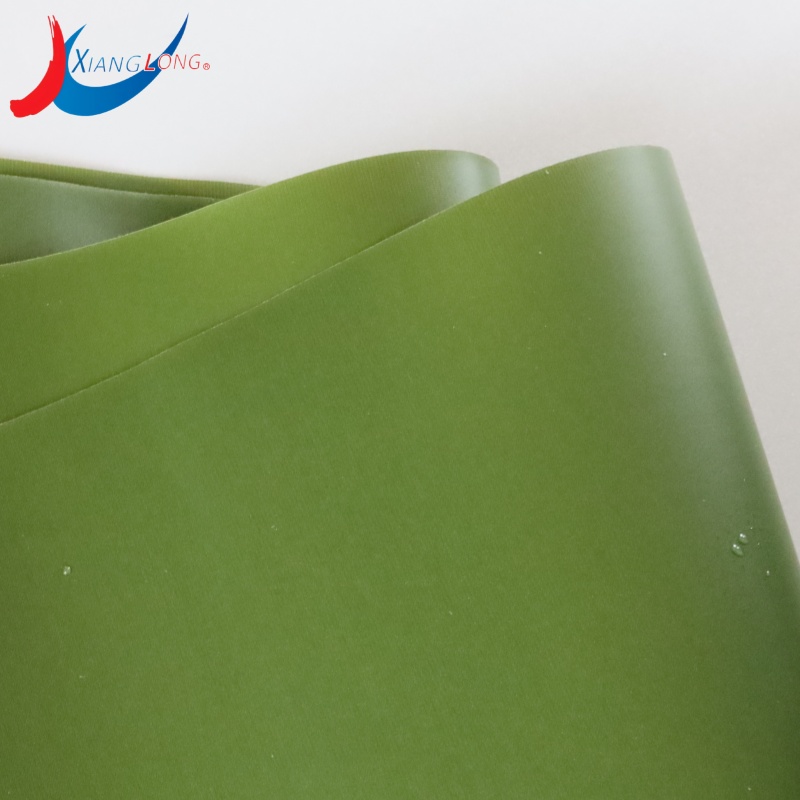
Polyether-based TPU is used for its favorable resistance to hydrolysis compared with conventional polyester-based TPU formulations. This material choice is relevant to inflatable products regularly exposed to ground moisture, condensation, humidity and changing outdoor conditions. The finished fabric also offers flexibility for folding, packing and repeated handling during normal equipment use.
With TPU on both sides, the material provides coated surfaces for inflatable product construction and can be evaluated for high-frequency welding and hot-air welding processes. It is suitable for manufacturers producing inflatable tent air beams, camping sleeping pads, air mattresses and other airtight fabric components.
40D Nylon Base for Lightweight Inflatable Structures
The 40D nylon base provides the woven structure that supports the TPU coating and contributes to the fabric’s mechanical stability. For inflatable equipment manufacturers, the base fabric needs to balance weight, handling characteristics and the demands of repeated inflation and deflation.
In inflatable tent air beams, the fabric forms part of the pressure-retaining structure. It must maintain its shape under the working conditions specified for the finished product. In camping sleeping pads and inflatable mattresses, the material also needs to withstand folding, rolling, packing and regular contact with outdoor surfaces.
Nylon offers a useful strength-to-weight balance for these applications. Its woven construction provides reinforcement for the coated material, while the TPU layers supply the airtight barrier. The performance of the finished inflatable component depends on the complete construction, including fabric orientation, seam layout, welding quality, valve attachment and operating pressure.
The olive green color is suitable for camping and expedition equipment, particularly products intended for use in woodland, mountain and other outdoor environments.
Double-Sided TPU Coating for Airtight Fabric Construction
Both surfaces of the 40D nylon fabric are coated with transparent TPU. This construction places a TPU layer on either side of the woven base rather than leaving one fabric face uncoated.
For inflatable product manufacturers, double-sided coating provides two TPU-coated surfaces that can be considered during material conversion and seam construction. It also encapsulates the nylon base between the coating layers, helping separate the woven substrate from direct exposure to moisture during normal use.
The TPU coating serves as the primary air-retention barrier. In applications such as inflatable tent air beams, sleeping pads and internal air chambers, consistent coating quality is important because small defects can affect pressure retention. Fabric inspection, seam preparation and finished-product leak testing remain necessary parts of production quality control.
The transparent coating maintains the olive green appearance of the base fabric. This is useful when manufacturers want a colored textile surface without covering the woven pattern with an opaque coating.
Polyether TPU for Hydrolysis Resistance
The TPU coating uses a polyether-based formulation. Compared with many conventional polyester-based TPU formulations, polyether TPU generally offers better resistance to hydrolysis, making it a relevant option for outdoor inflatable products exposed to moisture over extended periods.
Hydrolysis resistance matters when equipment is stored in damp conditions, used on wet ground or exposed to condensation during temperature changes. Under these conditions, the material selection should account for more than initial waterproof performance. The coating also needs to retain its functional properties throughout the intended service environment.
Actual hydrolysis performance depends on the TPU formulation, coating quality, processing conditions and exposure conditions. Manufacturers requiring a defined service life or a specific hydrolysis resistance level should confirm the relevant test method and results before final material approval.
Flexibility for Outdoor and Low-Temperature Use
Inflatable camping equipment is frequently folded, rolled and packed into limited storage space. The coated fabric therefore needs to remain workable during handling and assembly, while maintaining the material properties required by the finished product.
Polyether TPU is commonly selected for its flexibility and performance characteristics in demanding environments. This makes it worth evaluating for outdoor equipment exposed to changing temperatures, including expedition sleeping pads and inflatable tent structures.
The actual low-temperature performance of the finished fabric should be assessed against the operating temperature range of the intended product. Folding, bending and welding tests under representative conditions can help manufacturers determine whether the material is suitable for their equipment specifications.
HF Welding and Hot-Air Welding on TPU-Coated Surfaces
The double-sided TPU construction provides coated surfaces for inflatable fabric conversion. High-frequency welding, also referred to as RF welding, and hot-air welding can be evaluated for joining fabric panels and forming airtight seams.
For inflatable tent air beams, welding quality directly affects chamber construction and pressure retention. Sleeping pads and multi-chamber inflatable products may also require different seam layouts, internal partitions and valve attachment structures. The selected welding process must produce consistent bonding without damaging the coating or distorting the nylon base.
Before mass production, manufacturers should verify welding temperature, pressure, dwell time, electrode configuration and seam strength using their own equipment and product designs. Although both fabric faces have TPU coatings, welding performance should be confirmed on each side rather than assumed to be identical under every processing condition.
The material can be evaluated for:
Airtight seam construction in inflatable air chambers
Panel joining for inflatable tent air beams
Internal partition and multi-chamber fabrication
Valve attachment and reinforced connection areas
Hot-air or high-frequency welding trials
Finished products should undergo appropriate leak, seam-strength and pressure-retention inspections based on their intended use.