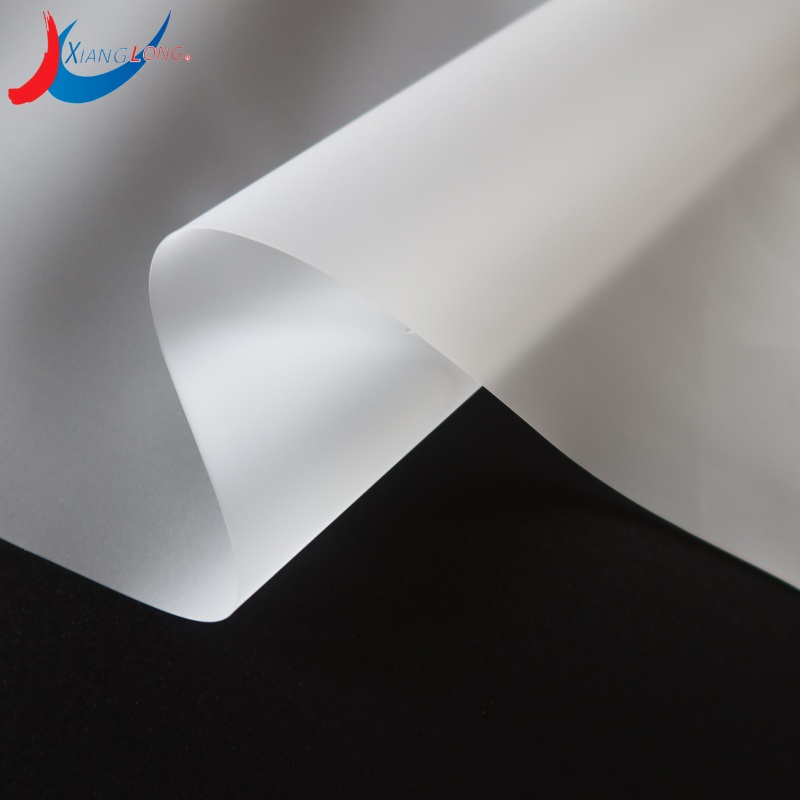
With a thickness range of 0.1 mm to 1.0 mm and a Shore A hardness of 85A to 90A, the film can be specified for different levels of flexibility and surface handling. UV-resistant TPU formulation helps the material retain its appearance and physical properties when used in outdoor environments, including medical tents, inflatable equipment, protective covers, and flexible privacy barriers.
For manufacturers sourcing a Semi Transparent TPU Film for outdoor medical equipment or flexible structures, the material combines optical control with the mechanical characteristics expected from TPU film.
Semi-Transparent Surface for Controlled Visibility
The visual behavior of a technical film can be just as important as its mechanical properties when the finished product is used around people or sensitive equipment. A fully transparent material may expose internal components, wiring, reinforcement structures, or stored equipment. An opaque film, on the other hand, can block too much natural or ambient light.
The semi-transparent construction provides a middle ground.
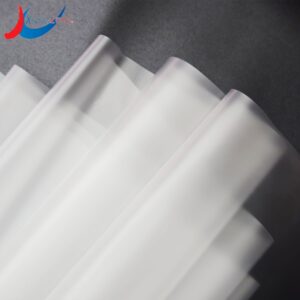
The frosted or matte appearance allows light to pass through without producing the same level of direct visibility associated with clear films. This makes the material suitable for applications where users need illumination but do not need a completely open view through the surface.
Typical benefits of the surface treatment include:
Partial concealment of internal structures and components
Softer light transmission for enclosed spaces
Reduced visual distraction from strong reflections
Less emphasis on fingerprints and minor surface marks
A cleaner appearance for medical and outdoor equipment
This characteristic makes Frosted TPU Film والسيد Matte TPU Film useful options for flexible structures where appearance and practical visibility need to be considered together.
UV-Resistant TPU Film for Outdoor Exposure
Outdoor equipment faces a different set of material conditions from products used inside controlled environments. Continuous sunlight can affect polymers over time, with prolonged ultraviolet exposure potentially contributing to discoloration, embrittlement, surface changes, and loss of flexibility.
XL Semi-Transparent TPU Film incorporates UV stabilization for applications exposed to sunlight. The material is specified with a UV resistance grade of 4.5+, providing a stronger basis for outdoor product development than a standard film intended mainly for indoor use.
The UV-resistant characteristics are particularly relevant when the film forms an exposed section of a finished product rather than being completely protected by another material.
Potential application conditions include:
Outdoor medical tents
Temporary clinical structures
Emergency response equipment
Inflatable medical products
Outdoor equipment covers
Flexible privacy screens
Protective panels exposed to direct sunlight
For manufacturers comparing الأشعة فوق البنفسجية Resistant TPU Film options, the intended exposure environment should be considered together with film thickness, surface requirements, processing method, and the construction of the finished product.
Thin TPU Film for Flexible Product Construction
Film thickness has a direct influence on how a material behaves during fabrication and final use. XL Semi-Transparent TPU Film is available from 0.1 mm to 1.0 mm, allowing manufacturers to select a suitable thickness according to the structure and handling requirements of the finished product.
Thinner film constructions can be considered where flexibility, weight, and conformability are priorities. Thicker specifications may be selected where the product requires additional material presence or greater resistance to handling during assembly and use.
The flexible nature of TPU allows the film to be incorporated into products with curved, folded, or movable sections. This is particularly useful for protective covers, inflatable structures, and temporary outdoor equipment where rigid panels would limit the form of the finished product.
For OEM projects, thickness selection should be evaluated together with:
Required flexibility
Product dimensions
Folding or bending frequency
طريقة اللحام
Exposure conditions
Mechanical loading during use
Desired surface appearance
This makes the film suitable for product development rather than being limited to one fixed construction.
Light Transmission and Privacy in Medical Environments
Medical equipment used outdoors or in temporary clinical environments often requires a balance between visibility and privacy.
For example, an outdoor treatment tent may need sufficient daylight to enter the enclosure while reducing direct visibility of people or equipment inside. A protective cover may need to shield internal components without completely blocking the surrounding light. A flexible partition may need to provide visual separation while maintaining a relatively open environment.
The semi-transparent surface of the film addresses these requirements through controlled visibility rather than complete transparency.
Applications can include:
Outdoor medical tents: Film sections can be used for windows, viewing areas, or flexible reinforcement zones where daylight and partial visual screening are both required.
Medical equipment covers: Semi-transparent material can conceal internal structures while maintaining a clean, technical appearance.
Privacy barriers: Flexible panels can provide visual separation in temporary or semi-permanent clinical environments without creating a fully opaque enclosure.
Inflatable medical equipment: The film can be incorporated into selected sections of inflatable products where visual appearance and environmental exposure are important considerations.
Processing for HF and Ultrasonic Welding
Material selection for flexible products also needs to account for manufacturing processes. XL Semi-Transparent TPU Film is compatible with High-Frequency welding and ultrasonic welding, giving manufacturers practical options for joining film components.
HF welding can be used to form sealed seams in suitable TPU constructions. This is relevant to inflatable products and flexible structures where the joint needs to form part of the finished barrier.
Ultrasonic welding provides another joining method for compatible assemblies, particularly where the product construction or production equipment favors localized welding.
Processing conditions should be established according to the selected TPU type, film thickness, equipment configuration, welding parameters, and final product construction. Production trials are recommended before mass manufacturing, especially when the film is combined with other flexible materials.
Material Options for Outdoor Medical Equipment
The film is available with either polyether-based or polyester-based TPU, allowing material selection according to the requirements of the finished product.
Polyether-based TPU can be considered for applications where hydrolysis resistance and long-term exposure to humid conditions are important material considerations. Polyester-based TPU can be selected for applications where its particular mechanical and processing characteristics fit the product construction.
The appropriate TPU type depends on the application environment rather than simply choosing one material for every project. Factors such as humidity, temperature, outdoor exposure, contact conditions, film thickness, and welding process should be reviewed during specification.
This flexibility gives manufacturers more room to develop TPU Film for Medical Equipment according to actual product requirements.