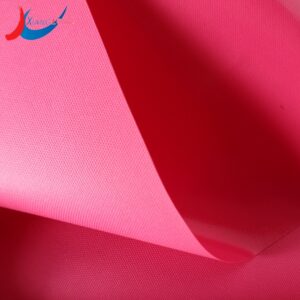
Designed to Control Damage, Not Just Resist It
In many real-world applications, materials do not fail all at once—they begin with small cuts, punctures, or stress points. What determines product lifespan is whether that damage spreads.
This fabric is specifically designed to address that problem.
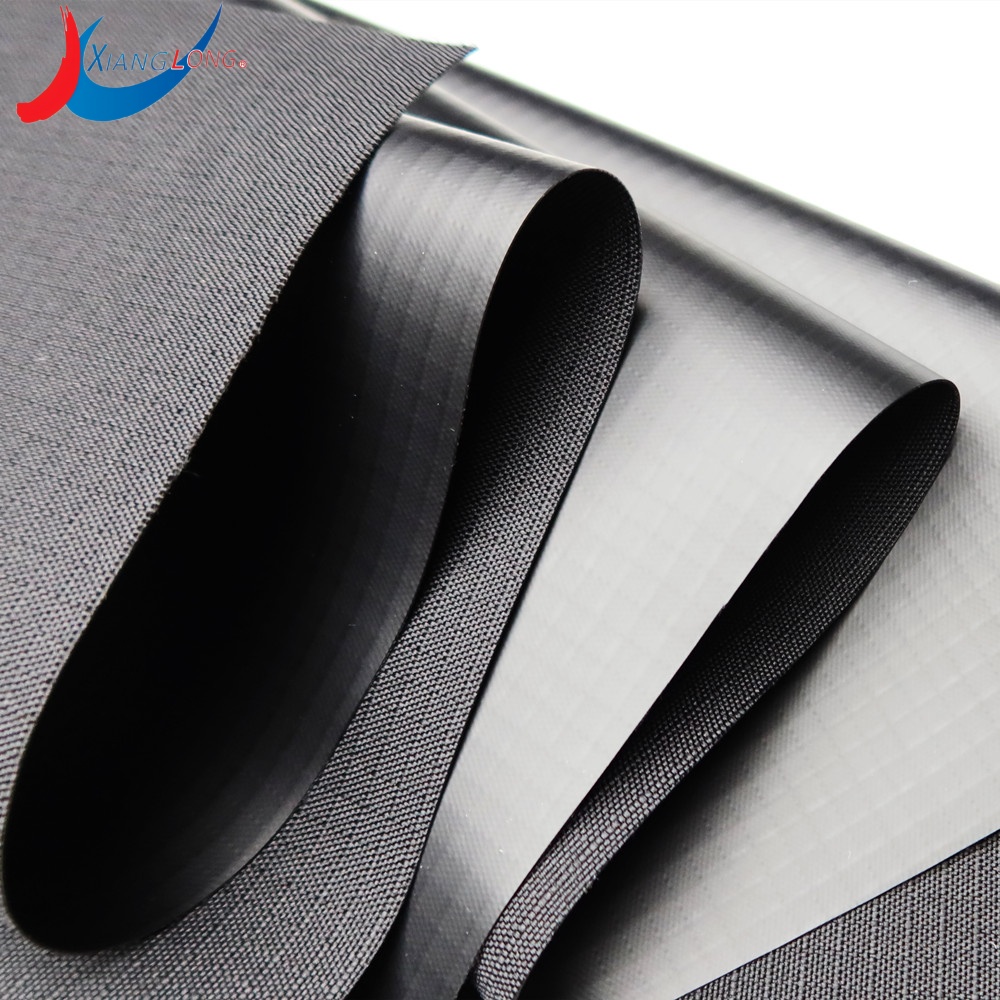
The integrated reinforcing grid within the 900D polyester base acts as a built-in tear-stop system. When a puncture occurs, the grid structure interrupts the tear path, preventing it from expanding across the fabric. This significantly reduces the risk of sudden failure and allows products to remain functional even after localized damage.
For users, this means fewer unexpected failures and longer service life in demanding conditions.
Reinforced Grid Structure: How It Works
The high tear strength of this material comes from its engineered weave.
During the weaving process, stronger reinforcement yarns are inserted at regular intervals, forming a grid pattern across the fabric. This grid acts as a structural checkpoint system.
When stress concentrates at a specific point:
The reinforcement yarns absorb and redistribute the load
The tear is confined within a limited area
Further propagation is effectively blocked
This approach does not just increase strength—it changes how the material behaves under failure conditions. Instead of tearing continuously, it resists and stabilizes.
Built on a 900D Heavy-Duty Polyester Base
The foundation of this fabric is a 900D high-density polyester construction.
Compared to lighter materials, this base provides:
Strong resistance to abrasion from repeated contact
High tolerance to rough handling and heavy loading
Reliable structural support for bags and covers
Improved durability in industrial environments
This makes it particularly suitable for products that are frequently dragged, loaded, or exposed to harsh surfaces.
TPU Coating for Waterproofing and Weldability
The XL series TPU coating applied to the fabric surface serves both protective and functional purposes.
It forms a continuous barrier that:
Prevents water penetration
Blocks dirt and contaminants
Improves surface durability
More importantly, the TPU layer allows the material to be processed using high-frequency (HF) welding.
This enables:
Seamless construction without stitching
Elimination of needle holes that can leak
Strong, permanent bonds for structural applications
For manufacturers, this opens up more reliable production methods, especially for waterproof or semi-sealed products.
Dimensional Stability for Structured Products
Another advantage of the reinforcing grid is improved dimensional stability.
The grid helps the fabric maintain its shape under tension, which is especially important for:
Structured bags
Equipment covers
Protective enclosures
This stability ensures that finished products do not easily deform, sag, or lose form during use.