








TPUコーティング生地 sits at the intersection of material science and real-world performance. It is used where failure is not an option—outdoor gear, medical products, inflatable systems, and protective equipment. Yet many buyers still approach it as a generic “waterproof fabric,” which leads to mismatched specifications, unnecessary costs, or premature product failure.
This guide breaks the material down from an engineering perspective: how it is built, why it performs the way it does, where it works best, and how to select the right specification for your application.
What Is TPU Coated Fabric?
TPU coated fabric is a composite material formed by applying a thermoplastic polyurethane (TPU) layer onto a textile base, such as polyester or nylon. The coating creates a barrier that adds waterproofness, air tightness, chemical resistance, and durability while retaining flexibility.
At first glance, it may look similar to other coated fabrics, but its internal structure and bonding mechanism are what set it apart.
Coating vs Lamination
This distinction is often misunderstood.
- Coating: TPU is applied in a molten or semi-molten state directly onto the fabric surface, forming a continuous bonded layer.
- Lamination: A pre-formed TPU film is bonded to the fabric using heat or adhesive.
Coating generally provides stronger integration and better resistance to delamination, especially under mechanical stress. Lamination can offer cleaner surface control but depends heavily on bonding quality.
Single-Sided vs Double-Sided Coating
- Single-sided TPU coating: Common in garments or lightweight applications where one surface needs protection.
- Double-sided TPU coating: Used in air-tight or high-strength applications such as inflatable products or dry bags.
The choice directly affects weight, cost, durability, and sealing performance.
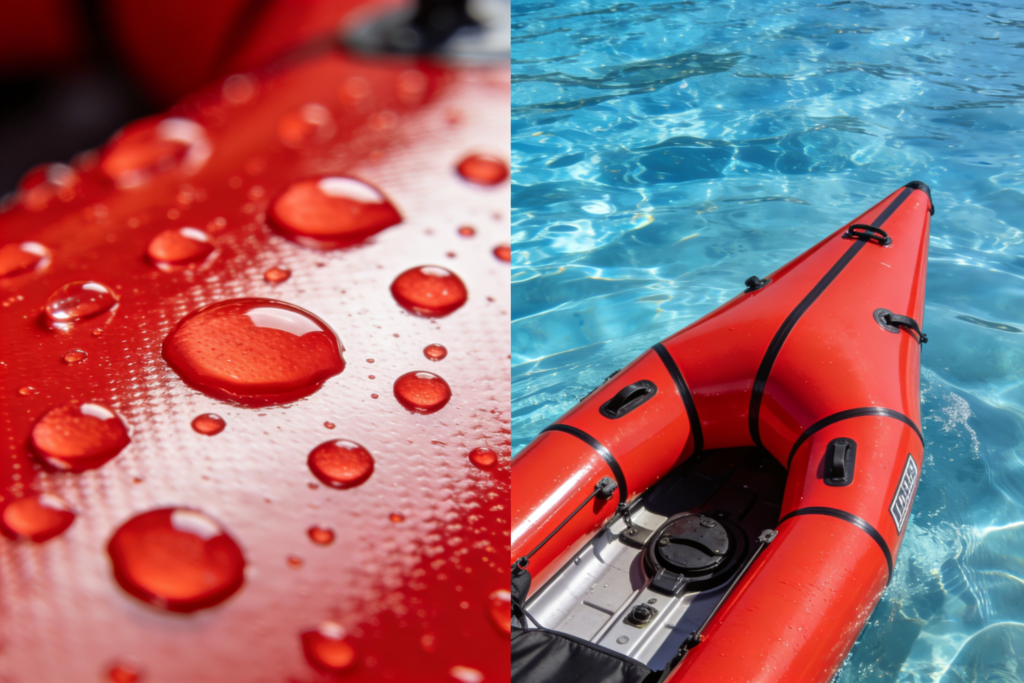
How TPU Coating Structure Determines Performance
Every performance characteristic of TPU coated fabric can be traced back to three structural variables: TPU layer thickness, base fabric, and coating method.
TPU Layer Thickness
Thickness is not just a number—it defines the balance between flexibility and barrier performance.
- Thicker TPU layers increase waterproofness, air tightness, and abrasion resistance.
- Thinner layers improve softness, foldability, and weight reduction.
A common mistake is assuming higher thickness always means better performance. In reality, excessive thickness can reduce flexibility and create stress points during repeated folding.
Base Fabric Selection
The textile substrate acts as the structural backbone.
- Polyester (PET): Good dimensional stability, cost-effective, widely used.
- Nylon (PA): Higher tensile strength, better tear resistance, lighter weight.
Denier (D) also plays a role:
- 20D–40D: Ultralight applications
- 70D–210D: Balanced performance
- 420D+: Heavy-duty industrial use
The coating does not compensate for a weak base fabric. Strength comes from the fabric; protection comes from the TPU.
Coating Methods
Different coating technologies produce different performance profiles.
Knife Coating
- Precise thickness control
- Cost-efficient
- Suitable for standard applications
Hot Melt Coating
- Strong bonding
- Better environmental performance (no solvents)
- More uniform layer
Transfer Coating
- Smooth surface finish
- High visual quality
- Better for premium applications
The coating method affects not only performance but also long-term reliability.
Key Performance Metrics of TPU Coated Fabric
Understanding specifications requires more than reading a datasheet. Each parameter reflects a functional outcome.
| Performance Metric | What It Indicates | Application Impact |
|---|---|---|
| Hydrostatic Head (mm) | Water pressure resistance | Outdoor gear, rain protection |
| Air Tightness | Leakage resistance | Inflatable products |
| Abrasion Resistance | Surface durability | Bags, industrial use |
| Flexibility | Resistance to cracking when bent | Foldable structures |
| Temperature Resistance | Stability in extreme climates | Outdoor, military |
| Chemical Resistance | Resistance to oils, solvents | Medical, industrial |
A high number in one category may compromise another. Performance is always a balance.
TPU Coated Fabric vs PVC vs PU
Material selection is often driven by cost, but long-term performance tells a different story.
| Material | Advantages | Limitations | Typical Use |
|---|---|---|---|
| TPU | Flexible, durable, low-temperature resistance, and environmentally safer | Higher cost | High-performance applications |
| PVC | Low cost, easy processing | Heavy, poor, low-temp performance, environmental concerns | Low-end waterproofing |
| PU | Lightweight, soft | Lower durability, hydrolysis risk | Apparel |
TPU stands out in applications where durability, flexibility, and environmental compliance matter simultaneously.
Industrial Applications of TPU Coated Fabric
The reason TPU coated fabric appears across so many industries is simple: it solves multiple performance requirements at once.
Outdoor Equipment
Tents, tarps, and dry bags require a combination of waterproofness, tear resistance, and flexibility. TPU maintains performance even in low temperatures where other materials become brittle.
Medical and Healthcare
In medical mattresses, protective covers, and inflatable devices, materials must be both durable and resistant to fluids and chemicals. TPU also supports hygiene requirements due to its non-porous structure.
Waterproof Bags and Backpacks
Frequent folding and abrasion demand a material that does not crack or delaminate. TPU-coated fabrics handle repeated stress cycles better than PVC alternatives.
Protective Equipment
Applications such as hazmat suits or industrial covers require chemical resistance and mechanical strength. TPU provides both without excessive weight.
Inflatable Structures
From air mattresses to rescue boats, airtight performance is critical. Double-sided TPU coating ensures low permeability and strong seam bonding.
Each application is not just about waterproofing—it is about maintaining performance under repeated stress.
Common Problems and How to Avoid Them
Even high-quality TPU coated fabric can fail if improperly specified or processed.
Delamination
Occurs when the TPU layer separates from the fabric.
Causes:
- Poor bonding during coating
- Incompatible lamination process
- Excessive mechanical stress
Prevention:
- Choose proper coating method
- Verify bonding strength
- Avoid sharp folding under load
Low-Temperature Cracking
Some materials lose flexibility in cold environments.
Causes:
- Incorrect TPU formulation
- Excessive thickness without flexibility balance
Prevention:
- Specify low-temperature performance requirements
- Test in real conditions
Surface Stickiness
A tacky surface can affect usability.
Causes:
- Improper formulation
- Storage conditions (heat, humidity)
Prevention:
- Use anti-blocking treatments
- Store under controlled conditions
Uneven Coating Thickness
Leads to inconsistent performance.
Causes:
- Poor process control
- Inconsistent equipment calibration
Prevention:
- Work with manufacturers using stable coating lines
- Request thickness tolerance data
How to Choose the Right TPU Coated Fabric
Selection should follow a structured process rather than guesswork.
Step 1: Define the Application
Start with the end use:
- Is it exposed to outdoor conditions?
- Does it require air tightness?
- Will it be folded frequently?
The application defines the performance priorities.
Step 2: Determine TPU Thickness
Match thickness to function:
- Lightweight: prioritize flexibility
- Heavy-duty: prioritize durability and barrier performance
Avoid over-specification—it increases cost without added value.
Step 3: Select Base Fabric
Choose based on mechanical requirements:
- Nylon for high strength and lightweight
- Polyester for cost efficiency and stability
Consider the denier and weave structure.
Step 4: Choose Coating Method
Align process with product expectations:
- Standard use → knife coating
- High durability → hot melt
- Premium finish → transfer coating
Step 5: Confirm Testing Standards
Always validate performance with data:
- Waterproof testing (hydrostatic pressure)
- Tensile strength
- Peel strength (for coating adhesion)
- Low-temperature flexibility
Specifications without testing are assumptions.
Custom TPU Coated Fabric: What Matters from a Manufacturer
For industrial buyers, standard products are rarely enough. Customization often defines product success.
A capable manufacturer should provide:
- Adjustable TPU thickness
- Single or double-sided coating options
- Custom base fabric selection
- Functional treatments (anti-bacterial, flame retardant)
- Stable small-batch sampling
Consistency across batches is just as important as initial performance.
TPU coated fabric is not a single material—it is a system composed of polymer, textile, and processing technology. Its performance is determined long before it reaches the final product.
Choosing the right specification requires understanding how structure translates into function. Thickness, fabric type, and coating method are not isolated decisions; they interact to define durability, flexibility, and reliability.
In applications where failure carries cost—whether financial or operational—material selection should be driven by performance requirements, not assumptions.
When specified correctly, TPU coated fabric delivers a balance that few alternatives can match: strength without rigidity, protection without weight, and durability without compromise.